What European Tea Importers Actually Require from Your Packaging: EU Regulation 1935/2004 Decoded

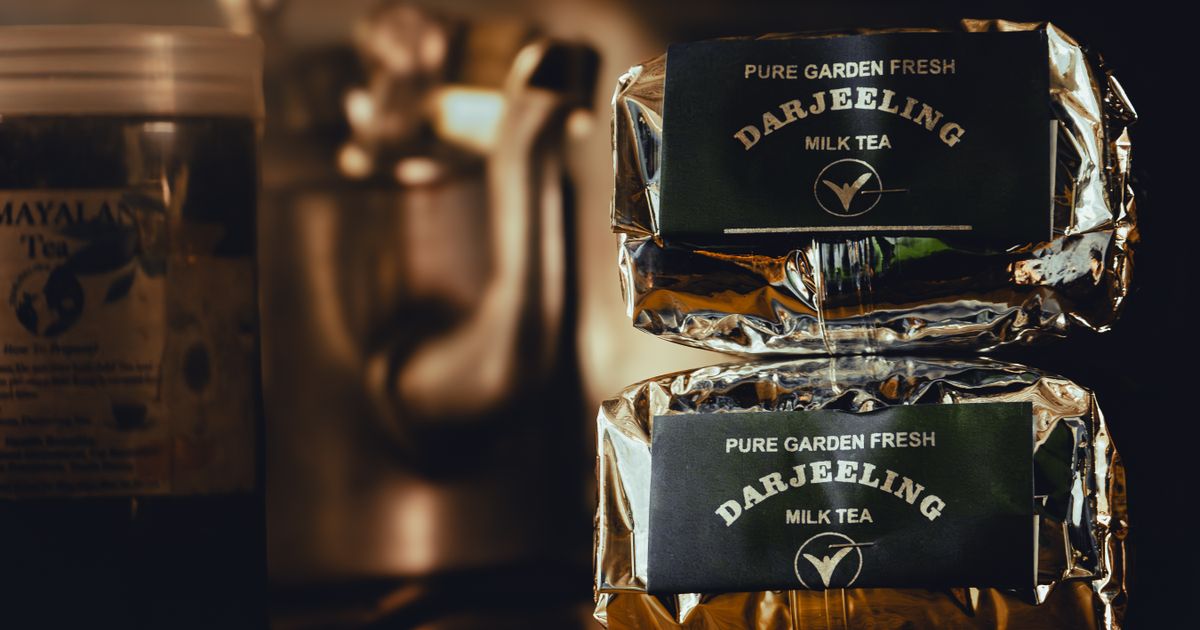
When an Indian tea shipment is turned away at a European port, the leaf is rarely the problem. The packaging is. EU Regulation 1935/2004 makes your pouch a legal food-contact material, and importers will not clear it without documentary proof that it is safe. This guide sets out what that proof looks like.
For any exporter, the packaging file now carries the same weight as the quality certificate. A buyer in Hamburg or Rotterdam is not judging your Assam CTC on cup quality alone. Their compliance team is checking whether your tea pouch can legally touch food inside the European Union. Get the paperwork wrong and the container sits in bond, running up demurrage, while your buyer’s confidence drains away.
What does EU Regulation 1935/2004 actually require from tea packaging?
EU Regulation 1935/2004 requires that any material meant to contact food must not transfer its constituents into that food in quantities that endanger health, change its composition unacceptably, or spoil its taste and smell. For tea packaging, this is the framework law. Every pouch, sachet, and overwrap sold into the EU has to meet its general safety principle, backed by traceability and a Declaration of Compliance.
Definition — EU Regulation 1935/2004: the European framework regulation on materials and articles intended to come into contact with food. It sets the overarching safety obligation and requires traceability “one step back, one step forward” through the supply chain, so any packaging component can be traced from converter to brand.
The regulation itself is short on numbers and long on principle. On the consolidated text at EUR-Lex, Article 3 sets the general requirement, Article 15 governs labelling, and Article 17 covers traceability at every stage. The limits that actually decide whether your pouch passes live in the measures beneath it, and the most important of those is the plastics regulation. If your packaging carries a metallised layer, an inner sealant film, or a printed surface, more than one measure applies at once.

Which EU rules apply to your tea pouch beyond 1935/2004?
Beyond the framework, four instruments do the real work for tea packaging: Regulation 10/2011 on plastics, Regulation 2023/2006 on good manufacturing practice, the printing-ink controls, and any national measures for paper and board. Most flexible tea pouches are multi-layer laminates, so a single pouch is usually governed by three of these at the same time.
The table below maps the measures a typical Indian tea exporter has to satisfy. Treat it as your documentation index. Each row is a file your buyer may ask to see.
| EU measure | What it governs | Relevance to a tea pouch |
|---|---|---|
| Reg. (EC) 1935/2004 | Framework safety and traceability | All packaging, the umbrella law |
| Reg. (EU) 10/2011 | Plastics: OML and SML limits | Inner sealant film, PET, PE layers |
| Reg. (EC) 2023/2006 | Good Manufacturing Practice (GMP) | Converter’s process controls |
| EuPIA / national ink rules | Printing inks and migration | Any printed pouch surface |
| National paper/board rules | Paper food-contact suitability | Kraft and paper-based laminates |
There is no single harmonised EU regulation for paper and board, which catches out a lot of exporters. Germany’s BfR recommendations and the Council of Europe resolution are the references European buyers apply in practice, so a paper-based laminate needs a supplier statement that addresses those. Our tea packaging glossary defines the barrier and migration terms these measures use, which helps when you are reading a supplier’s file for the first time.
What is a Declaration of Compliance and what must it contain?
A Declaration of Compliance (DoC) is a signed statement from your packaging supplier confirming the material meets EU food-contact law. It is the single most important document in an export packaging file, and European importers will refuse a consignment without one. A complete DoC lets the buyer place your packaging on the EU market without commissioning their own testing.
Definition — Declaration of Compliance: a mandatory written statement, required under Article 16 of Regulation 1935/2004 and detailed in Annex IV of Regulation 10/2011, in which the material manufacturer confirms conformity and provides the data a downstream user needs to rely on it.
A DoC your buyer will actually accept contains, at minimum:
- Identity of the converter and the specific material or article.
- Confirmation of compliance with Regulation 1935/2004 and each applicable specific measure.
- The substances subject to a restriction, and evidence that migration stays within limits.
- Overall and specific migration results, with the food simulant and test conditions used.
- Confirmation that any functional barrier, dual-use additives, or non-listed substances are declared.
- Enough information on restricted substances for the buyer to work out their own compliance.
- Date of issue and an authorised signature.
Ask for the DoC before you settle on a supplier, not after you win the order. Retrofitting compliance onto a pouch that is already in production is the most expensive way to find out your inks or sealant were never EU-suitable. It is the same discipline that governs domestic EPR obligations for tea packaging: documentation is cheapest when it is designed in, not bolted on afterwards.
How do migration limits work for EU tea packaging?
Migration limits cap how much of a packaging material can transfer into the food it touches. Under Regulation (EU) 10/2011, the Overall Migration Limit (OML) is 10 milligrams of total constituents per square decimetre of food-contact surface. Individual substances also carry their own Specific Migration Limits (SMLs). For dry, low-moisture products like tea, migration tends to run lower than for wet or fatty foods, but the pouch still has to be tested and declared.
Definition — migration testing: laboratory analysis measuring how much of a packaging’s chemical constituents transfer into food, or a food simulant, under set time and temperature conditions. For tea, the standard simulant is Tenax (poly-2,6-diphenylene oxide), used for dry foods.
Three things follow from this for a packaging manager. First, migration is a property of the whole structure, not one layer: a compliant sealant film laminated with a non-compliant adhesive gives you a non-compliant pouch. Second, printing inks migrate from the outer surface through the substrate. Set-off and permeation are real routes, which is why low-migration ink systems matter for tea, whose aroma taints easily. Third, every material or process change reopens the testing question. Switching from an aluminium foil laminate to a metallised paper structure changes the migration profile and needs fresh test data before the next export run.
India’s own framework already runs strict here. Under the Food Safety and Standards (Packaging) Regulations, 2018, FSSAI prohibits recycled plastics and printed surfaces in direct food contact, so exporters who build to the stricter of the two regimes rarely have to re-engineer twice. The Food Safety and Standards Authority of India publishes the Indian baseline that most export-grade converters already clear.

What do European tea importers actually check before accepting your packaging?
European importers check the documentation first and the material second. Before a purchase order is confirmed, a buyer’s technical team usually asks for the Declaration of Compliance, the migration test reports, an ink and adhesive statement, and confirmation of GMP under Regulation 2023/2006. Only when the paperwork holds do they move on to sensory and barrier evaluation of the pouch itself.
This is where first-time exporters lose weeks. The tea passes cup evaluation, the price is agreed, and then the packaging file stalls because no DoC exists for the printed pouch. Building the file in advance turns a three-week hold into same-day clearance. A realistic pre-shipment packaging file for the EU holds the supplier DoC, overall and specific migration results against the correct food simulant, a printing-ink compliance statement, a GMP declaration, and traceability records linking the batch of pouches to the shipment. According to the Tea Board of India, the country exports well over 200 million kilograms of tea a year, and the fastest-growing premium segment, specialty and single-origin, sells disproportionately into the very European markets where this scrutiny is highest. For premium Darjeeling positioning, the packaging file is part of the premium.
How does EU compliance differ from FSSAI requirements for tea packaging?
EU and FSSAI requirements share a goal, food safety, but they get there differently. FSSAI works through positive lists and Indian Standard specifications enforced at the point of manufacture. The EU works through a framework regulation plus migration-limit measures, enforced through the Declaration of Compliance. An exporter has to satisfy both, and the documents do not substitute for each other.
| Criterion | FSSAI (India) | EU (1935/2004 + measures) |
|---|---|---|
| Governing instrument | FSS (Packaging) Regulations, 2018 | Reg. 1935/2004 + Reg. 10/2011 |
| Core evidence | IS-standard conformity, positive lists | Declaration of Compliance + migration data |
| Migration limits | Overall and specific per IS standards | OML 10 mg/dm²; SMLs per substance |
| Printing on food-contact side | Prohibited | Restricted; low-migration inks required |
| Who must hold the proof | Manufacturer or brand | Every business in the chain |
The overlap is large enough that a well-run converter can serve both markets from one material specification. The gaps, chiefly the DoC and the EU-format migration data, are documentary rather than physical. That is genuinely good news, because it means EU readiness is usually a paperwork and testing exercise, not a re-tooling of your packaging cost base.

Where paper-based barrier packaging fits for EU-bound tea
Paper-based barrier laminates can meet EU food-contact requirements, but they are not a straight swap for foil, and being honest about the gap matters more than being enthusiastic about the material. For teas that need 18 to 24 months of shelf life at extreme humidity, an aluminium foil laminate still delivers barrier performance that paper structures cannot fully match. Where a paper-based structure earns its place is the large middle of the export market: teas with a 9 to 12 month target shelf life, premium positioning, and buyers who value recyclability alongside compliance.
That is the context in which Pakka’s flexC paper-based packaging is worth a look. Its limitation should be stated plainly first: it targets the moderate-to-good barrier band, not the absolute maximum that only foil provides, so it suits many tea SKUs but not all of them. Within that band, the advantages for an EU exporter are concrete. A recyclable paper-first structure lowers the packaging’s end-of-life liability in European waste streams, and its food-contact suitability is documented in the same DoC-and-migration format European buyers expect to see. If you are weighing recyclability against the barrier a specific tea actually needs, the sensible next step is a barrier assessment against that SKU’s real shelf-life target, not a blanket switch. The trade-offs are much the same ones we set out for chai and everyday tea formats, where format and barrier get chosen per price segment.
Frequently asked questions
Is EU Regulation 1935/2004 mandatory for Indian tea exporters?
Yes. Any tea packaging placed on the EU market must comply with Regulation 1935/2004, wherever it was manufactured. The obligation attaches to the packaging as a food-contact material, so an Indian converter’s pouch has to meet the same framework as an EU-made one, evidenced by a Declaration of Compliance.
What documents do I need to export tea packaging to Europe?
At minimum you need a supplier Declaration of Compliance, overall and specific migration test reports against the correct food simulant, a printing-ink and adhesive compliance statement, a GMP declaration under Regulation 2023/2006, and batch traceability records. European importers usually ask for these before confirming a purchase order.
Do migration limits apply to dry products like tea?
Yes, though the testing uses a dry-food simulant. Even low-moisture products like tea need migration testing, conducted with the Tenax simulant under set conditions. Tea’s sensitivity to aroma taint makes the specific migration of ink and solvent residues a particular concern, so that data often matters more than the overall figure.
Can paper-based tea packaging meet EU food-contact rules?
Yes, when it is documented properly. A paper-based laminate can meet EU requirements as long as the supplier furnishes a Declaration of Compliance covering the paper, the barrier coating, the adhesives, and the inks together. The whole structure is assessed, not just the base paper, and buyers apply German BfR and Council of Europe references where no single harmonised EU paper regulation exists.
How is EU compliance different from FSSAI compliance?
FSSAI enforces conformity at manufacture through Indian Standards and positive lists, while the EU relies on a framework regulation plus a Declaration of Compliance carrying migration data. An exporter has to satisfy both. Building packaging to the stricter of the two regimes usually saves you re-engineering the material twice.
Last reviewed: July 2026
Ready to build an EU-ready packaging file? If you are evaluating paper-based tea packaging for the European market, start with a barrier assessment against your specific tea type and shelf-life target. Foil still wins at the extreme end, and an honest comparison saves money. Explore Pakka’s food packaging range to see where flexC fits, or contact our team to talk through compliance documentation for your export SKUs.
Browse all Pakka articles.
You may also like