Tea Packaging Glossary: 20 Terms Every Brand Manager Needs to Know

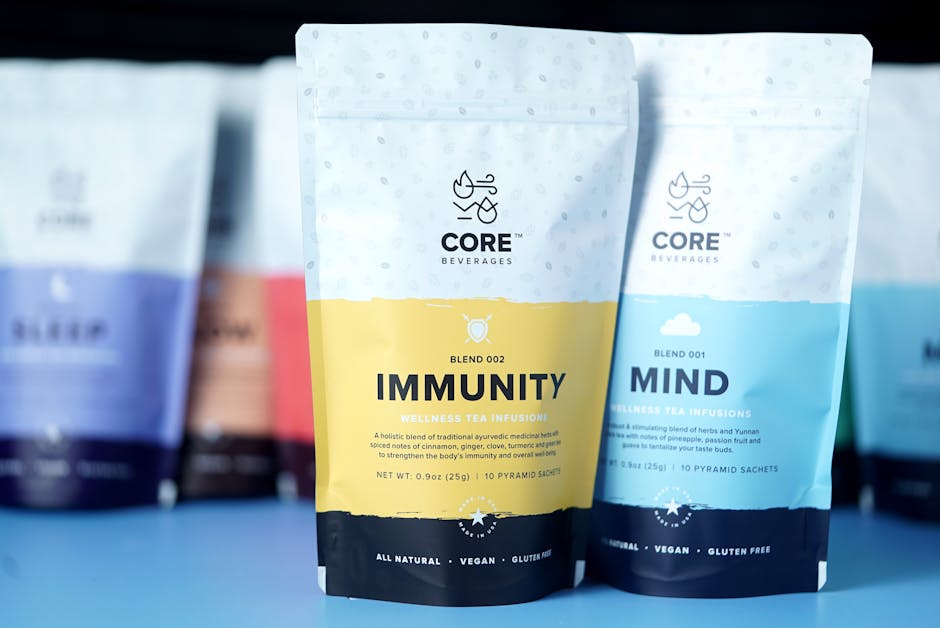
The gap between what a packaging supplier quotes and what your tea actually needs often comes down to terminology. A converter says “MVTR below 2.” Your procurement team nods. But does anyone in the room know whether that number is adequate for green tea shipped through Mumbai warehouses in August? India’s tea industry produced 1,395.76 million kg in 2024 (Tea Board of India, Annual Report 2024-25), and the packaging specifications behind that volume involve a vocabulary that brand managers encounter constantly but rarely have time to decode.
This glossary covers 20 terms that appear in packaging supplier proposals, material test reports, and regulatory filings. Each definition is written for brand owners and procurement leads, not packaging engineers. Where a term has direct implications for shelf life, cost, or compliance, those implications are stated plainly.
Key Takeaways
- This glossary covers 20 essential tea packaging terms across barrier properties, materials, formats, processing, and regulations.
- MVTR and OTR are the two most critical barrier metrics: tea typically requires MVTR below 2 g/m2/24hr and OTR below 5 cc/m2/24hr for 9-month shelf life.
- Indian tea packaging must comply with FSSAI norms, IS 14543, and increasingly with EU 1935/2004 for export markets.
- Understanding these terms helps brand managers evaluate supplier proposals on technical merit rather than marketing claims alone.
Quick Navigation
Barrier Properties
- MVTR (Moisture Vapour Transmission Rate)
- OTR (Oxygen Transmission Rate)
- Aroma Retention
- Barrier Properties
- Shelf Life
- Headspace
Packaging Materials
Packaging Formats
Processing and Testing
Regulatory Standards
Barrier Properties
MVTR (Moisture Vapour Transmission Rate)
Moisture Vapour Transmission Rate (MVTR) measures the rate at which water vapour passes through a packaging material, expressed in grams per square metre per 24 hours (g/m2/24hr) under specified temperature and humidity conditions. It is the single most important metric for tea packaging because tea is processed to 3 to 5% moisture content and begins degrading noticeably at 6 to 7%. According to ASTM E96 testing standards, MVTR values must always be reported alongside the test conditions (temperature and relative humidity) to be comparable across materials.
For tea, metallised films and laminates typically achieve MVTR of 0.5 to 3.0 g/m2/24hr at 38 degrees C and 90% RH, while plain paper can exceed 200 g/m2/24hr under identical conditions.
What this means for your brand: When evaluating supplier proposals, always confirm the MVTR test conditions. A film rated at 2 g/m2/24hr at 38 degrees C may perform at 3 to 3.5 at 45 degrees C, which matters if your tea ships through warehouses without climate control. For green tea, you’ll want MVTR below 2 for a 12-month shelf life target.
Related terms: Barrier properties, Shelf life, Headspace
Citation capsule: Tea packaging MVTR is measured in g/m2/24hr under ASTM E96. Metallised films achieve 0.5 to 3.0 g/m2/24hr at 38 degrees C and 90% RH, while plain paper exceeds 200 g/m2/24hr. Green tea requires MVTR below 2 for 12-month shelf life (ASTM E96 standard).
OTR (Oxygen Transmission Rate)
Oxygen Transmission Rate (OTR) measures how much oxygen passes through a packaging film, expressed in cubic centimetres per square metre per 24 hours (cc/m2/24hr). Oxygen is the primary driver of tea aroma degradation. Black tea contains over 600 volatile organic compounds, many of which oxidise rapidly when exposed to oxygen (Journal of Food Science and Technology, 2020). OTR testing follows ASTM D3985 or ASTM F2622 protocols at 23 degrees C and 50% RH as standard conditions.
For tea applications, conventional aluminium foil laminates achieve OTR below 0.5 cc/m2/24hr. Metallised papers and metallised BOPP films range from 1 to 10 cc/m2/24hr depending on the metallisation quality and substrate.
What this means for your brand: Target OTR below 5 cc/m2/24hr for a 9-month shelf life on most tea types. Premium single-origin teas with delicate volatile profiles may need OTR below 2. If your supplier quotes OTR at 23 degrees C but your warehouses reach 38 degrees C, expect real-world OTR to be higher.
Related terms: Aroma retention, Nitrogen flushing, Barrier properties
Aroma Retention
Aroma retention refers to the ability of a packaging material to prevent the escape of volatile organic compounds (VOCs) from within the package and block external odours from entering. Tea aroma comes from hundreds of VOCs, including linalool, geraniol, and methylsalicylate, which are chemically unstable and degrade through oxidation and evaporation. Research published in Food Chemistry found that improperly packaged tea can lose up to 30% of its volatile compounds within 8 weeks of packing (Food Chemistry, 2021).
Aroma retention depends on OTR, MVTR, seal integrity, and the scalping tendency of the inner sealant layer. Some polymer sealants absorb aromatic compounds from the tea, effectively pulling flavour into the packaging wall.
What this means for your brand: If customers report that your tea “doesn’t smell the same” well before the expiry date, the issue is almost certainly packaging, not the blend. Request scalping test data alongside OTR and MVTR figures when evaluating new materials.
Related terms: OTR, MVTR, Headspace
Citation capsule: Tea aroma retention depends on OTR, MVTR, seal integrity, and sealant scalping tendency. Research in Food Chemistry (2021) found improperly packaged tea loses up to 30% of volatile compounds within 8 weeks. Sealant layers that absorb aromatic compounds accelerate the problem.
Barrier Properties
Barrier properties is the umbrella term for a packaging material’s resistance to the transmission of moisture, oxygen, light, and aromatic compounds. For tea, barrier performance determines whether the product reaches the consumer in the condition it left the packing line. India’s monsoon season, when ambient humidity in major distribution hubs like Kolkata and Mumbai reaches 85 to 95% RH, tests these properties harder than any other period of the year.
Barrier properties are not a single number. They are a combination of MVTR, OTR, light transmission, and aroma scalping resistance. A material may excel on one metric and fail on another.
What this means for your brand: Avoid evaluating packaging on a single barrier metric. A film with excellent MVTR but poor OTR will keep your tea dry while allowing it to go stale from oxidation. Ask suppliers for the full barrier profile, not just the headline number.
Related terms: MVTR, OTR, Aroma retention, Shelf life
Shelf Life
Shelf life is the duration for which packaged tea retains its intended quality attributes, including aroma, flavour, colour, and moisture content, under specified storage conditions. Most Indian tea brands target 12 to 18 months of shelf life for retail products. According to FSSAI regulations, the shelf life declared on the package must be validated through accelerated shelf life testing (ASLT) that simulates the full storage duration under stress conditions (FSSAI, Food Safety and Standards (Packaging) Regulations, 2018).
Shelf life is not solely a packaging property. It is the outcome of tea quality at packing, packaging barrier performance, seal integrity, modified atmosphere (if used), and storage conditions through the supply chain.
What this means for your brand: If your tea ships nationally across climate zones, set your shelf life specification based on worst-case distribution conditions, not average conditions. A pouch validated in a Jaipur warehouse (dry heat, low humidity) may not hold up through a Guwahati monsoon.
Related terms: MVTR, Barrier properties, Nitrogen flushing
Headspace
Headspace refers to the volume of gas trapped inside a sealed package above the product. In tea packaging, headspace composition directly affects oxidation rate. A freshly sealed pouch may contain residual atmospheric air (approximately 21% oxygen) unless the headspace has been modified through nitrogen flushing or vacuum packing. Studies on modified atmosphere packaging for tea have shown that reducing headspace oxygen to below 2% can extend aroma retention by 40 to 60% compared to air-packed equivalents (Journal of Food Engineering, 2019).
Headspace volume also affects the rate at which permeated oxygen accumulates to harmful levels. A larger headspace means more total oxygen available for oxidation reactions.
What this means for your brand: When specifying nitrogen flushing, also specify maximum residual oxygen in headspace (typically below 2 to 3%). The flush itself is not the goal. The post-seal headspace oxygen level is what determines the benefit.
Related terms: Nitrogen flushing, OTR, Aroma retention
Packaging Materials
Metallised Paper
Metallised paper is a paper substrate with a thin layer of aluminium deposited on one surface through vacuum metallisation. The aluminium layer, typically 30 to 50 nanometres thick, provides moisture, oxygen, and light barrier while the paper base provides structure, printability, and recyclability. Global demand for metallised paper in food packaging is growing at approximately 5.2% annually, driven by sustainability regulations restricting conventional plastic laminates (Smithers Pira, 2024).
Unlike aluminium foil laminates, metallised paper uses 200 to 300 times less aluminium per square metre. The barrier is lower than foil, but adequate for tea applications requiring MVTR of 1 to 3 g/m2/24hr and OTR of 2 to 10 cc/m2/24hr.
What this means for your brand: Metallised paper is the middle ground between full-barrier aluminium foil laminates and uncoated paper. It suits tea products with 6 to 12 month shelf life targets and brands that need to demonstrate sustainability credentials without compromising the consumer’s sensory experience.
Related terms: Barrier properties, FlexC, Aluminium foil laminate
Metallised paper uses 200 to 300 times less aluminium than foil laminates but achieves barrier performance within the range tea actually requires. Most tea packaging is over-specified on barrier, meaning the shift to metallised paper is not a compromise for the product, only for the packaging engineer’s safety margin.
Citation capsule: Metallised paper deposits 30 to 50nm of aluminium on a paper substrate, using 200 to 300x less aluminium than foil laminates. It achieves MVTR of 1 to 3 g/m2/24hr and OTR of 2 to 10 cc/m2/24hr, which is adequate for tea applications targeting 6 to 12 month shelf life (Smithers Pira, 2024).
Aluminium Foil Laminate
Aluminium foil laminate is a multilayer packaging structure containing a layer of aluminium foil (typically 6 to 12 microns) bonded between polymer films. It achieves MVTR below 0.5 g/m2/24hr and OTR below 0.5 cc/m2/24hr, providing the highest barrier available in flexible packaging. This structure has been the standard for premium tea packaging globally. However, the EU’s Packaging and Packaging Waste Regulation (PPWR) targets multilayer non-recyclable packaging for reduction by 2030 (European Commission, PPWR 2024).
The foil layer provides a near-absolute barrier to moisture, oxygen, and light. The polymer layers provide heat sealability and printability.
What this means for your brand: Aluminium foil laminates remain the gold standard for barrier performance. But they cannot be recycled through standard waste streams because the bonded layers cannot be economically separated. If your brand exports to the EU or participates in EPR compliance in India, the long-term cost of using foil laminates is rising.
Related terms: Metallised paper, Barrier properties, Compostable packaging
Paper-Based Laminate
Paper-based laminate is any multilayer packaging structure where paper is the primary structural component, combined with functional coatings or thin films for barrier and sealability. Unlike conventional plastic laminates where polymer films carry the structure, paper-based laminates use paper (typically 40 to 90 GSM) as the backbone. The paper content must exceed 50% by weight to qualify for paper recycling streams in most jurisdictions.
Barrier performance varies widely depending on the coatings applied. Uncoated paper laminates may have MVTR above 100 g/m2/24hr, while those with metallisation or barrier coatings can achieve below 3 g/m2/24hr.
What this means for your brand: “Paper-based” is not a guarantee of recyclability or adequate barrier. Ask specifically about the paper content percentage, the coating chemistry, and whether the structure has been certified as recyclable or compostable under recognised standards (IS 17088, EN 13432).
Related terms: Metallised paper, Compostable packaging, FlexC
FlexC
FlexC is a paper-based metallised packaging substrate designed as a direct replacement for conventional multilayer laminates in tea sachets, pouches, and overwraps. The structure consists of paper (60 to 90 GSM) with vacuum-deposited metallic coating and a heat-sealable layer. It achieves MVTR below 2 g/m2/day and OTR below 10 cc/m2/day, which is adequate for tea applications targeting 6 to 9 month shelf life. FlexC is certified compostable and recyclable through paper waste streams.
The material runs on existing vertical form-fill-seal (VFFS) and horizontal form-fill-seal (HFFS) packing lines with minor adjustments: seal temperatures typically need to be set 10 to 20 degrees C lower than conventional PE sealant layers.
What this means for your brand: FlexC offers a route to compostable or recyclable tea packaging without replacing your packing equipment. The barrier performance is lower than aluminium foil laminates but falls within the range that most tea types actually require.
Related terms: Metallised paper, Compostable packaging, Heat seal strength
Compostable Packaging
Compostable packaging is packaging that breaks down into carbon dioxide, water, and biomass under composting conditions within a defined timeframe, leaving no toxic residues. The two primary certifications are EN 13432 (European standard, requires 90% disintegration within 12 weeks in industrial composting) and IS 17088 (Indian standard, aligned with EN 13432). According to the Ellen MacArthur Foundation, less than 14% of plastic packaging globally enters recycling systems (Ellen MacArthur Foundation, New Plastics Economy, 2023).
For tea packaging, compostability must coexist with adequate barrier performance. Early compostable films had MVTR exceeding 50 g/m2/24hr, which was useless for tea. Current metallised compostable substrates achieve 1 to 3 g/m2/24hr.
What this means for your brand: “Compostable” without a certification number (EN 13432 or IS 17088) is a marketing claim. Require certification documentation. Also confirm that compostable performance does not degrade barrier properties to the point where shelf life targets cannot be met.
Related terms: FlexC, Paper-based laminate, FSSAI packaging norms
Citation capsule: Compostable packaging must meet EN 13432 (EU) or IS 17088 (India) for certified composting claims. Current metallised compostable substrates achieve MVTR of 1 to 3 g/m2/24hr, sufficient for tea applications. Less than 14% of plastic packaging globally enters recycling (Ellen MacArthur Foundation, 2023).
Packaging Formats
Sachet Packaging
Sachet packaging refers to small, single-use sealed pouches typically holding 1 to 10 grams of tea for individual servings. Sachets are the dominant format for tea bags and single-serve loose-leaf portions in India’s hospitality and retail channels. India’s sachet and small-format packaging market for tea is estimated at over 15 billion units annually, driven by the Rs 1 to 5 price point segment (CRISIL Research, 2023).
Sachets are formed on high-speed VFFS or HFFS machines at rates of 200 to 600 sachets per minute. The packaging material must seal cleanly at speed without compromising barrier integrity.
What this means for your brand: Sachet packaging puts extreme demands on seal consistency because the seal-to-surface-area ratio is high relative to larger formats. A micro-leak that might be tolerable in a 250g pouch is catastrophic in a 2g sachet because the headspace-to-product ratio amplifies the impact of any ingress.
Related terms: Heat seal strength, Overwrap, Nitrogen flushing
Standing Pouch
Standing pouch (also called stand-up pouch or SUP) is a flexible packaging format with a bottom gusset that allows the package to stand upright on a shelf. For tea, standing pouches typically hold 100 to 500 grams and are the primary retail format for loose-leaf and CTC tea in Indian and export markets. The global stand-up pouch market reached USD 42.3 billion in 2023 and is projected to grow at 6.4% CAGR through 2030 (Grand View Research, 2024).
Standing pouches can incorporate resealable zippers, tear notches, and degassing valves. The larger surface area compared to sachets means total barrier performance across the entire pouch matters, including the zipper track.
What this means for your brand: Resealable standing pouches face a unique challenge: the zipper becomes the weakest point in the barrier system. Once a consumer opens and reseals the pouch, the effective barrier shifts from the film to the zipper. Specify zipper MVTR and OTR alongside film barrier numbers.
Related terms: Barrier properties, Shelf life, Sachet packaging
Overwrap
Overwrap is a secondary packaging layer applied around individual tea bags or sachets before they are placed into a box or outer pack. The overwrap provides the primary moisture and aroma barrier for individually wrapped tea bags, since the tea bag material itself (typically filter paper or non-woven fabric) has effectively zero barrier properties.
Overwraps are typically metallised film or metallised paper, applied on high-speed wrapping machines. The seal quality of the overwrap determines the effective barrier for each individual serving.
What this means for your brand: For tea bag products, the overwrap is your actual packaging barrier, not the outer carton. Cutting costs on overwrap material directly affects the consumer’s first sensory impression when they open an individual tea bag. That’s where aroma perception happens.
Related terms: Sachet packaging, Aroma retention, Metallised paper
In tea packaging evaluation, brands frequently over-invest in outer carton design and under-invest in overwrap barrier quality. The consumer’s moment of truth is not when they see the box on the shelf. It’s when they tear open the individual sachet and smell the tea.
Processing and Testing
Heat Seal Strength
Heat seal strength measures the force required to separate a sealed joint in flexible packaging, expressed in Newtons per 15mm (N/15mm) or grams per inch. It is tested using ASTM F88 protocols. For tea packaging, minimum seal strength of 3 to 5 N/15mm is typical for sachets, while standing pouches with heavier fills may require 6 to 10 N/15mm. Seal integrity failures cause more real-world aroma loss than film barrier deficiencies, according to packaging failure analyses published in Packaging Technology and Science (Packaging Technology and Science, 2022).
Heat seal strength depends on the sealant layer material, seal temperature, dwell time, and pressure. Different substrates require different sealing parameters.
What this means for your brand: When switching packaging materials, don’t assume your existing seal temperature settings will work. Paper-based metallised substrates typically seal at 10 to 20 degrees C lower than conventional PE sealant layers. Running too hot on paper substrates can char the paper and create weak seals.
Related terms: Sachet packaging, FlexC, Migration testing
Citation capsule: Heat seal strength for tea sachets requires 3 to 5 N/15mm minimum, tested per ASTM F88. Seal integrity failures cause more real-world aroma loss than film barrier deficiencies (Packaging Technology and Science, 2022). Paper-based substrates seal at 10 to 20 degrees C lower than conventional PE layers.
Nitrogen Flushing
Nitrogen flushing (also called modified atmosphere packaging or MAP) is the process of displacing atmospheric air in a package with food-grade nitrogen gas before sealing. Atmospheric air contains approximately 21% oxygen. Nitrogen flushing reduces headspace oxygen to typically 1 to 3%, dramatically slowing oxidation of tea’s volatile aromatic compounds. Research in the Journal of Food Processing and Preservation demonstrated that nitrogen-flushed tea pouches retained 50 to 70% more volatile compounds after 6 months compared to air-packed equivalents (Journal of Food Processing and Preservation, 2020).
Nitrogen flushing requires a gas injection system integrated into the packing line and a packaging material with sufficiently low OTR to maintain the modified atmosphere over the shelf life.
What this means for your brand: Nitrogen flushing is not a substitute for good barrier material. If your film OTR is high, oxygen re-enters through the film wall and the flushing benefit diminishes within weeks. Flushing works best when paired with materials achieving OTR below 5 cc/m2/24hr.
Related terms: Headspace, OTR, Shelf life
Migration Testing
Migration testing measures the transfer of chemical substances from packaging materials into the food product. For tea packaging, this includes testing for the migration of metals (aluminium, lead), adhesive residues, printing ink components, and sealant layer chemicals. FSSAI mandates overall migration limits of 60 mg/kg of food simulant under the Food Safety and Standards (Packaging) Regulations, 2018 (FSSAI, 2018). Specific migration limits apply to individual substances.
Testing follows IS 9845 (overall migration) and IS 15495 (specific migration) protocols using food simulants that replicate the chemical behaviour of tea.
What this means for your brand: Migration testing is a regulatory requirement, not an optional quality check. Request migration test certificates from your packaging supplier for every material change. Migration behaviour can differ between production batches, particularly for printed materials where ink formulations may vary.
Related terms: FSSAI packaging norms, IS 14543, Heat seal strength
Migration testing results vary significantly between metallised paper and aluminium foil laminates because the adhesive layers in foil laminates introduce additional migration pathways. Paper-based substrates with water-based coatings typically show lower specific migration for adhesive-related compounds.
Regulatory Standards
FSSAI Packaging Norms
FSSAI packaging norms are the regulatory requirements for food contact packaging materials in India, governed by the Food Safety and Standards (Packaging) Regulations, 2018, issued by the Food Safety and Standards Authority of India. These regulations specify permitted materials, overall and specific migration limits, labelling requirements, and testing protocols for all packaging that contacts food, including tea. As of 2024, FSSAI has registered over 6 million food businesses in India (FSSAI, Annual Report 2023-24), all of which must comply with these packaging standards.
The regulations reference Bureau of Indian Standards (BIS) test methods for migration testing (IS 9845, IS 15495) and material-specific standards for plastics, metals, and paper used in food contact applications.
What this means for your brand: FSSAI compliance is non-negotiable for any tea sold in India. Your packaging supplier should provide a compliance declaration for every material, covering migration testing, permitted substances, and any material-specific BIS standards. Don’t assume compliance carries over when you change materials or suppliers.
Related terms: Migration testing, IS 14543, EU 1935/2004
Citation capsule: FSSAI’s Food Safety and Standards (Packaging) Regulations, 2018, mandate overall migration limits of 60 mg/kg for food contact packaging in India. Testing follows IS 9845 (overall) and IS 15495 (specific migration). Over 6 million registered food businesses must comply (FSSAI Annual Report, 2023-24).
IS 14543
IS 14543 is the Bureau of Indian Standards specification for “Packaged Natural Mineral Water,” but its testing protocols and migration requirements are widely referenced in India’s broader food packaging compliance framework, including tea. More directly relevant is IS 9845:1998 (overall migration) and the suite of BIS standards for packaging materials. IS 14543 matters for tea brands because many of the BIS test methods it references are the same ones FSSAI applies to flexible packaging used for tea and other dry food products.
The standard specifies permissible limits for substances that may migrate from packaging into the product under defined test conditions.
What this means for your brand: When your packaging supplier references “BIS compliance” or “IS standard tested,” ask which specific IS standard applies to your material type. IS 14543 is frequently cited but is not the only relevant standard. For flexible tea packaging, IS 9845 (overall migration) and the material-specific IS standards for plastics and paper are more directly applicable.
Related terms: FSSAI packaging norms, Migration testing, EU 1935/2004
EU 1935/2004
EU Regulation 1935/2004 is the European framework regulation on materials and articles intended to come into contact with food. It establishes the principle that food contact materials shall not transfer their constituents to food in quantities that could endanger human health or bring about an unacceptable change in composition or taste. For Indian tea brands exporting to European markets, compliance with EU 1935/2004 is mandatory. EU food imports subject to enhanced border controls rejected 253 consignments from India for packaging-related non-compliance in 2023 (RASFF Portal, European Commission, 2023).
The regulation is supplemented by specific measures for plastics (EU 10/2011), recycled plastics, and active/intelligent materials.
What this means for your brand: If you export tea to Europe, your packaging must comply with both FSSAI norms and EU 1935/2004. The EU standards are generally stricter on specific migration limits and require a Declaration of Compliance (DoC) that traces materials through the supply chain. Your packaging supplier should provide this DoC for export-grade materials.
Related terms: FSSAI packaging norms, IS 14543, Migration testing
Frequently Asked Questions
What MVTR level does tea packaging need?
Most tea types require MVTR below 5 g/m2/24hr for 12-month shelf life at standard conditions. Green tea, which is more moisture-sensitive, needs MVTR below 2 g/m2/24hr. CTC black tea tolerates up to 5 g/m2/24hr. These figures assume storage conditions of 25 to 30 degrees C and 60 to 65% RH. For monsoon-affected supply chains where warehouse humidity reaches 85 to 95% RH, tighter specifications are essential. Always test under conditions that simulate your worst-case distribution environment, not laboratory standards.
What is the difference between metallised paper and aluminium foil for tea?
Metallised paper deposits 30 to 50 nanometres of aluminium on a paper substrate. Aluminium foil laminates use 6 to 12 microns of continuous foil, roughly 200 to 300 times more aluminium. Foil laminates achieve MVTR below 0.5 and OTR below 0.5, but cannot be recycled. Metallised paper achieves MVTR of 1 to 3 and OTR of 2 to 10, which is adequate for tea with 6 to 12 month shelf life. The trade-off is barrier ceiling versus end-of-life recyclability and regulatory compliance under EPR.
What are the FSSAI requirements for tea packaging materials?
FSSAI’s Food Safety and Standards (Packaging) Regulations, 2018, require all food contact materials to meet overall migration limits of 60 mg/kg, tested per IS 9845. Specific migration limits apply to individual substances like heavy metals, plasticisers, and monomers. Packaging must be manufactured from permitted substances listed in the regulations. Tea brands must obtain compliance declarations from packaging suppliers and maintain records for audit. FSSAI can test packaging during routine inspections at manufacturing or retail level.
How does nitrogen flushing extend tea shelf life?
Nitrogen flushing displaces atmospheric air (21% oxygen) from the package headspace, reducing residual oxygen to 1 to 3%. This slows oxidation of volatile aromatic compounds. Studies show nitrogen-flushed tea retains 50 to 70% more volatile compounds after 6 months compared to air-packed controls (Journal of Food Processing and Preservation, 2020). However, nitrogen flushing only works when the packaging film has sufficiently low OTR (below 5 cc/m2/24hr) to prevent oxygen from re-entering through the film wall over time.
What barrier properties matter most for e-commerce tea packaging?
E-commerce tea packaging faces additional stress from extended transit times, variable warehouse conditions, and rough handling. MVTR is the most critical barrier property because e-commerce warehouses rarely have climate control. OTR is the second priority for aroma preservation during longer storage periods. Seal integrity becomes especially important because e-commerce packages endure vibration and compression during shipping. Target MVTR below 2 g/m2/24hr, OTR below 5 cc/m2/24hr, and heat seal strength above 5 N/15mm for e-commerce tea pouches.
Choosing the Right Packaging Material
Packaging decisions for tea come down to balancing four variables: barrier performance, cost, regulatory compliance, and sustainability. No single material wins on all four. Aluminium foil laminates deliver the highest barrier but face increasing regulatory and sustainability pressure. Plain paper costs less but provides no meaningful barrier. The middle ground, metallised paper and paper-based laminates, is where most tea brands are converging.
Pakka’s metallised paper range, including the FlexC substrate, is designed for this middle ground. It achieves MVTR below 2 g/m2/day and OTR below 10 cc/m2/day on a paper-based structure that qualifies for paper recycling and composting certifications. It runs on existing VFFS and HFFS packing lines without equipment replacement.
But material selection is only half the equation. The terms in this glossary, from MVTR to migration testing to FSSAI compliance, are the language of informed procurement. Understanding them means you can evaluate supplier proposals on technical merit, ask the right questions during material trials, and make decisions that protect both your product and your brand’s regulatory standing.
If you’re evaluating packaging materials for a new tea product or considering a material switch, a conversation about your specific barrier requirements, shelf life targets, and distribution conditions is the right starting point.
Browse all Pakka articles.
You may also like