Second Flush Darjeeling Hits the Market in Weeks — Is Your Packaging Spec Ready for Premium Positioning?

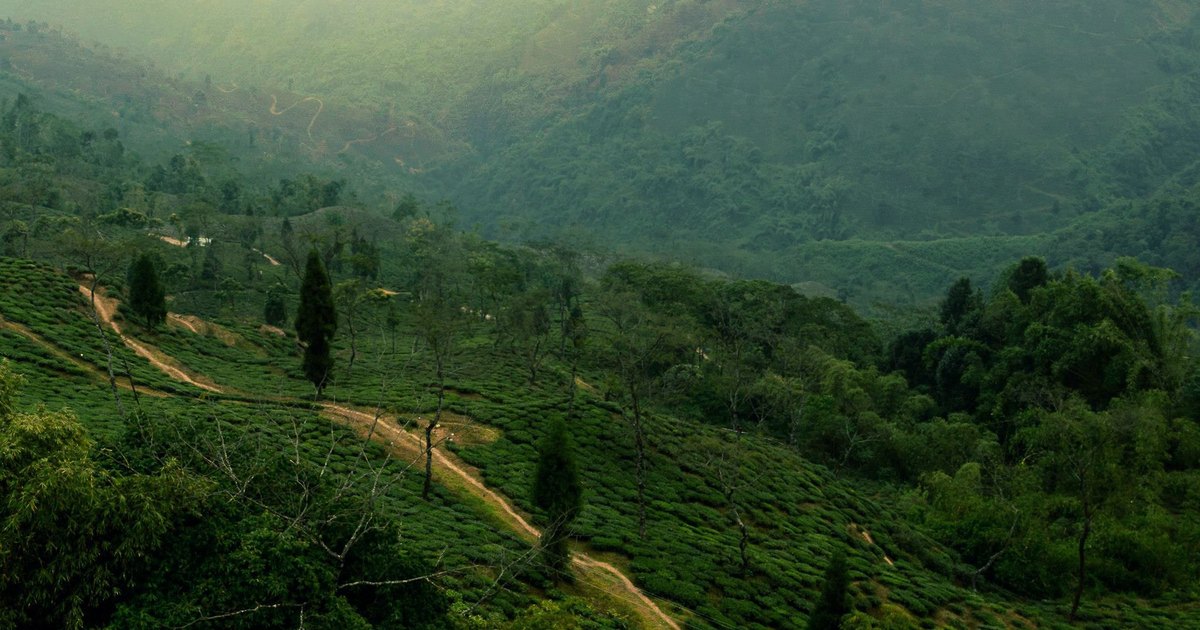
Second flush Darjeeling reaches buyers within weeks of plucking, and the packaging spec you lock now decides whether that muscatel character survives the journey to shelf. The premium positioning a brand charges for lives or dies on barrier performance, format choice, and timing. If your pouch lets oxygen and light degrade the aroma before the customer opens it, the price premium evaporates with the flavour. This guide sets out the barrier targets, format options, and procurement timeline a tea brand needs to ship second flush Darjeeling at the quality its price tag promises.
Most packaging managers treat the second flush as a calendar event their procurement runs straight past. The leaf is plucked, sold at auction or direct, and the pressure is on to pack and dispatch. But second flush Darjeeling is not ordinary tea, and ordinary packaging undersells it. The muscatel aroma that justifies a four-figure-per-kilo price is the single most fragile attribute in the entire portfolio, and it is the attribute packaging is supposed to protect.
When does second flush Darjeeling reach the market?
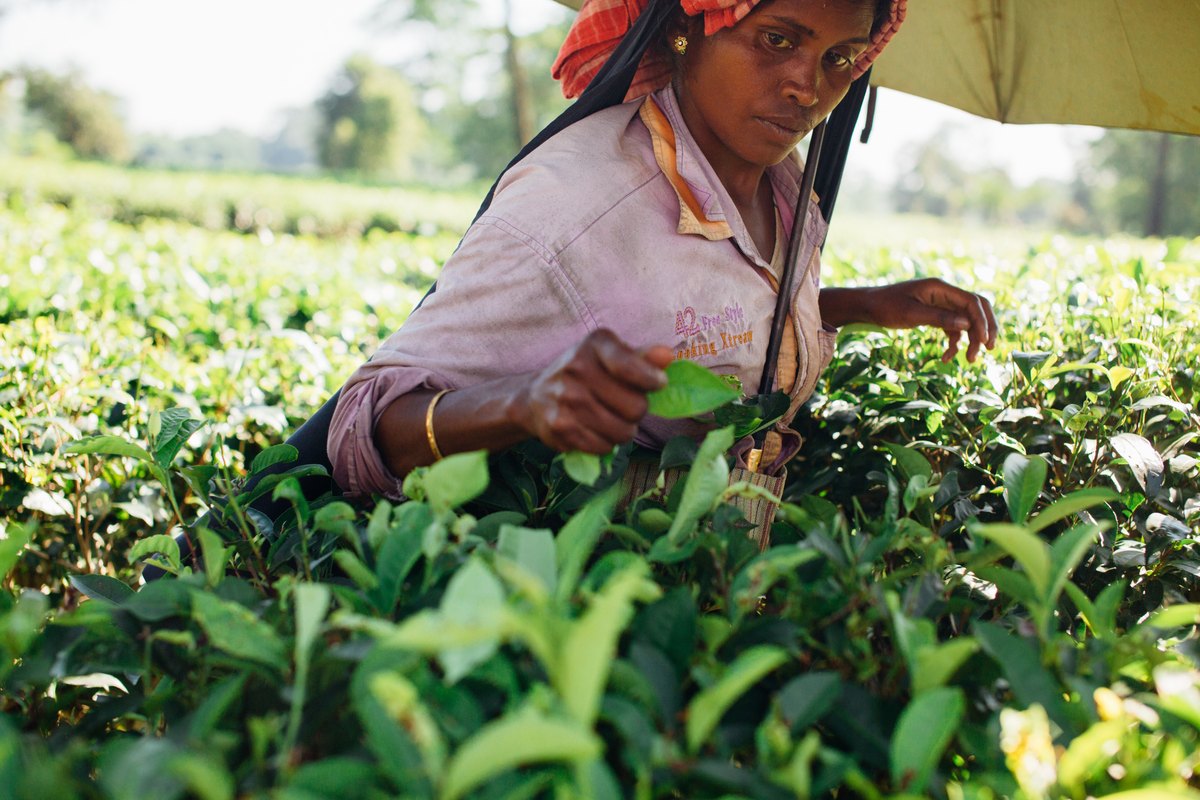
Second flush Darjeeling is plucked from late May through June and reaches domestic and export buyers across June and July, which leaves a packaging manager a narrow window to have specification, material, and artwork ready before volume arrives. The harvest is short and the quality peak is shorter, so packaging cannot be a post-harvest scramble.
Darjeeling produces only a small fraction of India’s tea by weight but commands a disproportionate share of its value. According to the Tea Board of India, the Darjeeling district yields roughly 7 million kilograms of tea annually against a national crop of over 1,300 million kilograms, and the second flush is the most prized of its four seasonal harvests. According to the Tea Board of India, Darjeeling tea was the first Indian product to receive a Geographical Indication, registered in 2004-05, which means the packaging also carries a provenance mark it is legally obliged to use accurately. A large share of the second flush crop is sold for export to Europe and Japan, where buyers pay for muscatel character specifically, so the packaging that protects that character is also protecting an export price. For a packaging manager, the takeaway is simple: this is the one harvest in the calendar where the value locked inside the pack is highest relative to the cost of the pack itself.
What is the second flush? The second flush is the harvest plucked after the first spring growth, typically from late May to June in Darjeeling. The leaf develops a distinctive muscatel flavour and amber liquor that fetches the season’s highest prices, making barrier protection commercially critical.
For a brand, the timeline matters as much as the leaf. A spec locked in March ships clean tea in June. A spec still in supplier negotiation in June ships compromised tea in July, or ships late and misses the premium-buying window entirely.
What makes second flush Darjeeling a premium packaging problem?
Second flush Darjeeling is a packaging problem because its commercial value sits almost entirely in volatile aroma compounds that escape or degrade faster than the leaf itself spoils. The muscatel and floral notes a buyer pays a premium for are carried by terpenes and other volatiles that oxygen, light, and moisture strip away within months under weak barrier protection, long before the tea looks or tests as stale.
This inverts the usual packaging logic. For a fast-moving CTC sachet, the threat is monsoon moisture turning the leaf soggy, and a manager specifies against MVTR benchmarks accordingly. For second flush Darjeeling, moisture still matters, but the dominant enemy is oxidation and light-driven flavour loss. A pouch can hold the leaf physically intact and still let the very thing the customer paid for leak away. The barrier requirement is therefore aroma and oxygen first, moisture close behind.
What is aroma retention? Aroma retention is a package’s ability to stop volatile aromatic compounds from escaping the pack. Tea quality is judged largely by aroma, so a pouch that leaks volatiles produces complaints of staleness even when the leaf is chemically sound. The full set of barrier terms is defined in our tea packaging glossary.
Premium positioning compounds the problem. A customer paying mass-market prices forgives a slightly tired cup. A customer paying for single-estate second flush does not, and a single disappointing pack damages the brand permission that justifies the price. Packaging is the last line of defence on a promise made at the point of sale.
What barrier spec does second flush Darjeeling packaging need?
Second flush Darjeeling needs a high-oxygen and high-light barrier first, with a strong moisture barrier in support, because flavour degradation is driven mainly by oxidation rather than moisture pickup for this leaf grade. The practical targets sit at the demanding end of the tea packaging range, closer to specialty-coffee specification than to commodity tea.
The table below sets out a working barrier specification for premium second flush against a commodity baseline. According to ASTM International test conventions, OTR is measured under ASTM D3985 and MVTR under ASTM F1249, and a supplier’s barrier report should cite the method and test conditions, not just a number.
| Barrier metric | Commodity tea baseline | Premium second flush target | Why it matters |
|---|---|---|---|
| OTR (oxygen, cc/m²/day) | 5–15 | Below 1 | Oxidation strips muscatel volatiles fastest |
| MVTR (moisture, g/m²/day) | 3–5 | Below 1 | Prevents staling and protects crisp leaf character |
| Light transmission | Partial | Near-opaque to UV | Light degrades catechins, flavour, and amber colour |
| Aroma barrier | Moderate | High | Retains the terpene volatiles that define the cup |
According to barrier conventions published by IPPTA and used across Indian flexible packaging, an OTR below 1 cc/m²/day generally requires either a metallised layer, an aluminium foil layer, or a high-barrier coating, since unmodified paper or single-layer plastic cannot reach it. The OTR and MVTR test definitions are worth confirming in any supplier quote, because a barrier figure quoted without its test method and conditions is not a specification, it is a marketing number.
Nitrogen flushing earns its place here more than anywhere else in the tea portfolio. Displacing oxygen in the headspace before sealing pushes residual oxygen below 2 per cent, which directly protects the volatiles that carry value. For a tea where aroma is the product, the flushing cost is easier to justify than it is for a three-month CTC line.
Which premium pouch format signals quality for Darjeeling?
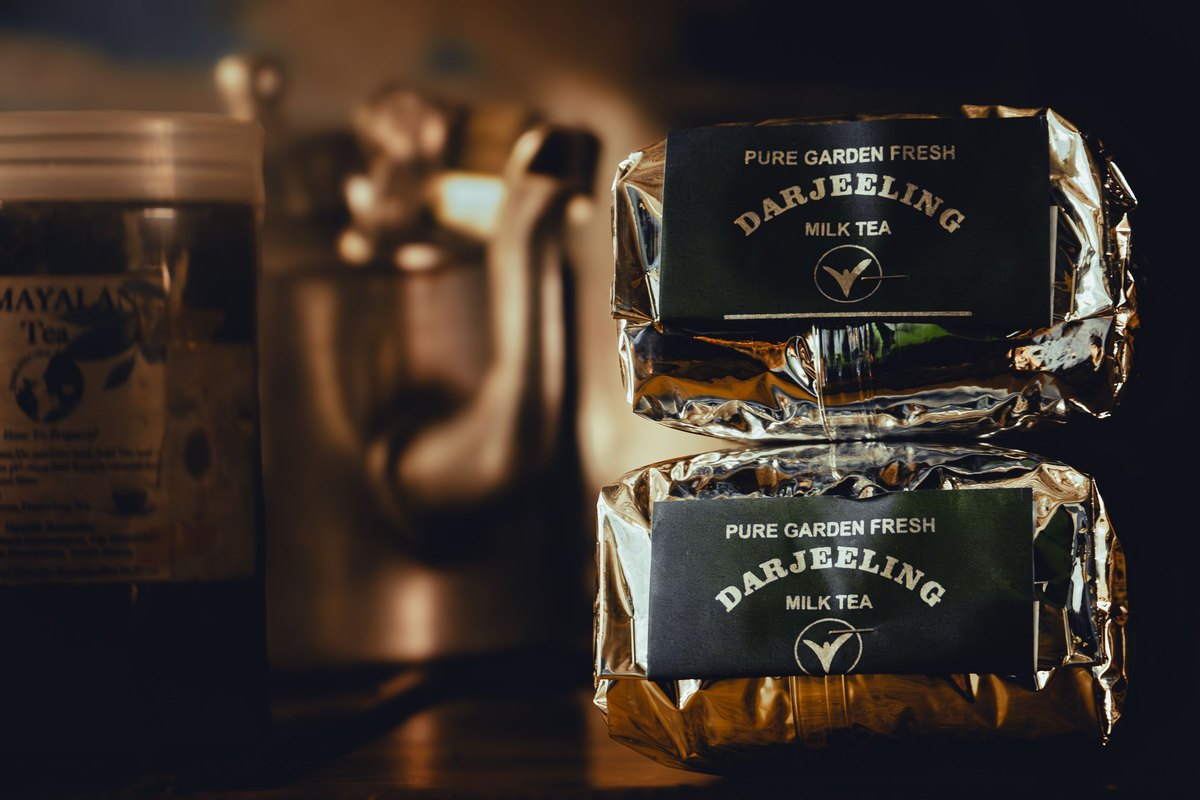
The right premium Darjeeling format balances barrier performance against shelf presence, and for most single-estate SKUs a high-barrier stand-up pouch with a degassing or zipper feature wins, though caddies and rigid formats still hold ground in gifting. Format does two jobs at once for premium tea: it protects the leaf, and it tells the customer on the shelf what the tea is worth before they read a word.
The decision matrix below scores four common premium formats across the criteria that matter for second flush, each rated from 1 (weak) to 5 (strong).
| Format | Barrier ceiling | Shelf appeal | Cost per unit | Recyclability | Suitability for second flush |
|---|---|---|---|---|---|
| Foil laminate stand-up pouch | 5 | 4 | 3 | 1 | 4 — highest barrier, poor end-of-life |
| Metallised paper stand-up pouch | 4 | 4 | 3 | 4 | 4 — strong balance, verify barrier |
| Rigid tea caddy (tin) with inner liner | 4 | 5 | 2 | 3 | 4 — premium gifting, heavier logistics |
| Kraft pouch with high-barrier liner | 3 | 5 | 3 | 3 | 3 — natural look, barrier depends on liner |
| Recommendation | Metallised paper stand-up pouch for retail SKUs; caddy for gifting |
According to flexible packaging industry figures cited by IPPTA, a stand-up pouch reduces material use by 40 to 60 per cent against an equivalent carton while giving the brand block on shelf, which is why premium tea has migrated toward it. The trade-off is that shelf appeal and barrier sometimes pull in opposite directions: a natural kraft finish reads premium and sustainable, but the barrier then rests entirely on the inner liner, not the visible paper. Our chai packaging guide works through the same format choices across price points, and the principle holds: for second flush, never let the aesthetic outrank the barrier.
How early must you lock your packaging spec before harvest?
A premium Darjeeling packaging spec should be locked roughly 8 to 12 weeks before the second flush ships, because barrier validation, material lead time, artwork approval, and a machine trial each consume time that the short harvest window does not give back. Working backwards from a late-June dispatch, the critical path starts in March or early April.
The sequence below is the procurement timeline a brand should run each year for second flush.
- Confirm the barrier specification (OTR, MVTR, light, aroma) against your own shelf-life data, 10 to 12 weeks out.
- Shortlist materials and request barrier test reports with stated test methods, 9 to 11 weeks out.
- Validate food-contact compliance against FSSAI packaging norms and, for export SKUs, the destination market’s rules, 8 to 10 weeks out.
- Approve artwork and GI labelling, including the Darjeeling Geographical Indication mark where eligible, 6 to 8 weeks out.
- Run a machine trial on your form-fill-seal line to confirm seal integrity and speed at the chosen material, 4 to 6 weeks out.
- Confirm volume order and delivery to land packaging before the leaf does, 2 to 4 weeks out.
Skip the machine trial and you discover seal failures on live premium leaf, which is the most expensive moment possible to learn that a material runs poorly on your line. The provenance and EPR obligations that ride on the artwork are not optional either; the EPR rules for tea packaging apply to premium SKUs exactly as they do to mass-market ones, and the registration detail belongs on the pack from day one.
Where paper-based and metallised structures fit premium Darjeeling
Paper-based and metallised-paper structures can carry premium second flush Darjeeling where the barrier specification is validated against the leaf’s real shelf-life needs, but they come with honest limits a brand should weigh before switching from foil. They do not automatically match the absolute oxygen and aroma ceiling of aluminium foil laminate, and their recyclability holds only if the barrier layer separates cleanly during repulping. A paper structure that cannot be separated is a composite waste stream wearing a paper-first label.
Stated plainly: for an ultra-premium export SKU that must hold muscatel character for 18 months or more in variable transit conditions, foil laminate remains the safest barrier choice today, and a brand should not chase a greener material at the cost of the aroma it sells. Validate any alternative against your own cupping data across the intended shelf life before committing. Barrier claims should rest on test reports with stated methods, and recyclability claims on repulping evidence, not on marketing language.
Where the shelf-life requirement allows it, this is the trade-off many premium tea brands are now weighing, and it is the contextual hook for considering a recyclable structure such as Pakka’s FlexC. FlexC is engineered as a paper-based flexible material with metallised paper barrier options, aiming to hold an oxygen and moisture barrier adequate for many premium retail SKUs while sitting in a materially better end-of-life position than conventional foil. For a brand whose customers increasingly read the back of the pack for sustainability as closely as the front for provenance, that recyclability can reinforce the premium story rather than dilute it. The honest caveat stands: it is one option to validate against your specific tea, shelf-life target, and channel, not a universal replacement for foil. The same recyclable-versus-conventional distinctions, and the label terms brands routinely confuse, are unpacked in our guide to compostable, recyclable, and biodegradable tea packaging.
The decision is a portfolio one. A single-estate retail SKU with a 9 to 12 month shelf life and steady turnover is a strong candidate for a high-barrier metallised paper pouch. An ultra-premium export lot demanding two-year stability may justify staying on foil and budgeting the recyclability trade-off honestly. Second flush does not demand one material; it demands that the barrier protects the aroma and the claims on the pack are true.
Frequently asked questions
When is second flush Darjeeling tea harvested and shipped?
Second flush Darjeeling is plucked from late May through June and typically reaches domestic and export buyers across June and July. The premium-buying window is short, so packaging specification and material need to be ready before the leaf is plucked, not afterwards.
What barrier properties does premium Darjeeling tea packaging need?
It needs a high oxygen barrier (OTR below 1 cc/m²/day), a strong light barrier approaching opacity, and a moisture barrier (MVTR below 1 g/m²/day). Oxidation and light degrade the muscatel aroma faster than moisture spoils the leaf, so oxygen and light protection take priority.
What is the best packaging format for premium second flush Darjeeling?
For most retail single-estate SKUs, a high-barrier metallised paper or foil stand-up pouch balances barrier protection with shelf presence. Rigid tea caddies suit gifting where premium feel outweighs logistics cost. The format should never compromise the barrier for aesthetics alone.
How far in advance should a tea brand finalise its second flush packaging?
Lock the packaging specification roughly 8 to 12 weeks before the second flush ships. That window allows for barrier validation, material lead time, FSSAI and export compliance checks, artwork and GI labelling approval, and a machine trial before live premium leaf runs on the line.
Can recyclable or paper-based packaging protect premium Darjeeling tea?
It can, where the barrier is validated against the tea’s real shelf-life needs and recyclability is evidenced by repulping data. For ultra-premium export SKUs needing 18-plus months of stability, foil laminate may still be the safer barrier choice. The right answer depends on tea type, shelf life, and channel.
Last reviewed: June 2026
If you are weighing a paper-based structure for your tea SKUs, our flexC food packaging range sets out the barrier materials we currently make, with specifications you can check against your own MVTR and OTR targets. flexC will not suit every SKU — very long shelf-life export teas may still need foil — so if you are unsure, ask our team for a barrier assessment against your actual shelf-life data.
Browse all Pakka articles.
You may also like