CTC, Orthodox, or Green: Why Each Tea Type Demands a Different Packaging Spec

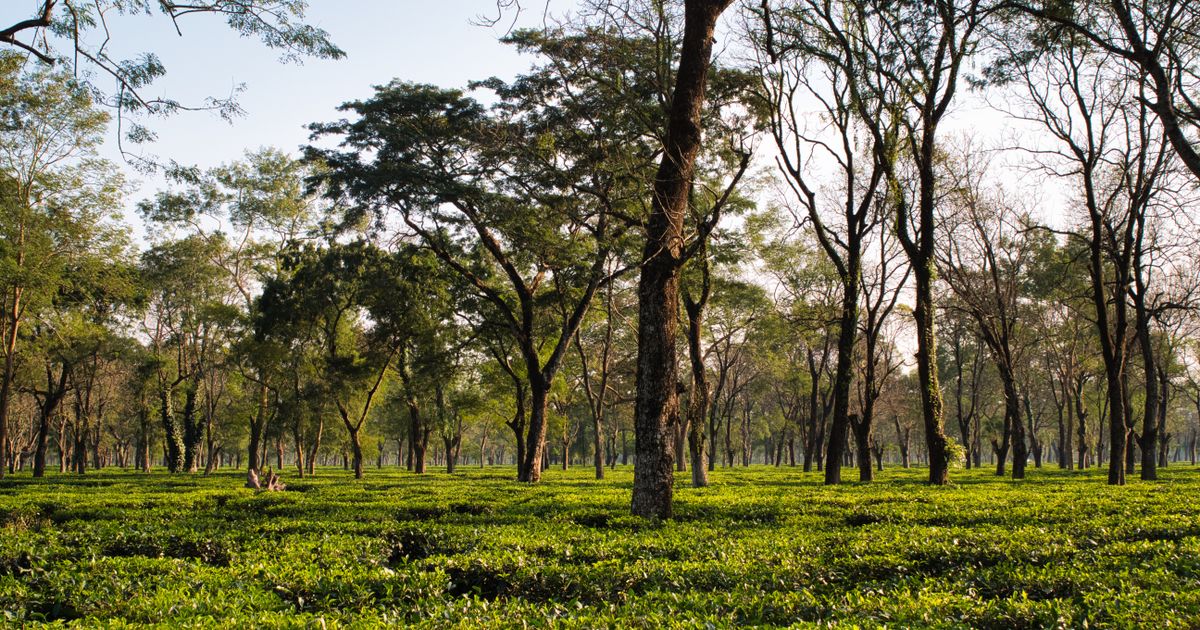
Three teas, three problems. CTC needs to keep moisture out, orthodox needs to keep aroma in, and green tea needs to keep oxygen and light away from the leaf. Specify one barrier for all three and two of them will underperform. This guide sets the packaging priority for each tea type, with the barrier numbers to brief your supplier against.
Most packaging failures in the Indian tea trade are not manufacturing defects. They are specification mismatches: a green tea sealed in a structure meant for CTC, or a premium orthodox lot packed to a moisture-first brief that ignores aroma loss. The processing route each tea takes changes what the leaf is chemically, and that chemistry decides which barrier matters most.
Why does tea type change the packaging spec?
Tea type changes the packaging spec because oxidation level, leaf density and residual volatiles differ sharply between CTC, orthodox and green tea. CTC is fully oxidised and hygroscopic, so moisture is the enemy. Orthodox is oxidised but aroma-rich, so volatile retention leads. Green tea is unoxidised and unstable, so oxygen and light do the most damage.
The processing route is the reason. Oxidation, sometimes loosely called fermentation, is the enzymatic browning step that converts fresh leaf into black tea; green tea skips it entirely. That single difference reshapes the barrier brief.
Oxidation (fermentation): the controlled enzymatic reaction that develops colour and flavour in black tea. CTC and orthodox are oxidised; green tea is not, which is why green tea retains more reactive compounds that oxygen can spoil after packing.
According to the Tea Board of India, CTC accounts for roughly 85–90% of the country’s black tea output, so most Indian packaging lines are tuned for a moisture-first brief by default. That default is wrong for the growing orthodox and green segments. Before you can right-size a barrier you need the core definitions of MVTR, OTR and aroma retention, because those three metrics carry different weight for each tea.
The practical takeaway: do not run one house structure across your whole range. Segment the barrier by tea type first, then optimise cost within each segment. Do it the other way round and you overspend on some SKUs while shortening shelf life on others.
What packaging does CTC tea need?
CTC tea needs a moisture-first barrier, because its small, dense, fully oxidised granules are highly hygroscopic and absorb humidity fast. The controlling metric is MVTR: for the Indian climate, target a structure delivering below 1 g/m²/day so the leaf holds under 7% moisture through a monsoon supply chain.
MVTR (Moisture Vapour Transmission Rate): the rate at which water vapour passes through a packaging wall, in g/m²/day. Lower is better; CTC packed above its moisture ceiling goes flat, cakes, and in humid storage risks mould.
BIS specification IS 3633 for black tea treats moisture as a core quality parameter, and most graders reject lots that climb past roughly 6.5–7% after packing. In Assam and the Dooars, where CTC dominates and ambient humidity runs high for months, the packaging is the last line of defence once the leaf leaves the estate. This is the same moisture-ingress problem covered in depth in our monsoon-proofing MVTR benchmarks, applied specifically to the CTC granule.
Because CTC sells largely through price-sensitive channels (loose tea, economy sachets, mass retail pouches), the barrier has to be cheap per unit as well as tight. That tension defines CTC packaging: moisture defence at a sachet cost of a few paise. Oxygen barrier matters less here than for green tea, since oxidation is already complete, which gives you room to trade some OTR for a lower material cost. For a per-format cost view, see the per-pouch cost breakdown by material.
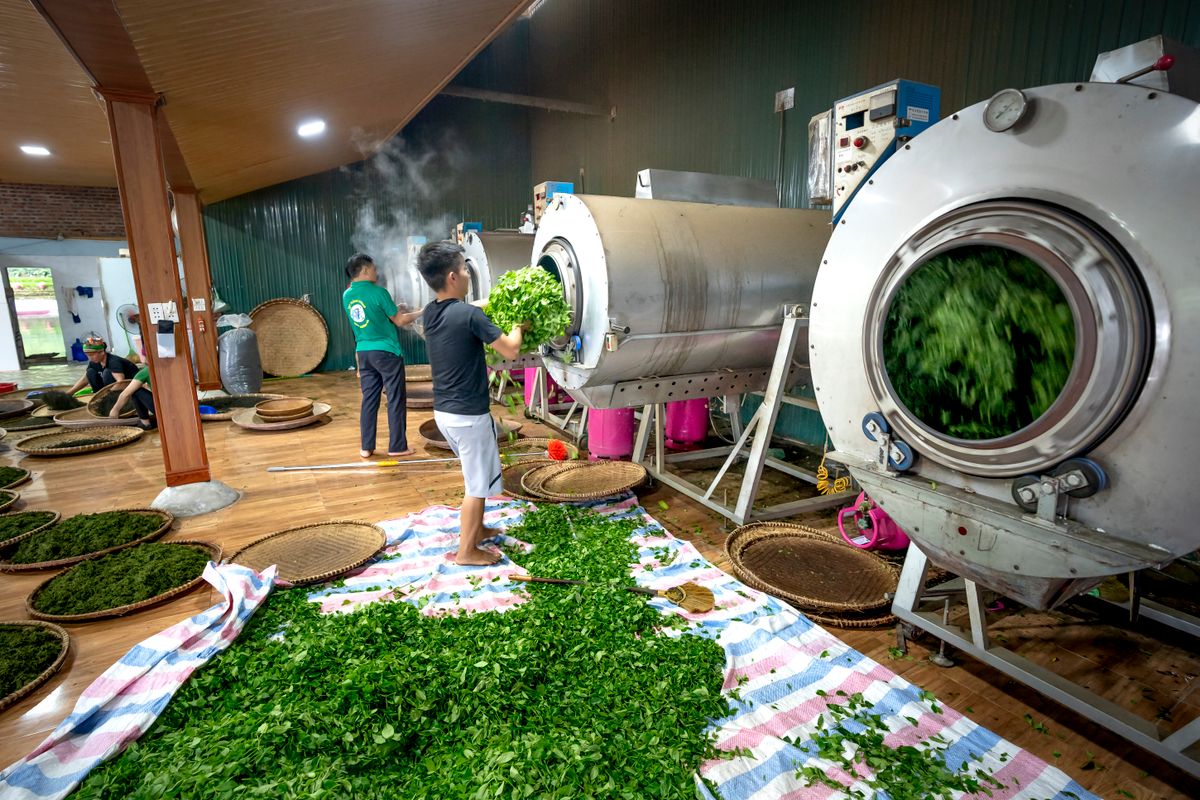
Post-processing moisture content sets the barrier target for CTC tea from Assam.
What packaging does orthodox tea need?
Orthodox tea needs an aroma-retention barrier, because its whole-leaf, twisted style is prized for volatile character that escapes through a weak pack long before the leaf itself degrades. The controlling metrics are OTR and aroma retention rather than raw moisture defence, since consumers judge orthodox on nose first.
Aroma retention: the pack’s ability to hold volatile aromatic compounds inside. A structure can pass its moisture test yet still leak aroma, producing complaints of staleness on leaf that is chemically sound.
Orthodox is where India’s premium and export value concentrates. The Tea Board of India protects Darjeeling as a Geographical Indication, with output of only around 8–9 million kg a year across 87 gardens. It is a scarce, high-value tea, and a stale nose wrecks both positioning and price. Second-flush Darjeeling in particular is bought on muscatel aroma, which is exactly what a low-barrier pack bleeds away; we cover the harvest-timing angle in the second-flush Darjeeling packaging spec.
For orthodox, then, specify a low OTR alongside a genuinely aroma-tight seal, and consider nitrogen flushing for the top tier. According to IPPTA-published barrier work, metallised and foil structures both hold aroma far better than uncoated paper, though they differ on recyclability. That trade-off matters more for a premium brand making sustainability claims than it does for economy CTC.

Orthodox Darjeeling tea is bought on aroma, so aroma retention leads its packaging spec.
What packaging does green tea need?
Green tea needs the tightest barrier of the three, because it is unoxidised and therefore chemically unstable. Oxygen and light degrade its catechins, colour and fresh character faster than in any black tea. The controlling metrics are a very low OTR plus a light barrier, and often nitrogen flushing as standard rather than an upgrade.
OTR (Oxygen Transmission Rate): the volume of oxygen passing through the pack, in cc/m²/day. Green tea’s reactive compounds oxidise on contact, so premium green typically calls for OTR below 1 cc/m²/day.
Green tea is the fastest-growing Indian tea segment on the domestic health wave, yet it is the least forgiving to pack. A structure that keeps CTC perfectly fresh can let green tea fade within weeks, because moisture defence alone does nothing against oxidation or light-driven colour loss. The barrier brief here is a system: oxygen, light and moisture together, not a single number.
Light is the metric packaging managers most often forget. Clear windows and translucent films that look attractive on shelf accelerate the loss of green colour and grassy top-notes. For green tea, an opaque or metallised wall usually beats a clear one on shelf life, even if it costs a little marketing appeal. Where a brand insists on a window for green tea, treat it as a deliberate shelf-life compromise and shorten the stated best-before accordingly.
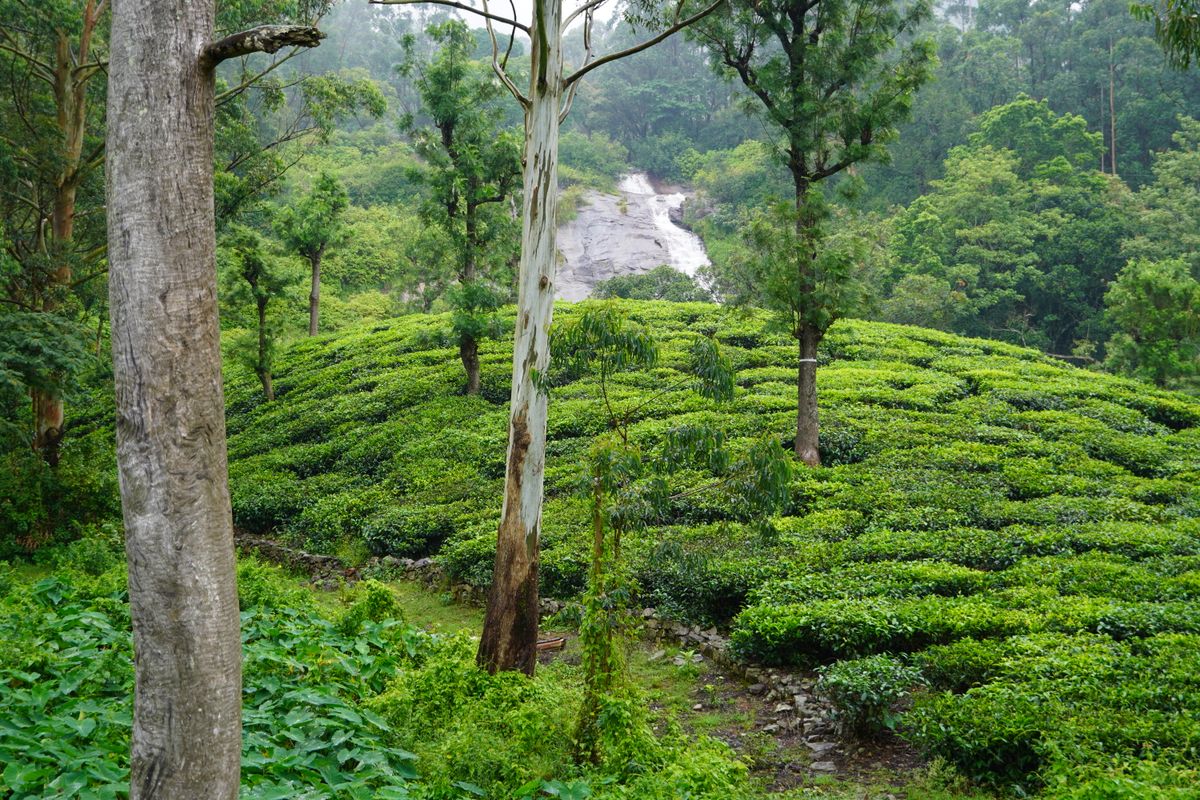
Green tea is unoxidised and needs the tightest oxygen and light barrier of the three.
CTC vs orthodox vs green: barrier spec compared
The decision comes down to which barrier leads for each tea type, and how hard you push the others. The matrix below scores the three teas across the barriers that decide shelf life, so you can brief a distinct structure per segment rather than defaulting your whole range to one house laminate.
| Barrier priority | CTC (Assam / Dooars) | Orthodox (Darjeeling / Nilgiri) | Green (Nilgiri / Himalayan) |
|---|---|---|---|
| Moisture (MVTR) | Critical, <1 g/m²/day | High | High |
| Oxygen (OTR) | Moderate | High, <2 cc/m²/day | Critical, <1 cc/m²/day |
| Aroma retention | Moderate | Critical | High |
| Light barrier | Low | Moderate | Critical, opaque preferred |
| Nitrogen flushing | Rarely needed | Worth it for top tier | Often standard |
| Typical shelf-life target | 6–9 months | 12–18 months | 9–12 months |
| Cost sensitivity | Very high (paise/sachet) | Low–moderate (premium) | Moderate |
| Lead barrier to specify | Moisture | Aroma + oxygen | Oxygen + light |
Read the table by column, not row. CTC is a cost-constrained moisture problem; orthodox is an aroma-and-oxygen problem where budget is available; green is a full-system barrier problem where light is as important as oxygen. A structure engineered for one column will overspend or underperform in the others.
A quick way to self-check a spec, in order:
- Name the lead barrier for the tea type (moisture, aroma, or oxygen-and-light).
- Set the hard number for that lead barrier (e.g. MVTR <1 for CTC).
- Set floor values for the secondary barriers so they are adequate, not gold-plated.
- Decide nitrogen flushing on the top metric only where turnover is slow.
- Cost-optimise within the segment, never across segments.
This ordering keeps you from the two commonest errors: paying foil prices for economy CTC, and shipping green tea in a moisture-only pack that ignores oxidation.
Where metallised paper and paper-based barriers fit
Paper-based and metallised structures do not suit every tea type equally, and it is worth being blunt about the limits before the benefits. For high-end green tea and long-shelf-life export orthodox that demand OTR at or below 1 cc/m²/day for 18-plus months, a full aluminium foil laminate still gives the most headroom, and a paper-first structure may fall short of that extreme. If your spec sits at that end, foil remains the safe default.
For the large middle of the Indian market, the picture changes. Metallised paper is a paper substrate carrying a thin vacuum-deposited aluminium layer, which gives barrier performance without a separate foil ply. It is recyclable in more streams than foil laminate and reaches MVTR and OTR values adequate for 6–12 month shelf life in moderate conditions. That envelope covers most CTC, a good deal of domestic orthodox, and green tea intended for reasonably quick turnover.
This is where Pakka’s flexC paper-based barrier packaging is designed to sit: matching the moisture-first brief of CTC and the mid-tier orthodox and green requirement, while cutting the EPR liability and non-recyclability that come with conventional foil. It will not out-barrier foil at the extreme long-life end, and we will say so on a spec-by-spec basis rather than oversell it. What it does well is let a brand hold adequate shelf life and drop the multi-material foil laminate that increasingly carries a regulatory and reputational cost. We quantify that switch in the cost breakdown, and it interacts with your format choice by SKU strategy. Compliance still runs through FSSAI food-contact rules whichever material you choose, a point we expand for the mass market in our chai packaging guide.
If you are weighing a move away from foil for your CTC, orthodox or green lines, the clearest next step is to match your lead barrier against a paper-based option. You can review the flexC food packaging range to see where it fits your spec, or talk to our packaging team about a barrier test for your specific tea type before you commit a line.
Last reviewed: July 2026.
Frequently asked questions
Does green tea really need better packaging than black tea?
Yes. Green tea is unoxidised, so its catechins and colour compounds oxidise on contact with oxygen and degrade under light, whereas fully oxidised CTC and orthodox black teas are chemically more stable. Green tea typically needs OTR below 1 cc/m²/day plus a light barrier, making it the most demanding of the three to pack well.
What MVTR should I specify for CTC tea in India?
Target a structure delivering below 1 g/m²/day MVTR for CTC in Indian conditions, so the granule holds under about 7% moisture through a humid, monsoon-affected supply chain. CTC’s small dense particles are highly hygroscopic, and moisture is its single most important barrier, more so than oxygen, since oxidation is already complete.
Can one packaging structure work for all three tea types?
You can run one structure across all three, but two of them will be sub-optimal. A moisture-first CTC laminate under-protects green tea against oxidation and light, while a premium aroma-tight orthodox spec overspends on economy CTC. Segment the barrier by tea type first, then cost-optimise within each segment.
Is orthodox tea packaging different from Darjeeling packaging?
Darjeeling is a type of orthodox tea, so the barrier logic is the same: aroma retention and low oxygen transmission lead, because orthodox is bought on nose and character. Darjeeling simply pushes it further, since second-flush muscatel aroma is the whole value proposition and a weak seal bleeds it away fastest.
Does paper-based packaging work for tea, or do I need foil?
Paper-based and metallised structures work well for most CTC, mid-tier orthodox and quick-turnover green tea, reaching adequate MVTR and OTR for 6–12 month shelf life. For extreme long-life export orthodox or premium green needing 18-plus months at OTR below 1, aluminium foil still gives the most headroom. Match the material to your lead barrier and shelf-life target rather than defaulting either way.
Browse all Pakka articles.
You may also like