Can Your Existing FFS Machine Run Paper-Based Tea Pouches? A Compatibility Guide


Most existing form-fill-seal machines can run paper-based tea pouches, but not on the settings you use today. Paper insulates where film conducts heat, and it is stiffer than the laminate your line was commissioned for. What you need to change is mostly settings, sensors, and tooling radii rather than the machine itself.
That matters, because “will I have to replace my line?” is the question that stalls almost every paper-packaging evaluation in the Indian tea industry. The answer is usually no. The less comfortable part is that you will lose some speed, and you will spend a shift or two finding your settings again.
Can your existing FFS machine run paper-based tea pouches?
Yes, in most cases. A vertical or horizontal form-fill-seal machine built for foil or plastic laminate will run a paper-based laminate after adjustments to seal temperature, dwell time, jaw pressure, and web tension. Machines with servo-driven jaws and adjustable forming tooling convert most easily. The pouches that resist conversion are high-speed stick packs and very small sachets, where the geometry leaves no room for the extra dwell that paper needs.
Definition, form-fill-seal (FFS): a packaging machine that forms a pouch from a flat reel of material, fills it with product, and seals it in one continuous sequence. Vertical FFS machines form the pouch over a collar and fill from above. Horizontal FFS machines run the web flat and are common for sachets and overwraps.
The reason paper behaves differently is straightforward. Your sealing jaws do not seal the paper. They heat the sealant layer laminated to its inside face, and that heat has to travel through the paper first. Paper is a poor thermal conductor, which is exactly why it works as a cup sleeve. On a tea packaging machine, that same property means heat reaches the sealant slower and less evenly than it does through a foil laminate, where the aluminium layer conducts almost instantly. The practical consequence is that a paper laminate needs either a hotter jaw or a longer dwell to reach the same seal integrity, and the paper’s grammage decides how much of each. A heavier paper insulates more and asks for more of both. This single thermal difference explains most of what follows: the speed loss, the limits on jaw pressure, and the reason high-speed stick packs are the hardest tea format to convert.
Everything else in this guide follows from that fact, plus a second one: paper is stiffer and less elastic than film, so it forms, tracks, and tensions differently.
What actually changes when you swap film for paper on a tea line?
Five things change: seal temperature, dwell time, jaw pressure, web tension, and how your registration sensor reads the web. Nothing else on a standard tea packaging line is usually affected, and none of the five requires a machine rebuild.
Seal temperature and dwell cause the most trouble during a first trial. Because heat has to conduct through the paper, the jaws typically need to run hotter, hold longer, or both. Converters generally report needing an increase of roughly 10 to 20°C over the equivalent film setting, though the true figure depends on your paper’s grammage and your sealant. Higher grammage insulates more. If you cannot raise temperature without scorching the paper’s outer surface, you buy the seal with dwell time instead, and dwell time is speed.
Jaw pressure is the next one to get wrong. Film tolerates aggressive knurled jaws in a way paper does not. Too much pressure on a fibrous substrate crushes fibres at the seal edge and creates a weak line that fails later in transit. Lower pressure with longer dwell almost always beats higher pressure with a short one.
Web tension needs to come down, usually by a noticeable margin, because paper has far lower elongation than plastic film. A tension setting tuned for film will stretch nothing and will instead concentrate stress at the reel edges, causing tears at splices and web breaks at the forming shoulder.
Registration is the one that surprises people. Eye-mark sensors are calibrated for contrast against a glossy printed film, and on uncoated or kraft-toned paper the sensor may simply not see the mark. The fix is cheap: reprint the eye mark with higher contrast, or switch to a sensor better suited to matte substrates.
Forming is the last piece. Paper’s stiffness fights the forming collar, though it also holds a crease beautifully once formed, which is why paper pillow packs look crisper than film ones. You often need a larger forming radius, and sometimes a scored crease line, to get the web round the shoulder without cracking.
If any of the terminology here is unfamiliar, our tea packaging glossary defines the barrier and sealing terms this guide uses.
Which machine parts need modification for paper tea pouches?
Most lines need nothing more than new settings and a sensor tweak. The parts that occasionally need physical modification are the forming shoulder, the seal jaw faces, and the reel splice arrangement. The table below sorts them by how likely you are to actually touch them.
| Machine element | Change needed for paper | Physical modification? | Typical difficulty |
|---|---|---|---|
| Seal jaw temperature | Increase, commonly by 10 to 20°C | No, settings only | Low |
| Dwell time | Increase; costs cycle speed | No, settings only | Low |
| Jaw pressure | Reduce to avoid fibre crushing | No, settings only | Low |
| Web tension | Reduce; paper has low elongation | No, settings only | Low |
| Eye-mark sensor | Recalibrate or raise mark contrast | Rarely, sensor swap | Low |
| Forming collar/shoulder | Larger radius for stiffer web | Sometimes | Medium |
| Jaw face pattern | Smoother face, less aggressive knurl | Sometimes | Medium |
| Reel splicing | Paper splices tolerate less tension | Occasionally | Medium |
| Dust extraction | Paper sheds fibre; sensors foul | Occasionally | Medium |
The dust point is the one nobody warns you about. Paper sheds fibre as it runs, and that fibre finds photo-eyes, seal jaws, and filling augers. Lines running paper generally need more frequent cleaning than the same line running film. Plan the maintenance interval and it stays a non-issue. Ignore it and you will chase phantom registration faults for a week.
Notice what is absent from that table: the drive, the frame, the filling system, and the control architecture. A tea packaging machine’s expensive parts are the parts paper does not touch.
How much line speed will you lose running paper tea pouches?
Expect a speed reduction of roughly 10 to 30% on most lines, driven almost entirely by the extra dwell time the seal needs. Well-matched paper laminates on servo-driven machines land at the low end. High-speed sachet lines with short seal windows land at the high end, and some cannot close the gap at all.
The arithmetic is worth doing before you get attached to a material. If your vertical line runs 60 pouches per minute on foil laminate and drops to 48 on paper, that is a 20% loss. Over a two-shift day, you either accept fewer pouches or you add hours, and either way it is a real cost that belongs in your business case alongside material price. The mistake worth avoiding is comparing materials on price per kilogram alone. A paper laminate that costs less per kilogram but runs 25% slower can be more expensive per pouch delivered, once you have priced the lost output and the labour attached to the extra hours. Work the comparison in pouches per shift rather than rupees per kilogram, because pouches per shift is the unit your plant actually produces and sells.
This is why machine compatibility and cost cannot be assessed separately. We break the underlying numbers down in our per-pouch tea packaging cost analysis, which is the right document to read alongside this one.
Two factors move you toward the good end of that range. The first is sealant choice, since a sealant formulated for a lower initiation temperature closes much of the dwell gap, and it is worth asking your converter about explicitly. The second is machine vintage. Servo-driven jaws with independent temperature and dwell control give you room to tune, whereas older cam-driven machines couple dwell to cycle speed, leaving temperature as the only lever you have.
Which tea pouch formats convert to paper most easily?
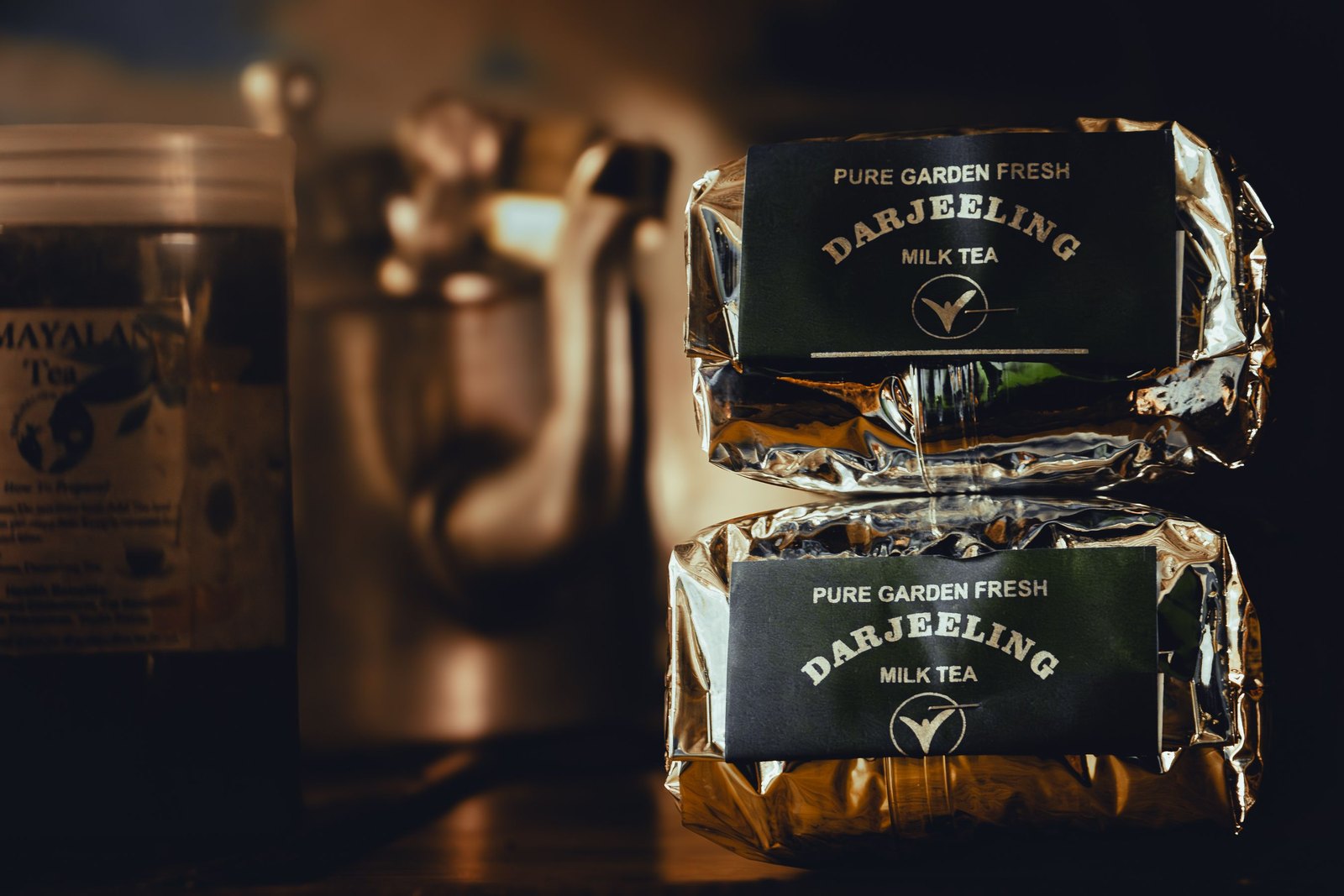
Pillow packs and stand-up pouches convert most easily, and stick packs and high-speed small sachets are the hardest. Format geometry, not the paper itself, is what decides. The matrix below scores five common tea formats out of 5 across the four factors that determine conversion difficulty.
| Format | Seal window tolerance | Forming tolerance | Speed retention | Overall conversion ease |
|---|---|---|---|---|
| Pillow pack (loose leaf/CTC) | 5 | 5 | 4 | Easiest (5) |
| Stand-up pouch (premium retail) | 4 | 4 | 4 | Straightforward (4) |
| Overwrap / carton wrap | 4 | 5 | 4 | Straightforward (4) |
| Flat sachet (single serve) | 3 | 3 | 3 | Workable (3) |
| Stick pack (high-speed) | 2 | 2 | 2 | Difficult (2) |
Recommendation: start your paper conversion with pillow packs or stand-up pouches. They carry generous seal windows, forgiving geometry, and the slowest line speeds, which is the combination paper wants. Prove the material there, then decide whether the harder formats are worth the engineering. Attempting a stick-pack conversion first is the most common way these projects get abandoned.
Stick packs are difficult for a specific reason. The format’s long, narrow fin seal is made at very high cycle rates, so the seal window is measured in fractions of a second, and paper needs more of that scarce time than film does. It can be done, but it makes a poor first project. If you are still choosing between structures, our guide to tea pouch format selection by SKU strategy works through the trade-offs from the brand side rather than the engineering side.
Your tea type matters here too. A CTC dust destined for a pillow pack has a very different barrier and format profile from an orthodox whole leaf in a stand-up pouch, and we set those differences out in our breakdown of packaging specs by tea type.
How do you run a paper pouch trial on your existing line?
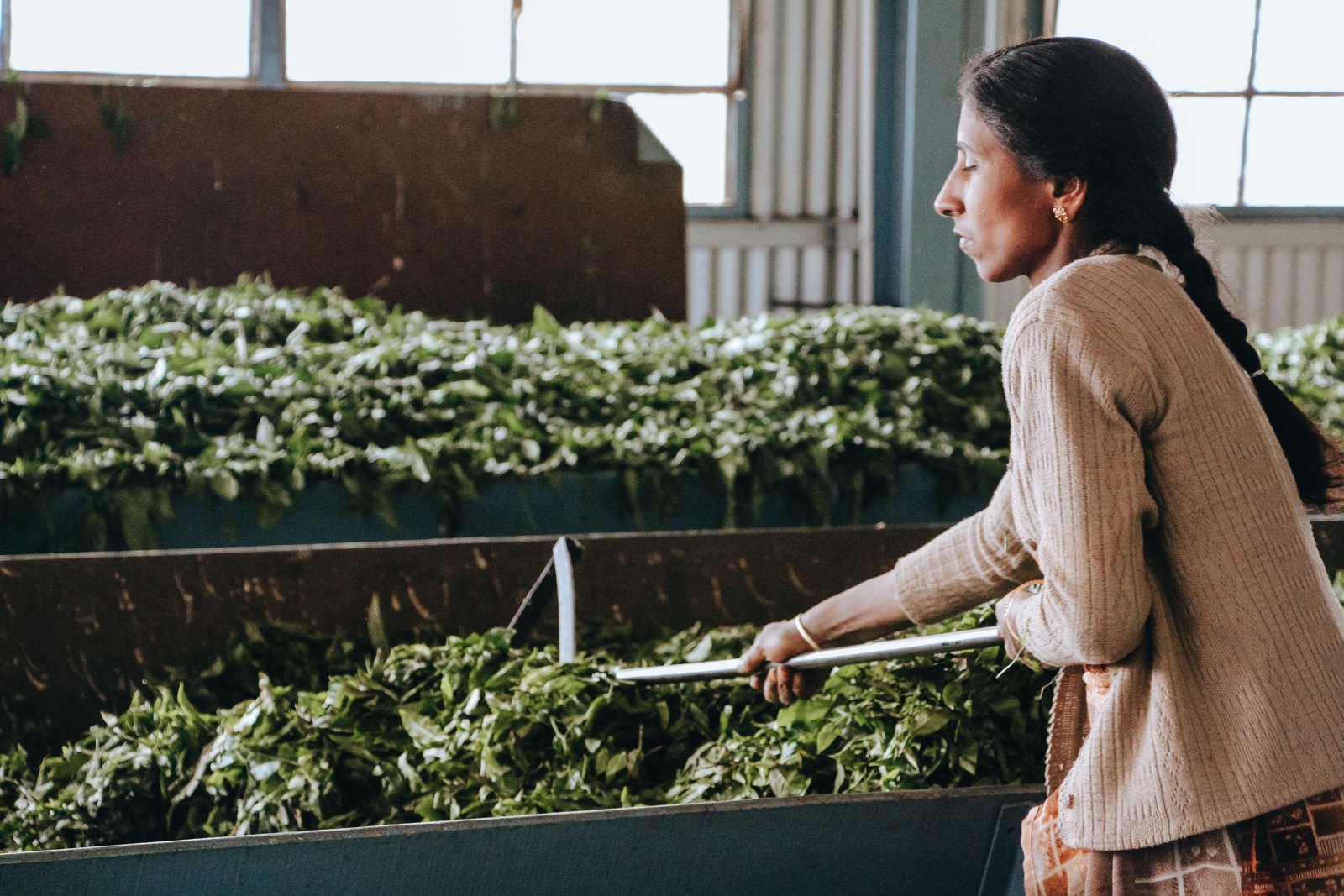
Run a structured trial over one shift with a defined settings ladder, and test the seals rather than eyeballing them. Most failed paper trials fail because someone loaded a reel, ran it at film settings, saw a bad seal, and concluded the material does not work, when the trial never had a protocol to begin with.
Follow this sequence:
- Get the material specification first. Ask your converter for grammage, sealant type, seal initiation temperature, and recommended jaw pressure. Without a seal initiation temperature you are guessing at your starting point.
- Book a dedicated slot. Use at least one full shift on a line that is not under production pressure, and take a full reel. Half a reel of trial material tells you nothing about splices or tension drift.
- Reduce tension before you start. Set web tension below your film setting from the first metre. Tension tears are the most common early trial failure and the easiest to prevent.
- Ladder the seal settings. Start at your converter’s recommended temperature. Run 50 pouches. Raise by 5°C. Repeat across the range, marking each batch. Change one variable at a time.
- Test seal strength properly. Pull seals against ASTM F88, the standard test method for seal strength of flexible barrier materials. Where a leak matters, add a dye penetration check per ASTM F1929. A seal that looks right and peels at 40% of target is the failure that reaches your customer.
- Check the hot tack separately. ASTM F1921 covers hot tack strength, which is the seal’s integrity while still hot. Tea drops onto a seal that has not yet cooled, so hot tack is what stops product contaminating the seal on a vertical line.
- Run a transit trial. Take sealed pouches through your real distribution rather than a lab shelf. Seal failures show up under vibration and stacking pressure, particularly in monsoon humidity.
- Record the settings ladder. Write down the winning combination of temperature, dwell, pressure, and tension. This document is the entire deliverable of the trial.
Step 7 deserves emphasis in the Indian context. A seal that holds in an air-conditioned QC room in February can behave differently on a truck to Guwahati in July, which is why we treat moisture separately in our monsoon MVTR benchmarks.

What the regulations require from a paper tea pouch
Paper does not change your compliance obligations, but it does change which clauses bite. Under the FSSAI Food Safety and Standards (Packaging) Regulations, 2018, printing ink must not come into contact with the food surface. That matters more on paper, because ink can migrate through an uncoated fibre structure in a way it cannot through foil. Your converter’s barrier coating and ink system have to be assessed together rather than separately.
According to the Tea Board of India, the country produces over 1.3 billion kilograms of tea a year, with Assam alone accounting for roughly half of it. That scale is why packaging decisions in this industry compound. A per-pouch change multiplied across a national CTC volume becomes a very large number in either direction.
The end-of-life position also shifts. Under the Plastic Waste Management (Amendment) Rules, 2022, administered by the Central Pollution Control Board, brand owners carry Extended Producer Responsibility obligations on plastic packaging, with recycling targets that rise year on year. A paper-first structure changes what you are filing and paying against, which we cover in detail in our guide to EPR obligations for tea packaging. If you export, the food-contact documentation is a separate exercise again, set out in our decoding of EU Regulation 1935/2004.
Where paper-based barrier structures fit
Paper-based barrier laminates are a real option for a large part of the Indian tea market, and a poor option for part of it. The limitation deserves stating before the benefit.
For teas needing 18 to 24 months of shelf life in extreme humidity, or for very high-speed stick-pack lines, an aluminium foil laminate remains the better engineering answer. Paper structures target the moderate-to-good barrier band, and no amount of enthusiasm changes that. If a supplier tells you paper matches foil at the top of the barrier range, treat the claim with suspicion.
Where paper does earn its place is the wide middle: teas with 9 to 12 month shelf-life targets, pillow packs and stand-up pouches, premium positioning, and brand owners carrying EPR exposure on flexible plastic. That is the context in which Pakka’s flexC paper-based packaging is worth evaluating. It runs on standard form-fill-seal equipment with the adjustments described above, which keeps the conversation about settings and a trial rather than capital expenditure. Its recyclable paper-first structure also changes the EPR arithmetic that now sits on every Indian brand owner’s desk.
A trial on one SKU is a better next step than a switch. Run it on your line, measure it against ASTM F88, and keep your real shelf-life target in front of you. If the numbers do not work for a given tea, they do not work, and it is better to learn that in a shift than in a shipment.
Frequently asked questions
Do I need a new machine to run paper-based tea pouches?
Usually not. Most vertical and horizontal form-fill-seal machines run paper laminates after changes to seal temperature, dwell time, jaw pressure, and web tension. Physical modification is limited to the forming shoulder, jaw faces, or splicing arrangement, and even those are occasional rather than routine. The drive, frame, and filling system are unaffected.
How much slower is a paper tea pouch on an FFS line?
Plan for 10 to 30% slower, because the seal needs more dwell time when heat has to conduct through paper rather than foil. Servo-driven machines with a well-matched low-initiation sealant sit at the low end of that band. High-speed stick-pack lines sit at the top of it, and a few cannot recover the speed at all.
What temperature should I seal paper tea pouches at?
Start at the seal initiation temperature your converter specifies, then ladder upward in 5°C steps and test each batch. Converters commonly report needing 10 to 20°C above the equivalent film setting, but grammage and sealant choice move that figure enough that a published number is no substitute for a trial on your own line.
Why is my paper pouch failing at the seal?
The three usual causes are insufficient dwell time, excessive jaw pressure crushing the fibres at the seal edge, and web tension left at the film setting. Test against ASTM F88 rather than judging by eye, since a seal that looks sound can peel well below target and only fail once the pouch is in transit.
Can paper tea pouches match foil for shelf life?
Not at the top of the barrier range. For 18 to 24 months of shelf life in high humidity, an aluminium foil laminate still performs better. Paper-based barrier structures suit the 9 to 12 month band, which covers a large share of Indian tea SKUs but genuinely not all of them.
Last reviewed: July 2026
Considering a paper pouch trial on your line? Start with one forgiving format, one SKU, and a proper settings ladder before you commit to anything wider. Foil still wins at the extreme barrier end, and an honest assessment saves money on both sides. Explore Pakka’s food packaging range to see where flexC fits your formats, or contact our team to discuss a machine trial for your tea SKUs.
Browse all Pakka articles.
You may also like