Pan Masala and Mouth Freshener Packaging Glossary: 20 Terms for Brand and Compliance Managers

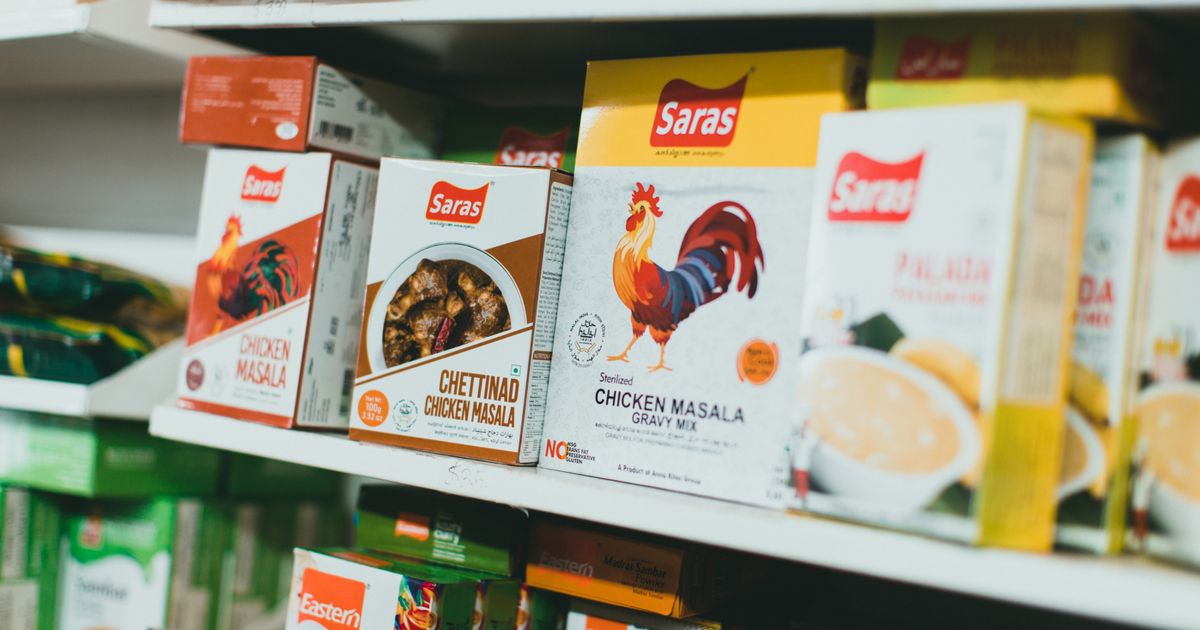
Pan masala and mouth freshener packaging sits at the intersection of two vocabularies: a regulatory one built around plastic-waste rules and a 2026 food-safety packaging amendment, and a technical one built around barrier science and sachet machinery. This glossary defines the twenty terms a brand owner, procurement head or compliance lead needs to read a spec sheet, a supplier claim or a gazette notification without being misled.
Each definition below states what the term means and why it matters for this specific category, where the product is a powder or a seed mix whose entire value is its aroma, and where the governing law is older and more contested than the recent headlines suggest. Where a term has a live regulatory status, the definition names the instrument, its number and its date, and says plainly whether it is in force.
Updated 9 October 2026: an earlier version of this article described the FSSAI Packaging Amendment 2026 as a draft. It was notified in the Gazette of India on 10 August 2026 and is in force. The sections below have been corrected.
Which rules and instruments govern pan masala packaging?
Two instruments now restrict material for pan masala packaging. The Plastic Waste Management Rules 2016 have prohibited plastic for these products since 2016. The FSSAI Packaging Amendment 2026, in force since 10 August 2026, adds pan masala to Schedule IV of the food packaging regulations and applies the same PWM clauses. Keeping the two apart helps, because they sit in different laws.
The table below summarises the instruments that matter for this category and, the status of each.
| Instrument | Number and date | Status | What it does for this category |
|---|---|---|---|
| PWM Rules 2016, Rule 4(1)(f) and 4(1)(i) | G.S.R. 320(E), 18 Mar 2016 | In force since 2016, largely unenforced | Prohibits plastic in any form for pan masala packaging |
| FSSAI Packaging Amendment 2026 | F. No. RCD-09002/1/2026, notified 7 Aug 2026, Gazette 10 Aug 2026 | In force since 10 Aug 2026 | Adds pan masala to Schedule IV: paper-based material free from plastic, foil and metallised layers, or tin or glass |
| PWM Rule 11 marking | G.S.R. 73(E), 23 Jan 2025 | In force, effective 1 Jul 2025 | Requires barcode, QR or unique number on plastic packaging |
| PWM (Amendment) Rules 2026 | G.S.R. 237(E), 31 Mar 2026 | In force | Raises Category III MLP recycled-content target from 5% to 10% by 2028-29 |
| GST on Retail Sale Price | Effective 1 Feb 2026 | In force | Taxes pan masala at 40% of printed RSP, making print reliability a tax matter |
PWM Rules 2016
The Plastic Waste Management Rules 2016 were notified as G.S.R. 320(E) on 18 March 2016 under the Environment (Protection) Act 1986. Rule 4(1)(f) prohibits plastic sachets for storing, packing or selling gutkha, tobacco and pan masala, and Rule 4(1)(i) prohibits plastic in any form in any package for those products. Both are in force and have been since 2016. The commercially relevant fact is that this absolute ban is comprehensively unenforced: pan masala ships nationwide in metallised plastic laminate today. This is the instrument that actually restricts material for the category, and it is ten years old, not recent.
FSSAI Packaging Amendment 2026
The Food Safety and Standards (Packaging) Amendment Regulations, 2026, File No. RCD-09002/1/2026-Regulatory-FSSAI, amend the FSS (Packaging) Regulations 2018. A draft was published for consultation on 28 April 2026. The final notification is dated 7 August 2026 and was published in the Gazette of India on 10 August 2026. It is in force from that date, and no separate transition period has been reported. It inserts pan masala at Sl. No. 11 of Schedule IV. The entry names paper, paperboard, cellulose or other naturally derived materials that are free from plastic (polyethylene, polypropylene, polyester, PVC and other synthetic polymers, copolymers or laminates) and free from aluminium foil or metallised layers. Tin or glass containers are permitted alternatives. The entry also applies clauses (f) and (i) of PWM Rule 4(1). Its practical effect is a shift of forum: the existing plastic prohibition now also sits in food law, which FSSAI and state food safety officers enforce through licensing. Our pan masala packaging rules explainer sets out how the two instruments fit together.
Schedule IV (FSS Packaging Regulations)
Schedule IV of the Food Safety and Standards (Packaging) Regulations 2018 is titled “List of suggestive packaging materials”. Its proviso reads that it is “an indicative list not restricting the use of any other packaging material complying with the specified standards”. That is how the parent regulations describe the schedule. The pan masala entry is now notified. It names paper-based materials free from plastic, foil and metallised layers, permits tin or glass, and incorporates PWM Rule 4(1)(f) and (i). Brands should treat plastic, foil and metallised packs for pan masala as non-compliant and take legal advice on any edge case.
PWM Rule 11 Marking
Introduced by G.S.R. 73(E) of 23 January 2025 and effective 1 July 2025, PWM Rule 11 requires plastic packaging to carry a barcode, QR code or unique number enabling traceability. It is material-neutral and in force, which makes it a compliance cost of remaining on plastic rather than a restriction on it. For a brand still running plastic laminate, it is one of the few marking obligations in this space that genuinely applies now.
RSP (Retail Sale Price) Declaration
The Retail Sale Price is the maximum retail price that must be declared on the pack. From 1 February 2026, pan masala and gutkha are taxed at 40% GST on Retail Sale Price rather than on transaction value, with compensation cess set to nil. Because the levy is calculated on the printed price, RSP legibility and print reliability on the pouch carry direct tax consequences, which is a production argument for a substrate that prints cleanly.
Form GST SRM-I
Form GST SRM-I is the machine registration return introduced by Notification 04/2024-Central Tax of 5 January 2024. It requires pan masala and tobacco manufacturers to declare packing machine make, model, capacity and electricity consumption, with penalties up to one lakh rupees and CCTV retention of forty-eight months. It means a packing line change carries a compliance paper trail, which is a practical constraint on switching material or machinery that content in this category often overlooks.
What do EPR and MLP mean for a brand owner?
Extended Producer Responsibility and Multi-Layered Plastic are the two terms that decide what a pan masala or mouth freshener brand owner must register, file and pay for its packaging. Unlike the long-unenforced PWM plastic ban for pan masala, these obligations are enforced and dated. A brand owner carries them regardless of who converts or supplies the packaging, which is why they belong in every procurement conversation.
MLP (Multi-Layered Plastic)
Multi-Layered Plastic is packaging with at least one layer of plastic as the main ingredient combined with one or more layers of other material, as defined under the Plastic Waste Management Rules. MLP sits in EPR Category III. Whether a paper-based laminate escapes the MLP definition turns on its construction, and a polymer sealant layer can pull it back in. The 2024 amendment, G.S.R. 201(E) of 14 March 2024, omitted the words “metallised layers or” from the multi-layered packaging definition in rule 3, clause (n), which is verifiable in the gazette. That resolves a narrow wording question but does not settle whether a given paper structure sits inside or outside Category III, a question that still turns on the main-ingredient test and needs legal review case by case.
EPR (Extended Producer Responsibility)
EPR is the obligation on producers, importers and brand owners to finance and account for end-of-life collection and recycling of the packaging they place on the market, registered and reported through the CPCB portal. Category III multi-layered plastic carries recycled-content targets rising from 5% in 2025-26 to 10% in 2028-29 under G.S.R. 237(E) of 31 March 2026, which is in force. Unlike the long-unenforced PWM plastic ban for pan masala, EPR obligations and their deadlines are enforced and citable. The plastic waste management rules guide covers the category structure and filing mechanics in full, and the parallel EPR obligations for tea packaging walks the same registration process for a related category.
PIBO (Producer, Importer, Brand Owner)
PIBO is the set of three registration categories under India’s EPR framework for plastic packaging. A brand owner placing packaged pan masala or mouth freshener on the market registers as a brand owner and carries EPR obligations for that packaging regardless of who converts or supplies it. The distinction matters because a brand that outsources conversion sometimes assumes the obligation sits with the converter; for brand-owner packaging it does not.
Migration (Food Contact)
Migration is the transfer of substances from packaging into food. Overall and specific migration limits apply to food-contact materials, evidenced by supplier declarations of compliance and testing against appropriate simulants. Pan masala and mouth freshener contain essential oils and lipophilic actives, so fatty and alcoholic simulants can be the relevant test conditions rather than aqueous ones. A migration certificate tested against the wrong simulant is a common and quiet compliance gap in this category.
What barrier terms decide shelf life and aroma retention?
The barrier terms are where pan masala and mouth freshener packaging is genuinely hard. The product proposition is aroma, and aroma is carried by small, mobile, volatile molecules that both pass through a pack and get absorbed into it. A structure can pass every moisture and oxygen test and still deliver a product that tastes flat, which is why the aroma-specific terms below matter as much as the classical barrier ones.
Aroma loss in this category runs through two distinct mechanisms that are easy to confuse. Moisture and oxygen transmission describe what passes through the wall of the pack, and they are measured by standardised tests that appear on any decent spec sheet. Aroma scalping and menthol migration describe what the pack absorbs or lets the product lose into the sealant, and they rarely appear on a spec sheet at all. A saunf or menthol product can sit behind an excellent moisture and oxygen barrier and still lose its character within weeks because the sealant chemistry is quietly scalping its volatile oils. Any evaluation of a paper-based or laminate structure for this category has to test the actual product, not just the material, because the failure that matters is the one the standard barrier numbers do not capture. For shared barrier science across categories, the tea packaging glossary and the confectionery packaging glossary define the same measures for adjacent products.
MVTR (Moisture Vapour Transmission Rate)
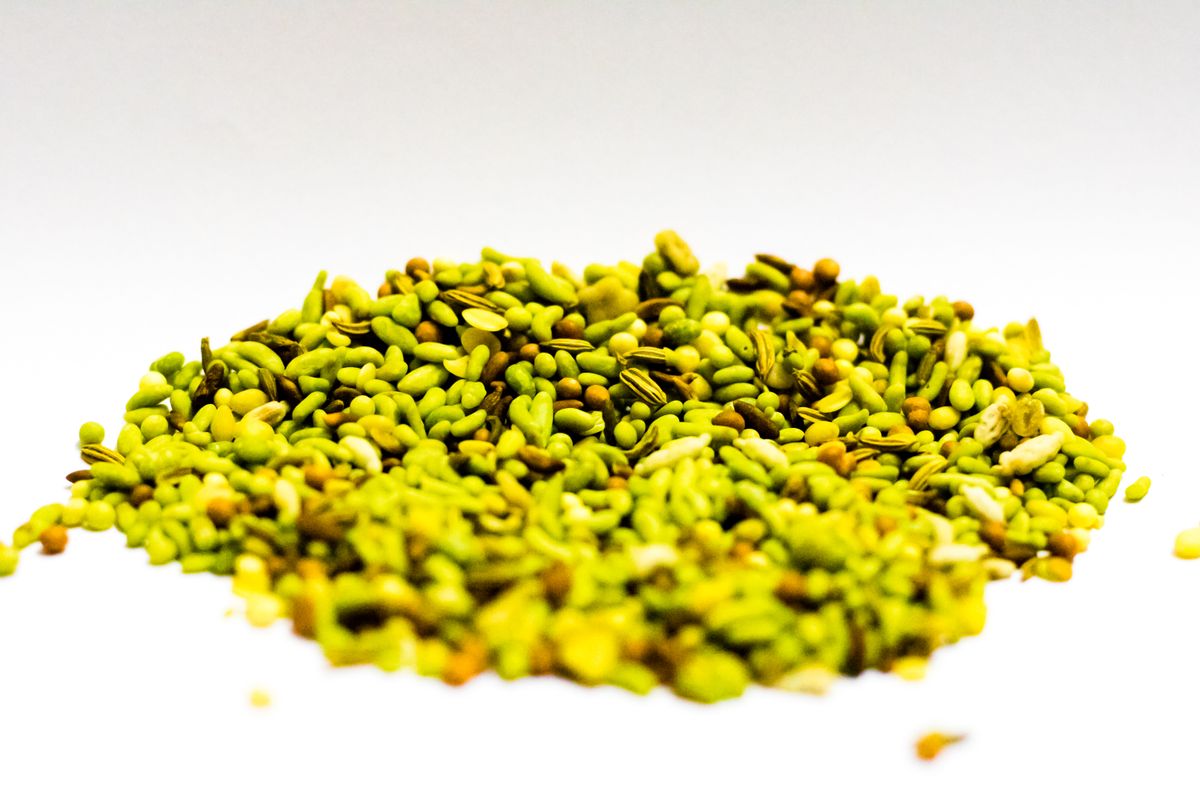
MVTR is the rate at which moisture passes through packaging material, measured in grams per square metre per day. It is the critical barrier property for this category: moisture ingress causes caking in pan masala and mukhwas, softens sugar-coated saunf, and in betel nut raises fungal and aflatoxin risk. Paper-based structures need engineered barrier layers to approach laminate performance on MVTR.
OTR (Oxygen Transmission Rate)
OTR is the volume of oxygen permeating through packaging per unit area per day, measured in cubic centimetres per square metre per day. Oxygen degrades the volatile oils that carry the aroma of saunf, elaichi and menthol-bearing mouth fresheners, and drives rancidity in nut and seed components. OTR and MVTR together set the classical barrier floor, but for this category they are necessary rather than sufficient.
Aroma Scalping
Aroma scalping is the absorption of a product’s volatile aroma compounds into the packaging material itself, rather than loss through it. It is the defining failure mode in this category, because the entire product proposition is aroma. Scalping presents as flavour flattening long before any barrier test registers a problem, and different sealant chemistries scalp different compounds at very different rates. It is the reason a pack can test clean and still disappoint.
Menthol Migration
Menthol migration is the movement of menthol and other volatile terpenes out of the product and into or through the packaging structure. Menthol is small, lipophilic and highly mobile, so it migrates into polyolefin sealant layers readily. It is the single hardest barrier problem in mouth freshener packaging and the most common cause of a pack that tests fine but tastes flat.
Sealant Layer
The sealant layer is the innermost, product-contact layer of a laminate, chosen to melt and bond at the sealing jaws. It is where most food-contact migration and aroma-scalping behaviour originates, and its polymer content is usually what determines whether a nominally paper-based structure is still classified as multi-layered plastic for EPR purposes. The sealant is therefore both the barrier weak point and the EPR classification pivot.

Metallisation
Metallisation is the vacuum deposition of an aluminium layer a few tens of nanometres thick onto a substrate, delivering a large barrier improvement at a fraction of foil’s aluminium content. It is the principal route to foil-like barrier on a paper base. It also sits directly in the path of the FSSAI Packaging Amendment 2026. Its pan masala entry requires material free from aluminium foil or metallised layers, so a metallised paper structure does not fall within it.
What format, machine and quality terms matter on the line?
Format and machine terms describe how a pan masala or mouth freshener pack is actually made, and they are where switching material meets physical reality. The sachet is the format the plastic ban names by word, and the vertical form-fill-seal machine is what runs it. A substrate that looks right on paper still has to survive the sealing jaws and the distribution chain, which is what the quality terms measure.

VFFS (Vertical Form-Fill-Seal)
VFFS is the dominant sachet format machine: a film web is formed into a vertical tube over a forming collar, back-sealed, cross-sealed, filled and cut. Throughput and seal quality depend on the substrate’s sealing window and stiffness, which is the core technical constraint when moving a pan masala or mouth freshener line from plastic laminate to a paper-based material. A narrower sealing window generally means a slower line until the settings are re-optimised.
Sachet
A sachet is a small single-portion pouch, typically four-side or three-side sealed, and the dominant format for pan masala and mouth freshener in India. The sachet format is what PWM Rule 4(1)(f) names explicitly when prohibiting plastic for these categories, so format and regulation are inseparable here. When a rule bans a format by name, the format itself becomes a compliance object, not just a packaging choice.
Heat Seal Strength
Heat seal strength is the force required to peel apart a sealed joint, measured in newtons per fifteen millimetres. In sachet formats it determines whether the pack survives distribution and handling at retail. The usable temperature and dwell window is narrower on paper-based substrates than on polymer laminate, which is what actually changes when a line switches material and why a trial run matters more than a datasheet.
Seal Integrity
Seal integrity is whether a seal is continuous and free of channels, contamination or product entrapment in the seal area. Powdered and granular products such as pan masala and mukhwas are particularly prone to product-in-seal defects, which create channel leaks that admit moisture and destroy shelf life without any visible failure. It is the quality term most closely tied to actual field complaints in this category.
Where paper-based structures fit, and where they do not
A word of caution before the material-class discussion, because this is where honest reading matters most. The notified FSSAI pan masala entry requires material free from aluminium foil or metallised layers. That excludes a metallised paper structure, which is the construction most often used to reach foil-like barrier on a paper base. A brand evaluating paper for pan masala should treat metallised structures as outside the entry and take legal advice on any edge case.
With that stated first, the material class the entry names, paper, paperboard and cellulose free of plastic and free from metallised layers, is worth understanding on its own terms. That class can perform well for lower-barrier, less aroma-critical applications. It struggles in exactly the place this category lives: aroma-critical products carried by volatile oils and menthol, where scalping and migration, not just moisture and oxygen transmission, decide shelf life. There is no shortcut around that physics, and any supplier claiming otherwise for a plastic-free, metallisation-free structure in an aroma-critical use should be asked for product-tested evidence, not material datasheets.
Pakka’s flexC is a paper-based compostable packaging material sold as reel stock by GSM, with first-party barrier data published against ASTM F1249 for moisture and the equivalent oxygen method. It is honest to say that flexC’s higher-barrier structures reach their performance through metallisation, the exact construction the notified FSSAI entry excludes, so Pakka does not offer them for pan masala. It is also honest to say that the non-metallised structure in the range is published for lower-barrier applications such as bars, cookies, biscuits and nuts, not for aroma-critical categories. There is no flexC product named or specified for pan masala or mouth freshener, and nothing here should be read as a compliance or suitability claim for this category. What paper-based structures offer today is a genuine option for the lower-barrier end.
Frequently asked questions
Is there a deadline to switch pan masala packaging away from plastic?
The switch is already due. The FSSAI Packaging Amendment 2026 was published in the Gazette of India on 10 August 2026 and applies from that date. No separate transition or grace period has been reported. The PWM Rule 4(1)(f) and (i) prohibition on plastic for pan masala has been in force since 2016, though largely unenforced. Brands still using plastic, foil or metallised packs for pan masala should take legal advice now.
What is the difference between the PWM ban and the FSSAI amendment?
The PWM Rules 2016 ban is a pollution-control instrument, in force since 2016 and largely unenforced. The FSSAI Packaging Amendment 2026 is food law, in force since 10 August 2026. Its pan masala entry names plastic-free, foil-free paper-based materials, or tin or glass, and applies the same PWM clauses. That gives the prohibition a second route to enforcement, through food licensing.
Does a paper-based sachet avoid EPR liability?
Not automatically. EPR liability for Category III multi-layered plastic turns on whether a layer of plastic is the main ingredient, and a polymer sealant can keep a nominally paper structure inside the category. The answer requires reviewing the actual construction and, given the unresolved points around the MLP definition, legal advice.
Why do mouth freshener packs lose their aroma even with a good barrier?
Because aroma scalping and menthol migration act on the sealant layer rather than passing through the pack wall. Moisture and oxygen tests measure transmission through the material and can look excellent while volatile oils are being absorbed into the sealant, flattening flavour weeks before any barrier number moves.
Which term should procurement check first on a supplier claim?
Check the sealant layer specification and ask for product-tested aroma and migration data, not just MVTR and OTR datasheet numbers. In this category the sealant is both the aroma weak point and the EPR classification pivot, so it is the single most informative line on a spec sheet.
Last reviewed: October 2026. Regulatory status verified: 9 October 2026. The FSSAI Packaging Amendment 2026 (F. No. RCD-09002/1/2026-Regulatory-FSSAI) was notified on 7 August 2026, published in the Gazette of India on 10 August 2026, and is in force. The Plastic Waste Management Rules 2016 (G.S.R. 320(E)) remain in force. FSSAI status checked against legal and trade sources; PWM status against MoEFCC gazette records.
For the full material and format picture across regulated and unregulated categories, explore the paper converter glossary and Pakka’s flexC food packaging range. To discuss a specific pan masala or mouth freshener packaging requirement, get in touch with the Pakka team.
External references: FSSAI · Ministry of Environment, Forest and Climate Change
Browse all Pakka articles.
You may also like