Pan Masala Packaging Rules in India: What the Law Requires in 2026

Updated 9 October 2026: an earlier version of this article described the FSSAI Packaging Amendment 2026 as a draft. It was notified in the Gazette of India on 10 August 2026 and is in force. The sections below have been corrected.
Plastic packaging for pan masala has been prohibited in India since 2016, not 2026. Rule 4(1)(i) of the Plastic Waste Management Rules, 2016 bans plastic in any form for pan masala packaging, and it is in force today. The FSSAI packaging amendment in the trade headlines is no longer a draft. It was notified in the Gazette of India on 10 August 2026 and is in force from that date.
Both of those statements are true at the same time. That is why the packaging commentary written about this category serves it so badly. One set of articles announces a ban that has existed, unenforced, for a decade. Another still describes the FSSAI entry as a draft, months after it was notified. A packaging manager reading either one comes away with a wrong picture of their own risk.
This page is the map. It separates the instruments that apply, cites each instrument by number, date and status, and states plainly where the position is genuinely unresolved.
What packaging is legally permitted for pan masala in India?
Read strictly, no plastic packaging is permitted for pan masala in India. Rule 4(1)(i) of the Plastic Waste Management Rules, 2016 prohibits “plastic material, in any form” in any package for pan masala. Rule 4(1)(f) separately prohibits plastic sachets for storing, packing or selling gutkha, tobacco and pan masala. Both provisions are in force.
The instrument is G.S.R. 320(E), dated 18 March 2016, made by the Ministry of Environment, Forest and Climate Change under the Environment (Protection) Act, 1986. It is not a draft, not a proposal, and not new. It has been binding law for over ten years.
The exemptions elsewhere in Rule 4 do not extend to this. Those exemptions carve out export and SEZ manufacture from other plastic prohibitions, but the rule expressly withholds them from gutkha, tobacco and pan masala.
What is permitted, therefore, is anything that is not plastic: paper, paperboard, cellulose-based structures, tin, glass. That is the legal position on the page.
The commercial position is entirely different, and pretending otherwise helps nobody. Pan masala ships nationwide today in metallised plastic laminate sachets. The prohibition is comprehensively unenforced. Any supplier who tells you the category has already moved is selling you something.
Has FSSAI banned plastic sachets for pan masala?
FSSAI has now written the restriction into food law. The instrument is the Food Safety and Standards (Packaging) Amendment Regulations, 2026, F. No. RCD-09002/1/2026-Regulatory-FSSAI. The draft was published on 28 April 2026 in the Gazette Part III Section 4 under section 92(2) read with section 23 of the Food Safety and Standards Act, 2006, and consultation closed around the end of May 2026. The final notification is dated 7 August 2026 and was published in the Gazette of India on 10 August 2026. It is in force from that date.
It is worth being precise about what the notified entry says. For pan masala, it names packaging of paper, paperboard, cellulose or other naturally derived materials, free from plastic and free from aluminium foil or metallised layers. Tin or glass containers are permitted alternatives. It also applies clauses (f) and (i) of Rule 4(1) of the Plastic Waste Management Rules, 2016, which bar plastic sachets and plastic in any form for pan masala.
So the 2016 plastic prohibition now sits in food packaging law as well as environmental law.
The entry took effect on publication, 10 August 2026. No separate transition or grace period has been reported. If someone quotes you a later switchover date, ask for the source.
What does the notified Schedule IV entry actually say?
The amendment inserts pan masala at Sl. No. 11 of Schedule IV to the Food Safety and Standards (Packaging) Regulations, 2018. The entry names paper, paperboard, cellulose or other naturally derived materials that are free from plastic (polyethylene, polypropylene, polyester, PVC and other synthetic polymers, copolymers or laminates) and free from aluminium foil or metallized layers. Tin or glass containers are permitted alternatives. The entry also applies clauses (f) and (i) of Rule 4(1) of the Plastic Waste Management Rules, 2016.
Two words in that entry matter more than the rest, and we will come back to them: metallized layers.
One reported feature of the parent regulations is worth knowing. Schedule IV of the 2018 Regulations is titled “List of suggestive packaging materials”, and it carries a proviso stating that it is “an indicative list not restricting the use of any other packaging material complying with the specified standards.”
That wording does not change the practical position. The pan masala entry is now notified, and it brings the PWM Rule 4(1) clauses with it. Brands should treat plastic, foil and metallised packs for pan masala as non-compliant, and take legal advice on any edge case.
So why does the FSSAI entry matter?
Because of which body can now enforce it, not because of what it says. This is the part the coverage misses entirely, and it is the genuinely significant development.
The 2016 prohibition sits in environmental law, enforced by pollution control boards, which have not enforced it against this category in ten years. Moving the same prohibition into food law puts it in front of FSSAI and state food safety officers, who hold something the pollution boards do not: the FSSAI licence that every manufacturer needs in order to operate at all.
Licensing is leverage. That is the change worth planning around.
The honest summary is this. The statutory ban has existed since 2016 and has gone largely unenforced. Since 10 August 2026, FSSAI has brought the same prohibition into food law, where licensing gives it real teeth. The entry is in force, and no transition period has been reported.
Which pan masala packaging rules are actually in force right now?
Six instruments bind the category today. The FSSAI entry is the newest of them, notified in August 2026.
| Instrument | Number and date | Status | What it does |
|---|---|---|---|
| Plastic Waste Management Rules, 2016, Rule 4(1)(f) and 4(1)(i) | G.S.R. 320(E), 18 Mar 2016 | In force | Prohibits plastic sachets, and plastic in any form, for pan masala, gutkha and tobacco packaging |
| PWM (Amendment) Rules, 2024 | G.S.R. 201(E), 14 Mar 2024 | In force | Amends rule 3: in clause (n), the words “metallised layers or” are omitted from the multi-layered packaging definition |
| PWM Rule 11 marking | G.S.R. 73(E), 23 Jan 2025 | In force from 1 Jul 2025 | Barcode, QR or unique number marking on plastic packaging |
| PWM (Amendment) Rules, 2026 | G.S.R. 237(E), 31 Mar 2026 | In force | Recycled-content targets; Category III multi-layered 5% to 10% by 2028-29; Registered Environmental Auditors. No pan masala-specific provision |
| GST on retail sale price | Effective 1 Feb 2026 | In force | 40% GST on RSP for pan masala and gutkha; compensation cess to nil; RSP declared on pouch |
| FSS (Packaging) Amendment Regulations, 2026 | F. No. RCD-09002/1/2026; notified 7 Aug 2026, Gazette 10 Aug 2026 (draft 28 Apr 2026) | In force from 10 Aug 2026 | Adds pan masala at Schedule IV Sl. No. 11; applies PWM Rule 4(1)(f) and (i) |
The 2024 amendment is worth dwelling on, because most published commentary on multi-layered packaging still quotes the superseded definition. G.S.R. 201(E) is a final notification, in force from publication. Its own preamble records the draft stage as G.S.R. 744(E) of 16 October 2023 and states that objections were duly considered. Rule 3 of that notification reads: “in clause (n), the words ‘metallised layers or’ shall be omitted.” Clause (n) is the multi-layered packaging definition.
That resolves a wording question that a great deal of secondary commentary still gets wrong. It does not resolve the EPR question that sits behind it, and we say so below rather than let a verified detail drift into a claim it does not support.
Machine registration is the other in-force obligation people forget. Form GST SRM-I (Notification 04/2024-Central Tax, 5 January 2024) requires pan masala manufacturers to register each packing machine with make, model, capacity and electricity consumption, with penalties up to ₹1 lakh and CCTV retention of 48 months. Changing a line has a tax paper trail, which is a real constraint on how quickly anyone can trial an alternative substrate.
Do these rules apply to mouth freshener, mukhwas and saunf?
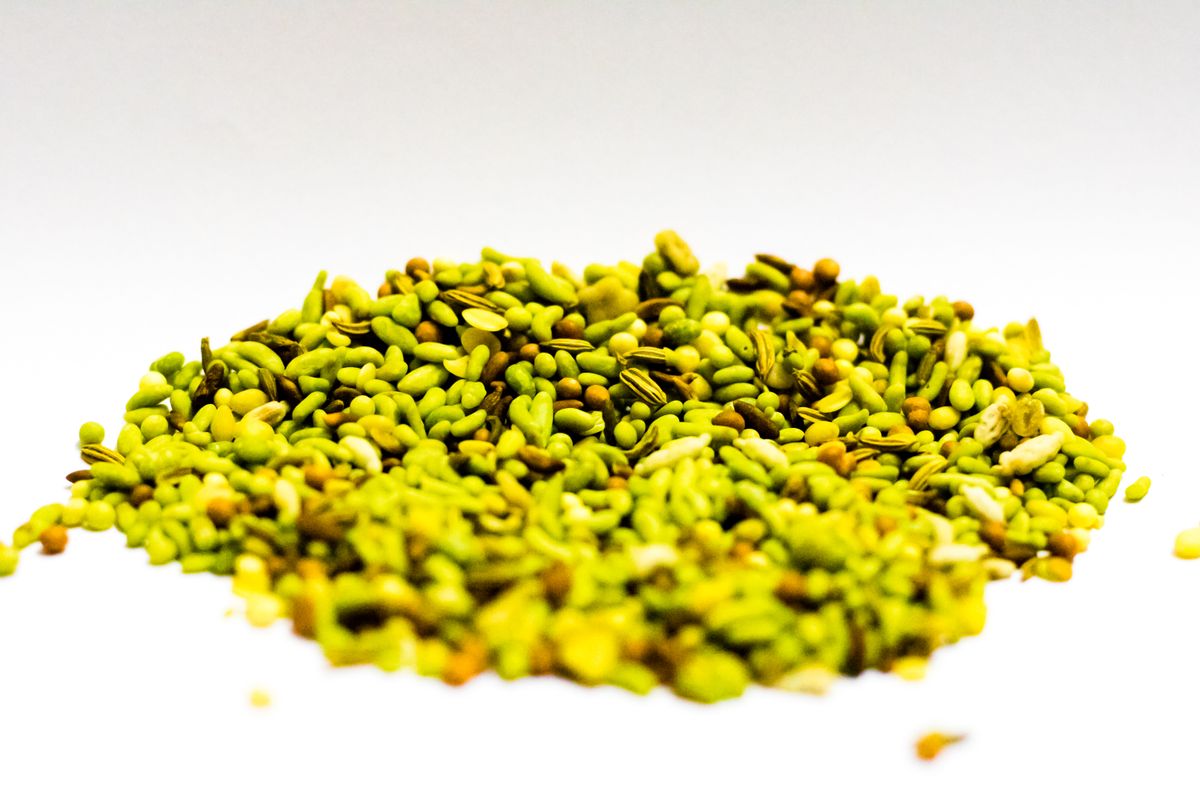
Not on the face of the instruments. Rule 4(1)(f) and Rule 4(1)(i) name gutkha, tobacco and pan masala. A plain saunf, elaichi or mukhwas mouth freshener that is not pan masala is not named in either provision, and the notified Schedule IV entry is likewise specific to pan masala.
This is the most commercially important distinction in the category and it is almost never drawn.
Two categories that share a shelf, a format, a filling machine and often a customer sit in completely different regulatory positions. A mouth freshener sachet line faces no material prohibition at all. A pan masala line, on paper, faces an absolute one.
That said, product classification is a legal question, not a packaging question. Composition, marketing and labelling all bear on how a product is classified, and a mouth freshener sold alongside or formulated close to pan masala should not be assumed to sit outside the prohibition simply because of the name on the pack. Take that determination from your own counsel, not from a packaging supplier.
The practical consequence for buyers is that the two categories should be specified separately. The permitted material set is different, the EPR exposure is different, and treating a mouth freshener pouch as a pan masala pouch imports a constraint that may not apply to it.
What does EPR mean for a sachet or pouch producer?
Extended Producer Responsibility makes the brand owner, importer or producer financially responsible for collecting and processing the packaging they put on the market. Under the PWM Rules, multi-layered packaging falls in Category III, which carries its own recycled-content trajectory. That target runs from 5% to 10% by 2028-29 under G.S.R. 237(E) of 31 March 2026.
This matters more than the prohibition does, because it is the obligation that is actually enforced. Registration, annual returns and now Registered Environmental Auditors are live administrative requirements with real filing consequences.
There is an argument that a genuinely plastic-free paper structure sits outside Category III, since the multi-layered definition turns on “at least one layer of plastic as the main ingredient”. We are not making that argument here. The definition still hinges on that plastic-layer test, a sealant layer can pull an otherwise paper-based structure back inside the category, and the consolidated post-2024 text of the definition has not been verified against a clean source. It is a question for counsel, not for a blog post, and any supplier who answers it for you without qualification is overreaching.
Our detailed treatment of the same obligations in adjacent categories is set out for tea packaging EPR in India and for paper packaging converters. The registration mechanics are common across all of them.

What can paper-based packaging actually do on barrier today?
Less than metallised structures can, in the applications this category cares most about. Aroma retention is where the honest answer is uncomfortable. Pan masala and mouth freshener are aroma-critical products: menthol, camphor and volatile seed oils migrate readily, and losing them is a shelf-life failure long before any moisture or oxygen number is breached.
The barrier vocabulary here is worth being precise about. MVTR (moisture vapour transmission rate) measures how much water vapour crosses a structure per square metre per day. OTR (oxygen transmission rate) does the same for oxygen. Aroma scalping is the absorption of volatile flavour and aroma compounds into the packaging material itself, a loss into the sealant layer rather than a leak outward. Our tea packaging glossary and paper converter glossary define these and the related production terms in full.
Metallisation is what delivers very low MVTR and OTR in a thin, machinable paper-based structure. Remove the metallised layer and both numbers move in the wrong direction. That is physics, not positioning, and we have written about the same trade-off in our monsoon MVTR benchmarks and in the distinction between compostable, recyclable and biodegradable structures, where the labels are routinely conflated.
The notified Schedule IV entry describes a material class: paper, paperboard, cellulose, free of plastic, free of aluminium foil or metallized layers. Understanding what that class can and cannot do is more useful right now than any product conversation, because that class is where pan masala packaging now has to go, and its hardest cases are exactly the aroma-critical ones.
Lower-barrier applications are a solved problem for paper today. Dry, low-volatile products with modest shelf-life requirements run well on non-metallised paper structures. The difficulty is specific, and it sits at the volatile end.
Where paper-based structures fit
Start with the constraint, because it is the one that works against us. The notified entry requires material free from aluminium foil or metallized layers. flexC’s metallised paper structures do not fall within the pan masala entry, so we do not offer them for pan masala.
flexC is a paper-based compostable flexible packaging material sold as reel stock by GSM, not as finished pouches. Three structures ship today: Bleached Teabag Metalized at 63 ± 2 GSM, Bleached Confectionary Metalized at 90 ± 2 GSM, and Bleached Confectionary Non-Metalized at 70 ± 2 GSM. The metallised structures publish a water vapour transmission rate below 2 g/m²/day tested to ASTM F1249, with GSM to TAPPI T410 and thickness to TAPPI T411.
Two things follow, and both need stating plainly.
There is no pan masala or mouth freshener structure in that range. The non-metallised structure that ships today is published for energy, granola and protein bars, cookies and biscuits, and dry fruits and nuts, not for the aroma-critical applications this category needs. We do not claim that any flexC structure is compliant with, approved under, or qualifying for the notified pan masala entry.
What is genuinely useful today is the material-class conversation: what paper can hold, what it cannot, and how a line behaves when you run it. If you are evaluating a substrate change, the machine-side realities are set out in our work on paper-based pouch machine compatibility and the cost of switching a line from plastic to paper. Both were written for adjacent categories, and both apply directly to a VFFS sachet line.

What should a packaging manager do now?
- Separate your SKUs by classification. Pan masala and non-pan-masala mouth freshener sit in different regulatory positions. Specify them separately and take the classification from counsel.
- Treat EPR as the live obligation. Registration, returns and recycled-content targets under G.S.R. 237(E) are enforced. The 2016 prohibition currently is not.
- Plan against the date that has passed. The FSSAI entry has been in force since 10 August 2026. No separate transition period has been reported.
- Check your pan masala packs against the notified entry. Treat plastic, foil and metallised packs as non-compliant, and take legal advice on any edge case.
- Trial early on the aroma question. Substrate qualification for volatile products takes months of shelf-life data. The rule is already in force, so start generating that data now.
- Account for SRM-I. Machine changes carry a tax registration trail. Build that into any line-modification timeline.
Frequently asked questions
Is plastic packaging for pan masala banned in India?
Yes, under Rule 4(1)(i) of the Plastic Waste Management Rules, 2016 (G.S.R. 320(E), 18 March 2016), which is in force. The ban is absolute on its face and has been law for over ten years. It is also comprehensively unenforced, and pan masala ships in metallised plastic laminate nationwide today.
When do the new FSSAI pan masala packaging rules come into force?
They are already in force. The Food Safety and Standards (Packaging) Amendment Regulations, 2026 (F. No. RCD-09002/1/2026) were notified on 7 August 2026 and published in the Gazette of India on 10 August 2026. They apply from the date of publication. No separate transition or grace period has been reported.
What packaging material does the FSSAI entry specify for pan masala?
Paper, paperboard, cellulose or other natural materials completely free from plastic and synthetic polymers, and free from aluminium foil or metallized layers, together with tin and glass containers. The entry sits at Sl. No. 11 of Schedule IV, which the parent regulations describe as an indicative list of suggestive materials. It also applies the PWM Rule 4(1)(f) and (i) plastic bars, so treat plastic, foil and metallised packs for pan masala as non-compliant.
Do plastic packaging rules apply to mouth freshener and mukhwas?
Not on the face of the instruments. Rule 4(1)(f) and 4(1)(i) name gutkha, tobacco and pan masala only, and the notified Schedule IV entry is specific to pan masala. Classification depends on the product’s composition and how it is marketed, so confirm it with your own legal adviser rather than assuming.
Can paper-based packaging hold aroma in a mouth freshener pouch?
It depends entirely on the structure and the product. Metallisation is what delivers very low MVTR and OTR in a thin paper-based laminate, and removing it degrades both. Dry, low-volatile products run well on non-metallised paper today. Menthol-bearing and volatile-oil-bearing products are the hard case, and they need shelf-life trial data rather than a specification sheet.
Last reviewed: October 2026 Regulatory status verified: 9 October 2026. The FSS (Packaging) Amendment Regulations, 2026 were notified in the Gazette of India on 10 August 2026 and are in force, verified against published legal and trade sources.
If you are evaluating paper-based structures for a sachet or pouch line and want a straight answer about what the material can and cannot do, our food packaging range carries the published technical specifications for each structure, and the resources library holds the brochures. For an application-specific conversation, including one where the honest answer is that we do not have the structure you need, get in touch.
Browse all Pakka articles.
You may also like