The Real Cost of Cheap Packaging for D2C Food Brands: Returns, Shelf Life Losses, and Brand Damage

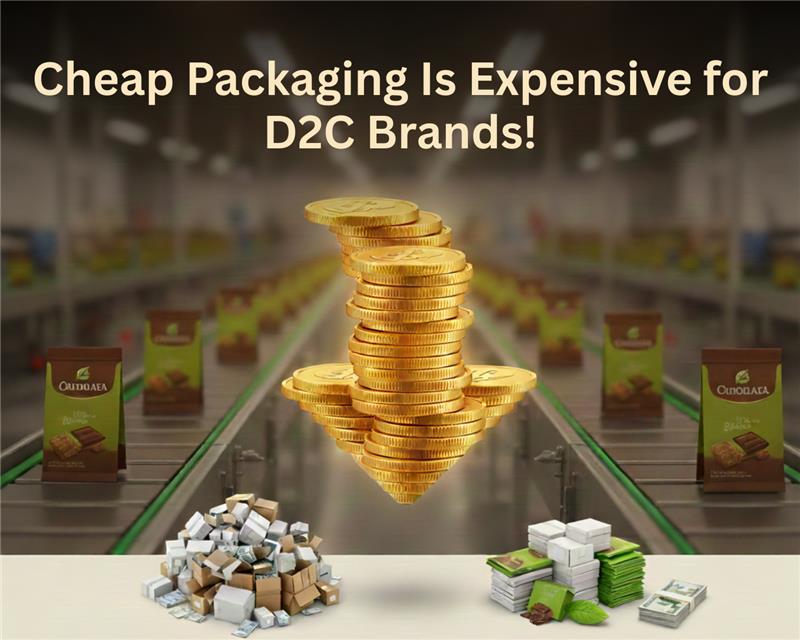
The packaging line item on a D2C food brand’s P&L typically runs 8 to 15% of the cost of goods sold. That makes it a natural target when founders look for ways to improve unit economics. The logic seems sound: a pouch is a pouch, the cheaper one does the same job, and the savings go straight to the bottom line.
That logic breaks down in practice. India’s D2C market reached USD 12 billion in 2025 (Bain & Company India Venture Capital Report, 2025), with food and beverages as the second largest category. Within that market, packaging failure is one of the top three causes of product returns for food brands shipping through e-commerce, alongside incorrect orders and delivery delays (Unicommerce E-commerce Index, 2024).
The actual cost of cheap packaging is not the material price. It is the damage rate, the return rate, the shelf life reduction, the customer complaints, and the brand perception hit. When you add those up, cheap packaging is often the most expensive option.
Key takeaways
- Product damage and returns from packaging failure cost D2C food brands 3 to 8% of revenue, depending on product category and shipping conditions.
- A pouch with MVTR of 5 g/m2/24hr instead of 2 g/m2/24hr can reduce effective shelf life by 30 to 40% for moisture-sensitive products. That means more expired inventory and shorter sales windows.
- Unboxing content drives 40% of D2C food brand discovery on Instagram (Shopify India D2C Report, 2025). Cheap packaging kills shareability.
- The correct cost comparison is not material price per unit. It is: material cost + damage rate cost + return processing cost + shelf life loss + customer acquisition cost to replace lost customers.
- Compostable packaging at 15 to 40% material premium can reduce total cost when factoring in lower EPR fees, higher unboxing shareability, and reduced greenwashing risk.
Where the money actually goes when packaging fails
Transit damage
D2C food products travel through India’s courier network: sorted by machine, stacked in vehicles, bounced across 500 to 2,000 km of roads, and left at doorsteps in ambient conditions. A protein bar in a thin flow wrap that punctures during transit is not a packaging problem on paper. It is a customer complaint, a replacement shipment, and a negative review.
Transit damage rates for food products in e-commerce range from 2 to 6% of shipped units (ASSOCHAM E-commerce Logistics Study, 2024). The cost per incident includes: the product cost (written off), the replacement product cost, the second shipping cost, the customer service handling cost, and the probability of losing the customer permanently.
For a D2C brand shipping 10,000 units per month at an average order value of INR 500, a 4% damage rate translates to 400 damaged units, costing roughly INR 3 to 4 lakh per month in direct costs alone. That is INR 36 to 48 lakh annually, which is almost always more than the annual saving from choosing cheaper packaging.
Shelf life reduction
This is the cost that most D2C brands do not track because it happens slowly. A cheaper film with higher MVTR allows more moisture into the product over time. The product does not fail dramatically. It degrades gradually: protein powder clumps earlier, chocolate develops fat bloom sooner, tea loses aroma faster, snack bars go stale before the printed expiry date.
The result is inventory write-offs. Products that reach the end of their effective shelf life before they sell become waste. For a brand with 6-month shelf life and a typical 3-month inventory cycle, a 30% shelf life reduction (from 6 months to 4 months) cuts the selling window from 3 months to 1 month. That tighter window increases the proportion of unsold stock that expires on warehouse shelves.
Brand perception
The unboxing moment is the first physical interaction a customer has with a D2C brand. The packaging is the brand, at least until the customer opens the product. A pouch that feels cheap, crinkles poorly, has blurry printing, or arrives damaged does not just disappoint. It signals that the brand cuts corners.
72% of Indian online shoppers say packaging quality influences their perception of product quality (Nielsen India E-commerce Survey, 2024). That perception directly affects repeat purchase rates and willingness to recommend.
The flip side is equally true. Premium packaging that looks and feels intentional gets photographed, shared, and talked about. For food brands competing in crowded D2C categories (protein supplements, artisanal snacks, speciality teas), packaging shareability on social media is a genuine acquisition channel.
The total cost calculation most brands skip
Here is what a real cost comparison looks like for a D2C snack brand shipping 10,000 pouches per month. Two scenarios: Option A (budget film, lower barrier) and Option B (quality film, proper barrier).
| Cost element | Option A (budget film) | Option B (quality film) |
|---|---|---|
| Material cost per pouch | INR 3.50 | INR 5.00 |
| Monthly material cost | INR 35,000 | INR 50,000 |
| Transit damage rate | 5% | 1.5% |
| Monthly damage cost (product + reshipping) | INR 37,500 | INR 11,250 |
| Shelf life achieved | 4 months | 7 months |
| Monthly inventory write-off (expired stock) | INR 25,000 | INR 5,000 |
| Return processing cost | INR 10,000 | INR 3,000 |
| Total monthly cost | INR 1,07,500 | INR 69,250 |
The budget film saves INR 15,000 per month on material cost. It costs INR 38,250 per month more in damage, shelf life losses, and returns. The “expensive” packaging is INR 23,250 per month cheaper when you count everything.
These numbers are illustrative, but the pattern holds across most D2C food categories. The breakeven point — where the material premium is offset by reduced failure costs — typically sits at damage rate reductions of 2 to 3 percentage points. Most quality film upgrades deliver that improvement.
What “cheap” actually means in packaging specifications
The cost differences between budget and quality flexible packaging films come from specific technical choices, not abstract “quality.”
Barrier properties. Budget films use thinner metallisation or skip it entirely. That increases MVTR and OTR, which directly reduces shelf life. A film at MVTR 5 g/m2/24hr costs less than one at MVTR 1.5 g/m2/24hr, but the second one gives your product twice the effective shelf life.
Seal strength. Cheaper films have narrower heat seal windows and lower seal strength. That means more seal failures on production lines (higher reject rates) and more micro-leaks in the field (more transit damage).
Puncture resistance. Budget flow wraps for bars and snacks use thinner gauge films that puncture when products with nuts, seeds, or crispy inclusions press against the film during transit. The puncture lets in moisture and oxygen, starting a degradation cascade.
Print quality. Digital printing on budget substrates produces inconsistent colour matching and lower resolution. The difference is visible at arm’s length, which is exactly the distance at which a customer evaluates your product.
When compostable packaging makes economic sense for D2C
Compostable flexible packaging carries a 15 to 40% material cost premium over conventional films. For D2C brands, the economics work in specific scenarios.
If your shelf life target is 6 to 9 months (typical for D2C snacks, teas, protein bars), current compostable films can meet the barrier requirements. The material premium is offset by simplified EPR compliance (compostable packaging enters organic waste streams rather than requiring recycling proof) and by higher consumer willingness to pay.
65% of Indian D2C consumers consider sustainability when choosing between competing products (Kantar India Sustainability Report, 2025). For brands where packaging is visible to the consumer (pouches, sachets, wraps), the sustainability story is a tangible acquisition and retention driver.
The economic case weakens for products with 12+ month shelf life targets or for products shipped through temperature-uncontrolled distribution. In those cases, conventional films with better barrier performance remain the financially sound choice, and honesty about that limitation is better than forcing a compostable solution where it does not yet fit.
Frequently asked questions
How much do D2C food brands typically spend on packaging?
Packaging represents 8 to 15% of cost of goods sold for most D2C food brands, depending on format, material choice, and order volume. At monthly volumes of 10,000+ units, per-unit costs drop significantly. The packaging budget should include not just material cost but damage, returns, and shelf life losses.
What is the biggest hidden cost of cheap food packaging?
Transit damage and product returns. Damage rates with budget packaging run 4 to 6% of shipped units for food products. Each damaged unit costs the product value plus reshipping plus customer service handling. For most brands, the annual damage cost exceeds the annual material savings from using cheaper packaging.
Does packaging quality affect D2C customer retention?
Yes. 72% of Indian online shoppers say packaging quality influences their perception of product quality. Premium packaging drives unboxing shares on social media, which is a genuine acquisition channel for D2C food brands. Poor packaging drives negative reviews and reduces repeat purchase rates.
Should D2C food brands switch to compostable packaging?
If your shelf life target is 6 to 9 months and your consumer base values sustainability, yes. The 15 to 40% material premium is often offset by EPR compliance simplification, higher consumer willingness to pay, and social media shareability. For 12+ month shelf life targets, run your own testing before committing.
What packaging specs should D2C brands prioritise?
MVTR and OTR for shelf life protection, seal strength for transit integrity, puncture resistance for products with hard inclusions (nuts, seeds), and print quality for brand presentation. Request specific test data from your supplier for each parameter rather than relying on general claims.
How do I calculate the true cost of my packaging?
Add material cost, transit damage cost (damage rate multiplied by replacement cost per unit), shelf life loss cost (expired inventory write-offs), return processing cost, and customer acquisition cost to replace lost customers. Compare this total across packaging options, not just the material price per unit.
Evaluating packaging options for your D2C food brand? Talk to our team about barrier specifications, damage reduction, and compostable packaging economics for your product category.
Browse all Pakka articles.
You may also like