Paper Bag Printing: Ink Adhesion, Registration, and Substrate Prep for Kraft and Poster Paper

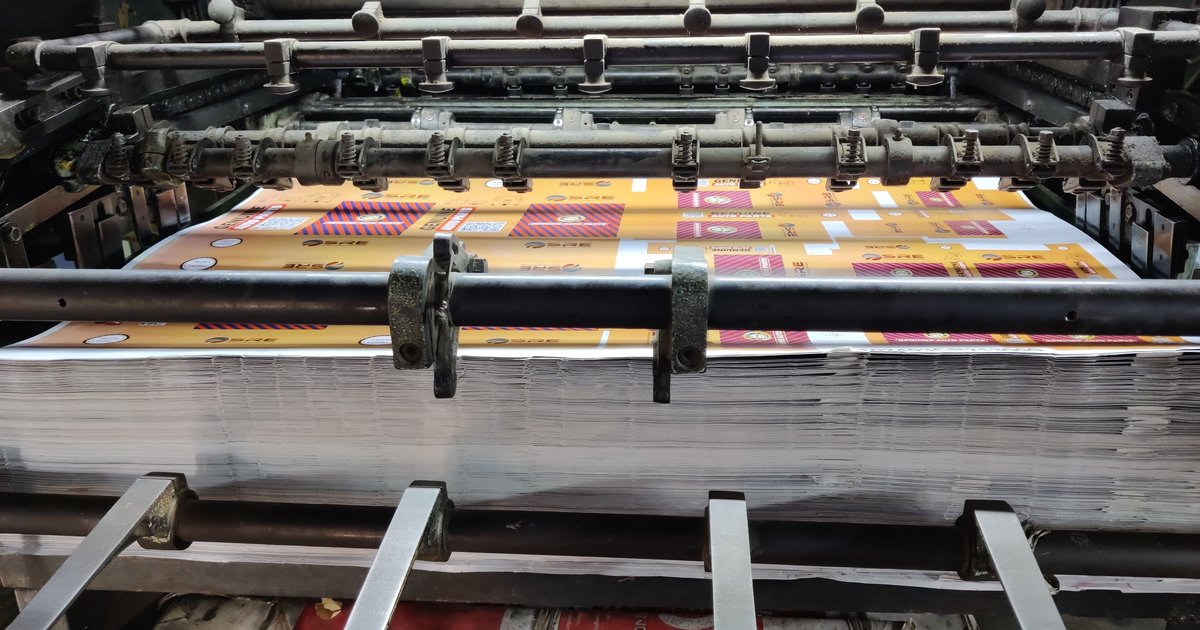
Clean paper bag printing comes down to three variables that most converters treat as one: how well the ink anchors to the sheet, how tightly the print registers to the bag, and how the substrate is prepared before it reaches the impression roller. Get the surface, tension and ink chemistry right and the print survives the fold, the punch and the customer’s hand. Get any one wrong and the reject bin fills faster than the delivery.
The common failure is to blame the ink when the paper is the problem, or the operator when the tension setting is. Unbleached kraft, coated poster and bleached kraft each take ink differently, and a plate that registered perfectly on one reel drifts on the next because the paper changed, not the press. This guide covers which print process suits paper carry bags, what actually makes ink adhere to kraft, how to hold registration on a converting line, and how to prep the substrate so the print lands right the first time.
Which printing process suits paper carry bags?
Flexography is the default for paper carry bags in India, because it prints water-based inks on absorbent kraft at line speeds that match bag-making output; offset suits short-run premium retail bags on coated poster where fine detail matters, screen printing survives on thick spot-colour work, and digital fits low-volume branded runs where plate cost cannot be justified. Run length, substrate and the ink chemistry the bag’s end use permits decide the process, so it is an engineering choice rather than a stylistic one.
Flexography (flexo) is a rotary relief printing process using flexible photopolymer plates and low-viscosity inks. Its water-based inks and fast drying make it the standard for high-volume kraft carry-bag printing.
India’s carry-bag print volume is being pulled by the same force driving the bags themselves. Following the Central Pollution Control Board’s nationwide ban on identified single-use plastics and on plastic carry bags below 120 microns, brands and retailers shifted printed-bag budgets onto paper, and every one of those bags carries a logo, a compliance mark or a barcode. According to the Indian Paper Manufacturers Association and IPPTA sector commentary, paper and paperboard consumption in India continues to grow at mid-single-digit rates, with carry-bag grades among the fastest-moving, so print quality is now a competitive line item, not an afterthought. The head term itself tells the story: “paper bag printing” draws roughly 1,900 searches a month in India, a demand signal that most converters treating print as a bolt-on service are leaving on the table.
The four processes are not interchangeable. The matrix below scores them for a typical Indian carry-bag operation running mixed kraft and poster work.
| Print process | Kraft suitability | Detail / halftone | Run-length economics | Setup cost | Total /20 |
|---|---|---|---|---|---|
| Flexography (water-based) | 5 | 3 | 5 | 4 | 17 |
| Offset (sheet-fed) | 2 | 5 | 3 | 3 | 13 |
| Screen printing | 4 | 2 | 2 | 4 | 12 |
| Digital (inkjet/toner) | 3 | 4 | 2 | 5 | 14 |
Recommendation: for volume kraft carry-bag work, flexo wins on substrate fit and cost-per-thousand and should be the default. Reserve offset for coated-poster premium retail bags where halftone detail justifies the setup, and use digital only for short branded runs where plate cost cannot be amortised. If those substrate terms need grounding, the paper converter glossary defines each before we go deeper.

What makes ink adhere to kraft paper?
Ink adheres to kraft when the paper’s surface energy exceeds the ink’s surface tension, letting the ink wet and key into the fibre rather than sitting on top and rubbing off. Uncoated unbleached kraft is absorbent and generally takes water-based flexo ink well, but a heavily calendered or sized surface, or a low-energy coated sheet, resists wetting and needs corona treatment or a primer before it will hold a rub-fast print. Adhesion is a surface-chemistry match, not a matter of laying down more ink.
Ink adhesion (anchorage) is the bond strength between a dried ink film and the substrate, tested by tape pull or rub resistance. Poor anchorage shows as ink that lifts, smears or chalks off the finished bag.
The substrate decides most of the outcome. Unbleached kraft’s open, absorbent surface anchors water-based ink readily, which is why grocery and QSR bags print reliably on it, though the brown ground shifts every printed colour and limits bright halftones. Bleached and coated poster papers print sharper but their smoother, lower-energy surface can reject ink without treatment, so printing on unbleached kraft is often easier for adhesion even as it is harder for colour accuracy. That trade-off between print fidelity and print durability maps directly onto the kraft versus poster paper framework, and the same surface properties that govern ink also govern glue, which is why porosity and Cobb value from the base paper testing guide belong in the print conversation.
Surface energy, measured in dynes per centimetre, is the substrate’s affinity for wetting. Converters commonly treat a print surface to around 38 to 42 dynes/cm to secure reliable ink and coating adhesion; below that, water-based inks bead and lift.
How do you fix print registration problems on paper bag lines?
Print registration problems on paper bag lines are corrected at the web, not the plate: hold consistent web tension, feed the paper with the grain in the machine direction, and keep moisture in a tight band so the sheet does not stretch or shrink between print stations. Most register drift on a converting line is the paper moving under changing tension or humidity, not a mounted plate slipping. Stabilise the web and the colours line up.
Print registration is the alignment of successive ink colours (and of the print to the die and fold) within tolerance. Misregistration shows as colour fringing, blurred edges or a logo that sits off the panel.
Registration and machine behaviour are the same problem seen from two angles. Grain direction, web tension and moisture are exactly the variables that decide whether a reel runs clean on a former, which is why print register and substrate match cannot be solved separately, a point the machine compatibility guide makes for the folding side. According to converting-machinery OEM specifications, automatic tube-type paper bag machines run roughly 60 to 250 bags per minute depending on format, so a register fault caught late costs thousands of misprinted bags before an operator reacts. A reel delivered at 6 to 9% moisture holds register; one that soaked up humidity in a monsoon-season godown stretches unevenly through the print nip and drifts colour to colour. Register control, in other words, starts in the paper store, and reducing this class of misprint is one of the levers in the converting-line cost-optimisation guide.
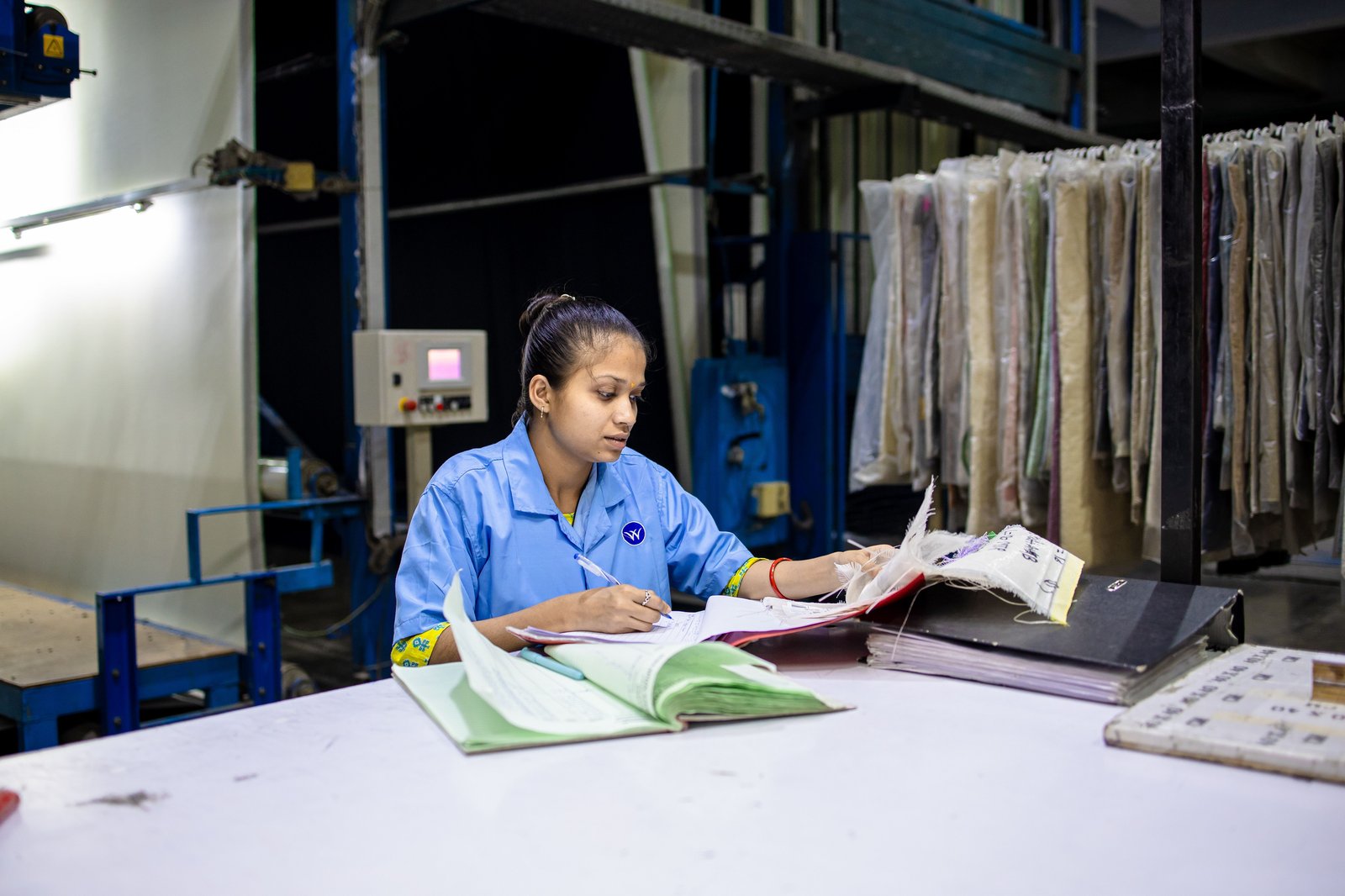
Substrate prep for kraft and poster paper before printing
Substrate preparation for printing means conditioning the paper’s moisture, verifying its surface energy, and treating or priming the surface where ink will not otherwise anchor, all before the reel reaches the press. Kraft and poster paper demand opposite preparation: absorbent unbleached kraft usually needs only moisture conditioning and a dyne check, while smooth coated poster often needs corona treatment or a tie-coat primer to lift its surface energy into the printable band. Preparation is where most print defects are prevented, or created.
Four preparation steps carry most of the risk, and they run in order because each one constrains the next:
- Condition the paper to the pressroom. Let reels equilibrate to 6 to 9% moisture and to shop-floor temperature before printing; a cold or damp reel stretches through the nip and drifts register.
- Verify surface energy. Dyne-test the print face; if it reads below roughly 38 dynes/cm, plan corona treatment or a primer rather than hoping the ink keys.
- Match ink chemistry to substrate and end use. Water-based flexo ink for absorbent kraft; for food-contact bags, specify low-migration inks and confirm the ink system against the bag’s use.
- Run a costed proof at speed. Pull a proof at full line speed and rub- and tape-test the dried film; approve on adhesion and register data, not on a hand-pulled swatch.
Skip the dyne check on a new coated grade and the fault surfaces mid-run as chalking ink; skip conditioning and it surfaces as register drift an hour into the shift. Preparation is cheaper than reprints, and it is the step converters under time pressure cut first.
How do you print food-grade paper bags without ink migration?
Food-grade paper bags stay compliant when the print uses low-migration inks, keeps the printed surface off direct food contact where possible, and is verified against migration limits for the market. The risk is that ink components, particularly mineral-oil hydrocarbons (MOSH/MOAH) and photoinitiators, migrate through the paper into the food. India’s food-contact packaging sits under the FSSAI Packaging Regulations and IS 15495 for paper and board, and export markets add EU Regulation 1935/2004 and German BfR recommendations, all of which treat printing ink as a potential contamination source, not a cosmetic layer.
This is where printing stops being a converting decision and becomes a compliance one. A bag that prints beautifully but uses a non-compliant ink system fails at a buyer’s food-safety audit exactly as a substrate that misses the buyer’s base-paper spec fails at goods-inward. The ink migration controls, barrier considerations and export thresholds are covered in depth in the food-grade paper bag compliance guide; for a print operation, the practical rule is to fix the ink system to the strictest market the bag will reach and validate it, rather than print first and certify later.
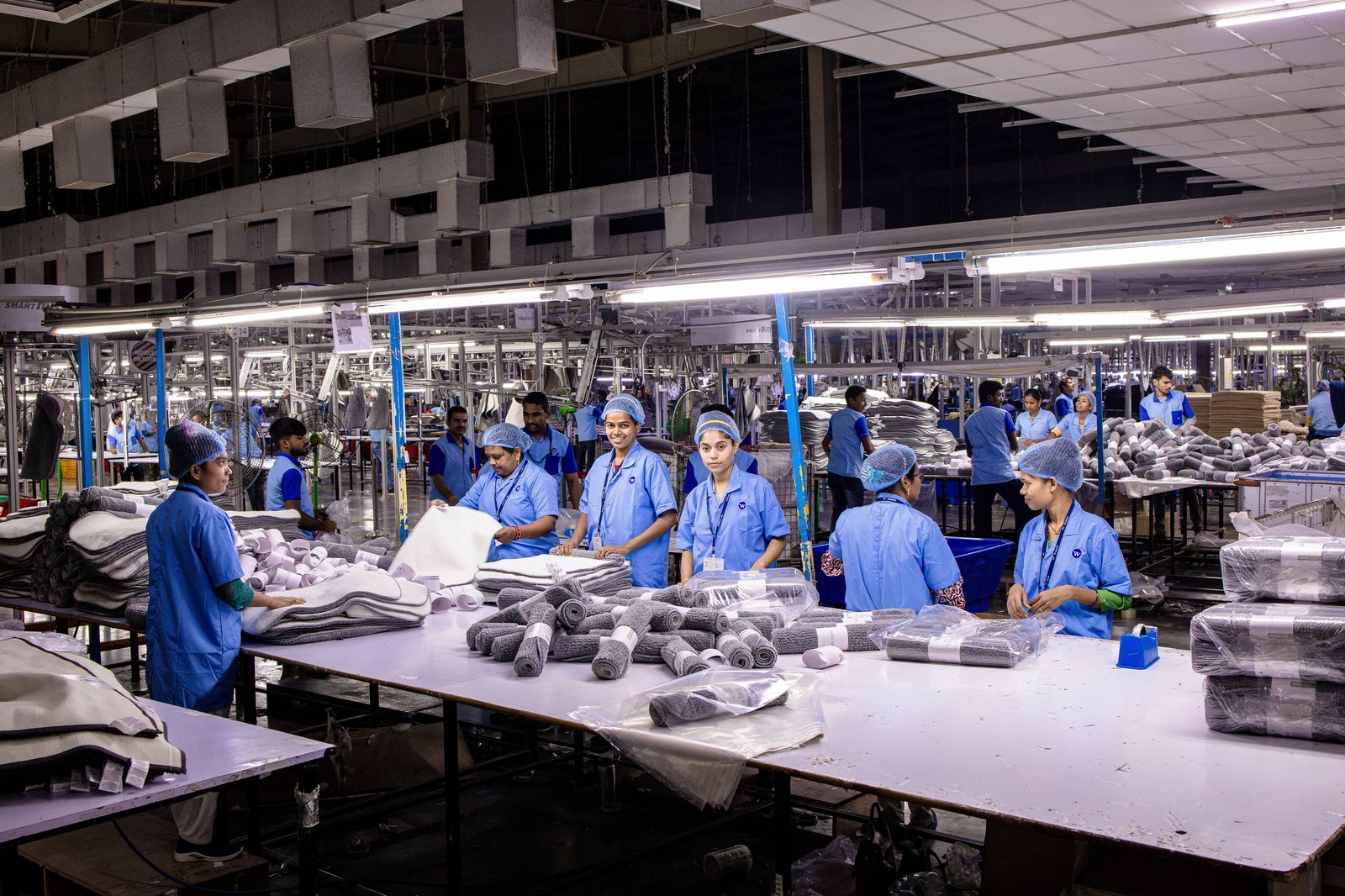
Where print quality hits the substrate ceiling
Be honest about the ceiling: no press setting turns unbleached kraft into a photographic print surface. The brown ground and open fibre of natural kraft cap colour brightness and halftone resolution no matter how well the ink adheres, and pushing fine four-colour work onto it wastes ink and time. A converter who promises magazine-grade imagery on 70 GSM natural kraft is setting up a rejection; the honest answer is that the substrate does not support it, and the bag should either move to a coated grade or the artwork should be redesigned around bold spot colours that kraft prints well.
The reverse ceiling is durability. Coated poster prints sharp but its lower-energy surface and lighter build take handling abrasion poorly, so a premium printed retail bag can scuff in transit where a plainer kraft bag would not. Print quality is always a negotiation between fidelity and durability, and the substrate sets the terms. This is the point where the base paper itself decides the print outcome, and where a mill that understands converting and printing lines earns its place over a trader quoting only a price. Pakka manufactures food-grade and carry-bag base paper, virgin and bagasse-based kraft grades, on a vertically integrated line in India’s sugarcane belt, and its technical team matches surface, grammage and coating to a converter’s actual print process and ink system rather than shipping a generic reel. Where a grade will not carry the print a buyer wants, the honest answer is that it will not, and that is worth more to a print operation than a cheaper reel that chalks.
Frequently asked questions
What is the best printing method for paper carry bags?
For most Indian carry-bag volume, flexography with water-based inks is the best method: it prints well on absorbent kraft, dries fast, and runs at speeds that match bag-making output at a low cost per thousand. Offset suits short premium runs on coated poster where fine halftone detail matters, and digital fits low-volume branded work where plate cost cannot be justified.
Why does ink rub off unbleached kraft paper bags?
Ink rubs off when it never anchored to the fibre, usually because the surface energy was too low for the ink to wet the sheet, the ink chemistry did not match the substrate, or the film was under-cured. On heavily sized or coated grades, corona treatment or a primer is needed to lift surface energy into the printable band before a rub-fast bond forms.
How do you improve ink adhesion on kraft paper?
Match the ink’s surface tension to the paper’s surface energy, dyne-test the print face and treat it to roughly 38 to 42 dynes/cm if it reads low, use a water-based ink system suited to absorbent kraft, and cure the film fully. Verify with a tape-pull or rub test on a proof pulled at full line speed, not on a hand swatch.
What causes print registration problems on paper bag machines?
Most register drift comes from the web, not the plate: inconsistent web tension, wrong grain direction, and moisture swings that stretch or shrink the paper between print stations. A reel outside the 6 to 9% moisture band or fed cross-grain will drift colour to colour however precisely the plates are mounted.
Can you print food-grade paper bags without ink migration?
Yes, by specifying low-migration inks, keeping the printed surface off direct food contact where the design allows, and validating the print against the migration limits of the strictest market the bag will reach, whether FSSAI and IS 15495 in India or EU 1935/2004 for export. The ink system must be fixed to the compliance requirement before the run, not certified afterwards.
Key Takeaways
- Flexography with water-based inks is the default for volume kraft carry-bag printing; offset and digital serve premium and short-run niches.
- Ink adhesion is a surface-energy match: unbleached kraft anchors ink readily, while smooth coated grades often need corona treatment or a primer to reach ~38 to 42 dynes/cm.
- Print registration is held at the web, through consistent tension, machine-direction grain and 6 to 9% moisture, not by adjusting the plate.
- Substrate prep, conditioning, dyne check, ink match, and a proof at speed, prevents most print defects before the press runs.
- Food-grade bags need low-migration inks validated against FSSAI/IS 15495 or export limits; kraft caps colour fidelity no matter the press.
Last reviewed: July 2026
Ready to match a base paper grade to your print process and ink system? Explore Pakka’s food wrap & carry paper range, where downloadable spec-sheet PDFs list surface, grammage and food-grade compliance for each grade. For a print-substrate review against your flexo, offset or digital line and ink chemistry, reach the technical team via the contact page.
Browse all Pakka articles.
You may also like