Export-Readiness Checklist for Indian Paper Bag Converters: FSC, PFAS-Free, and Food-Grade Compliance

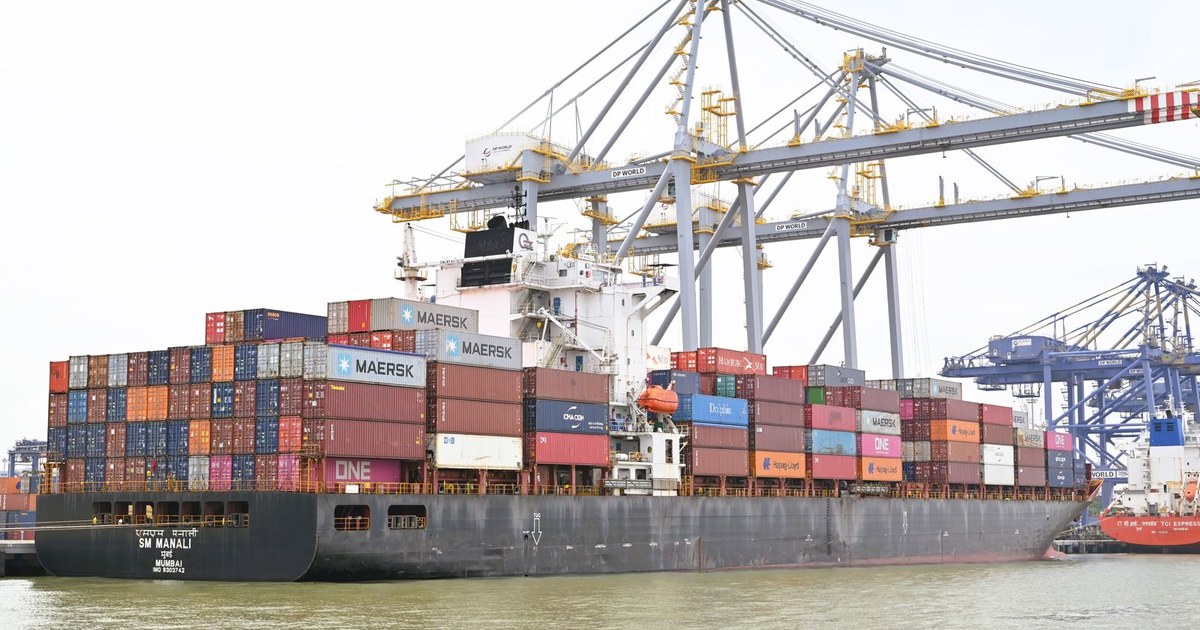
An export order for paper carry bags rarely fails on price. It fails on a missing declaration: no chain-of-custody certificate, no PFAS-free statement, no food-contact evidence in the format the buyer’s compliance team will accept. For an Indian converter with a competitive per-bag cost, the paperwork is the gate, and it is a gate that closes fast when a deadline in the destination market has already passed.
Export-readiness for a paper bag converter comes down to three credential axes that overseas buyers now treat as non-negotiable: forest-certification chain of custody (FSC or PEFC), a PFAS-free position on any grease barrier, and food-contact compliance evidence matched to the destination market. Get all three documented before you quote, and an export enquiry becomes a shipment. Leave any one open, and the order stalls in the buyer’s supplier-onboarding queue. This checklist sets out what each axis requires, which markets demand what, and the order in which to close the gaps. The commercial side, which markets pay for what you already make, how overseas buyers find suppliers and how to quote through freight and currency swings, is covered in our guide to winning export orders for paper bags.
What does a paper bag converter need to export to the EU and US?
To export paper carry bags to the EU or the US, a converter needs three documented things: proof the fibre comes from responsibly managed forests, proof the bag carries no intentionally added PFAS, and proof the food-contact grade meets the destination market’s rules. None of these is optional for a serious buyer, and two of them now carry hard EU deadlines in 2026.
The bar has risen because destination markets turned buyer preference into binding law. They moved grease-proofing chemistry, deforestation, and packaging waste from voluntary buyer preference to binding law within a single 2024-to-2026 window. An Indian converter selling only domestically can treat these as future concerns. A converter quoting an export buyer cannot, because the buyer’s own placing-on-market liability transfers straight into their supplier qualification. Our FSC, PEFC and sustainability certifications guide covers the certification mechanics that underpin the first axis; the sections below add the PFAS and food-grade axes that export specifically demands.
Which PFAS rules affect exported paper bags?
PFAS rules are now the single fastest-moving export barrier for paper packaging, and they bite hardest on grease-resistant food bags. If your bag relies on a fluorochemical grease barrier, it is already unsellable into large parts of the United States and, from 12 August 2026, into the European Union. The safe export position is a documented PFAS-free grease barrier, achieved through water-based coatings or an uncoated food-grade grade rather than fluorochemistry. This matters because destination-market compliance teams increasingly treat the grease barrier as a chemical-of-concern question rather than a performance one, and they will ask for evidence on the finished bag, not just a mill assurance. A converter that switches to a water-based barrier early removes the barrier chemistry from the conversation entirely, which shortens supplier onboarding and protects the order against a rule change mid-contract.
PFAS (per- and polyfluoroalkyl substances) are a family of fluorinated chemicals historically used to make paper repel grease and water. They are the “forever chemicals” now restricted across food-contact packaging because they persist in the environment and the body.
The regulatory picture converging on paper bags is worth stating precisely, because export buyers cite these instruments by name:
- In the US, the Food and Drug Administration confirmed on 28 February 2024 that PFAS grease-proofing agents are no longer sold for food-contact use in the country, completing a voluntary phase-out that covered fast-food wrappers, takeaway paperboard, and similar paper packaging (US FDA, 2024).
- At least twelve US states restrict intentionally added PFAS in food packaging, with dates already in force: California’s AB 1200 applied from 1 January 2023, and Maine’s restriction on plant-fibre packaging reaches its sell-through date on 25 May 2026 (OFW Law state compliance guide, 2026).
- In the EU, the Packaging and Packaging Waste Regulation (Regulation (EU) 2025/40) applies from 12 August 2026, after which food-contact packaging above set PFAS limits cannot be placed on the EU market. The limit applies to the whole packaging unit, including inks, coatings, and adhesives, with no recycled-content exemption (Food Packaging Forum, 2024).
The scale of the historical problem explains why buyers now ask. A study of more than 400 US fast-food packages detected fluorinated compounds in 46% of food-contact papers and 20% of paperboard items before the phase-out (Silent Spring Institute, 2017). That legacy is why a modern compliance team will not take a PFAS-free claim on trust. They want a supplier declaration and, increasingly, total-organic-fluorine test data on the finished bag.
Do you need FSC or PEFC certification to export paper bags?
For most EU and multinational buyers, yes: a valid FSC or PEFC chain-of-custody certificate is a procurement precondition, not a nice-to-have. The two schemes are broadly interchangeable for market access, though individual brand policies sometimes name one. From late 2026 a second forest instrument, the EU Deforestation Regulation, layers a legal due-diligence duty on top of the voluntary certification.
Chain of custody is the certified, unbroken tracking of certified fibre from the forest through every processing and trading step to the finished bag. It is what lets a converter make an FSC or PEFC claim on the product, and it is audited annually.
The two schemes are large enough that buyers treat certification as a baseline expectation rather than a differentiator. The Forest Stewardship Council reports about 175.5 million certified hectares and 70,099 chain-of-custody certificates worldwide (FSC, 2026). The Programme for the Endorsement of Forest Certification covers roughly 296 million hectares with more than 13,800 chain-of-custody certificates (PEFC Global Statistics, 2025). Between them they set the frame an export buyer’s sustainability policy is written against.
The newer duty is the EU Deforestation Regulation (Regulation (EU) 2023/1115), which applies to pulp and paper from 30 December 2026. It requires the operator placing goods on the EU market to file a due-diligence statement proving the product is deforestation-free and legally produced, including geolocation of the source plots (EUR-Lex, 2023). For a converter, the practical effect is that your EU customer will push traceability requests upstream to you, and an existing FSC or PEFC chain of custody makes those requests far easier to answer. Certification and deforestation due diligence are separate obligations, but they draw on the same traceability records.
What food-grade evidence do export buyers demand?
Export buyers demand food-contact evidence matched to the destination market, not a generic “food-safe” claim. For the EU that means Framework Regulation 1935/2004 plus, in practice, the German BfR Recommendation XXXVI benchmark for paper. For the US it means the relevant parts of 21 CFR 176. Each market has its own reference, and stating the wrong one signals inexperience to a compliance reviewer. The practical failure mode is a converter offering an Indian FSSAI declaration to a German buyer, who then has to explain that it carries no weight in their market and restart the qualification. Prepare the right reference for the right destination before the enquiry lands, hold the supporting test data on the exact grade you will ship, and the food-grade axis stops being the step that delays an otherwise competitive quote.
The core instruments are worth knowing by name. EU Framework Regulation (EC) 1935/2004 sets the overarching rule that food-contact materials must not transfer their constituents to food in quantities that endanger health or unacceptably change the food (European Commission). Germany’s BfR Recommendation XXXVI is the widely demanded technical benchmark for paper and board in food contact and is frequently written into EU buyer specifications. In the US, 21 CFR 176.170 governs paper and paperboard in contact with aqueous and fatty foods, while 21 CFR 176.180 covers contact with dry foods (eCFR).
Beyond the legal references, buyers specify measurable performance. Two tests recur in export specifications:
- Cobb value measures water absorption in grams per square metre over a set time, usually 60 seconds. Below 10 is excellent, 10 to 20 is good, and above 40 signals poor water resistance for a food bag.
- Kit rating (TAPPI T559) measures grease resistance on a 0 to 12 scale, where higher is more resistant. Greasy hot-food service bags typically need a mid-to-high Kit result achieved without fluorochemicals.
Fibre sourcing carries a food-contact dimension too. EU buyers generally require virgin fibre, or a proven functional barrier, for direct food contact, because recycled fibre carries mineral-oil (MOSH and MOAH) migration risk under Regulation 1935/2004 and BfR XXXVI. This connects directly to the finish decision covered in our bleached versus unbleached base paper guide, where virgin pulp and freedom from optical brightening agents already matter for domestic FSSAI food bags. The domestic food-grade groundwork is set out in our food-grade paper bag compliance guide; export simply raises the evidentiary bar on the same fundamentals.
Which credentials does each export market demand?
No two destination markets weight the three axes identically, so map the requirement before you commit to a certification spend. The table below sets out what each major market treats as a hard requirement versus a strong buyer preference, so a converter can prioritise the credential that actually unlocks the target order.
| Destination market | Forest certification | PFAS position | Food-contact reference | Deforestation duty |
|---|---|---|---|---|
| European Union | FSC or PEFC expected by most buyers | PFAS limit binding from 12 Aug 2026 (PPWR) | 1935/2004 + BfR XXXVI in practice | EUDR due diligence from 30 Dec 2026 |
| United States | Buyer-preference, not law | No PFAS grease-proofing (FDA) + state bans | 21 CFR 176.170 / 176.180 | Not applicable |
| United Kingdom | FSC or PEFC widely required | PFAS-free strongly preferred | Retained FCM rules, buyer-led | Buyer-led traceability |
| Middle East / GCC | Buyer-led, project-dependent | Emerging preference | Buyer or local food-authority spec | Not applicable |
Treat the matrix as a priority guide rather than a fixed rulebook. The EU column is the most demanding and carries the two 2026 deadlines, so a converter targeting European buyers should treat all four requirements as live. A converter aiming at US grocery or quick-service accounts can lead with the PFAS-free and 21 CFR evidence and treat forest certification as the commercial edge that many buyers still reward. The certification that wins a specific contract is the one that market’s buyers actually audit, which our QSR paper bag specifications guide illustrates on the buyer-requirement side.
The paper bag export-readiness checklist
Work the gaps in a fixed order so effort lands where an order is actually blocked. Each step produces a document or a test result an export buyer’s onboarding process will ask for:
- Confirm the target market and pull its exact requirement set from the matrix above before spending on any credential.
- Secure an FSC or PEFC chain-of-custody certificate for your site, and keep the transfer or percentage claim records that support product-level claims.
- Replace any fluorochemical grease barrier with a water-based coating or an uncoated food-grade grade, then hold a signed PFAS-free declaration from the paper mill and the coating supplier.
- Commission total-organic-fluorine test data on the finished bag if the buyer or the destination rule requires evidence beyond a declaration.
- Match food-contact evidence to the market: 1935/2004 with a BfR XXXVI report for the EU, or a 21 CFR 176 compliance statement for the US.
- Test and record Cobb value and Kit rating on the exact grade you will ship, not a sample the mill selected.
- Specify virgin, OBA-free pulp for direct food-contact bags, and keep the mill declaration on file against MOSH and MOAH migration questions.
- Prepare for EUDR from late 2026 by capturing fibre origin and geolocation traceability now, so an EU customer’s due-diligence request does not stall a live order.
- Assemble a single export compliance dossier per grade so a buyer’s onboarding team receives every declaration in one pass.
Where export certification does not pay off
Export credentials are an investment, and honesty about where they do not return is part of the specification discipline. Full FSC or PEFC certification does not pay off for a converter whose realistic pipeline is entirely domestic non-food retail, where Indian buyers rarely audit chain of custody and the annual certification cost has no order to recover it against. For that profile, the domestic demand drivers in our paper bag demand outlook matter more than an export credential.
PFAS-free positioning, by contrast, costs almost nothing to adopt and is worth doing regardless of export intent, because the domestic direction of travel follows the export markets and water-based barriers are already the sensible default. The credential that genuinely needs a business case is forest certification, since it carries a recurring audit cost. Size that spend against a named export or multinational-brand opportunity, not against a general hope of exporting. Where a compostable or alternative-fibre angle is part of the pitch, our bagasse-based paper guide sets out where those substrates hold up and where they do not, and the underlying test methods sit in our burst factor and porosity testing guide.
Frequently Asked Questions
Do I need FSC certification to export paper bags from India?
For most EU and multinational buyers, a valid FSC or PEFC chain-of-custody certificate is a procurement precondition. The two schemes are broadly interchangeable for market access, though some brand policies name one specifically. For US buyers it is usually a strong preference rather than a legal requirement, so weigh the recurring audit cost against a named export opportunity before certifying.
What does PFAS-free mean for paper carry bags?
PFAS-free means the bag carries no intentionally added per- and polyfluoroalkyl grease-proofing chemistry, and that any grease resistance comes from water-based coatings or an uncoated food-grade grade. The US FDA completed a phase-out of PFAS grease-proofing agents in 2024, and the EU restricts PFAS in food-contact packaging from 12 August 2026, so an export bag needs a documented PFAS-free declaration from the mill and coating supplier.
Which food-grade standard do EU buyers ask for on paper bags?
EU buyers reference Framework Regulation (EC) 1935/2004 and, in practice, the German BfR Recommendation XXXVI benchmark for paper and board in food contact. Many also specify measurable Cobb value and Kit grease-resistance results on the exact shipped grade. US buyers reference 21 CFR 176.170 and 176.180 instead, so match the evidence to the destination market.
When does the EU Deforestation Regulation apply to paper?
The EU Deforestation Regulation (Regulation (EU) 2023/1115) applies to pulp and paper from 30 December 2026. It requires the operator placing goods on the EU market to file a due-diligence statement proving the product is deforestation-free and legally produced, with geolocation of source plots. Your EU customer will push those traceability requests upstream, so capturing fibre origin data now protects live orders.
Is an export compliance dossier different from domestic FSSAI paperwork?
Yes. Domestic food bags are governed by the FSSAI Packaging Regulations 2018 and IS 15495 for inks, while an export dossier adds the destination market’s own references: forest certification, a PFAS-free declaration, and either EU or US food-contact evidence. The underlying fibre and ink fundamentals overlap, but export raises the evidentiary bar and the market-specific references.
Last reviewed: August 2026
Preparing a paper bag line for export buyers? Pakka’s food-grade wrap and carry papers are made from virgin, food-contact fibre with water-based, PFAS-free barrier options, so the FSC, food-grade and PFAS-free axes are covered at the base-paper stage. Explore the range and download the technical spec sheets at pakka.com/product-category/food-wrap-carry. For a grade matched to your target export market’s compliance set, talk to our technical team.
Browse all Pakka articles.
You may also like