Bleached vs Unbleached Base Paper for Carry Bags: Print Quality, Strength, and Cost Compared

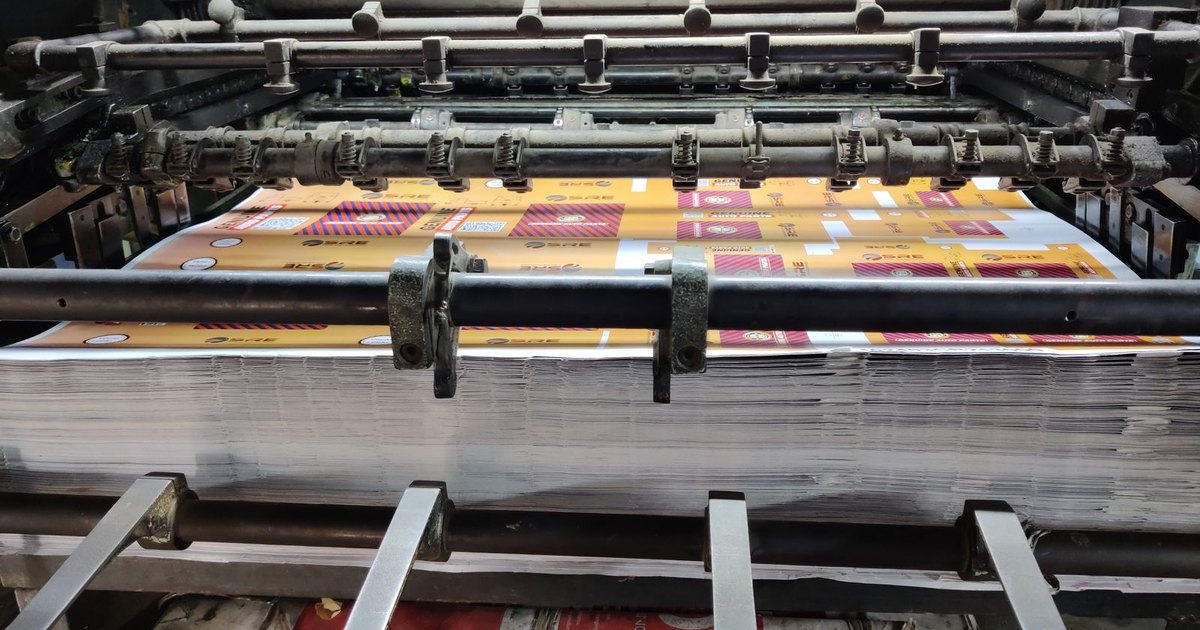
You are quoting a printed carry-bag order, and the buyer has left the base paper open: “kraft, your call on the finish.” That one choice, brown or white, unbleached or bleached, sets your print result, your bag strength and a chunk of your material cost before the reel is even mounted. Most converters default to whatever the mill quoted first. The finish deserves a deliberate decision.
For most carry-bag work, unbleached natural kraft is the stronger, cheaper choice, and bleached white kraft is worth its premium only when print fidelity or a white brand look genuinely drives the order. Bleaching strips lignin to whiten the sheet, and that same delignification costs fibre strength. The trade is real, it is measurable, and it runs in a predictable direction. This guide sets out where each finish earns its place on a converting line supplying QSR chains, retail and export buyers.
What is the difference between bleached and unbleached kraft paper?
Unbleached kraft is brown because it keeps most of its lignin. Bleached kraft is white because chemical stages remove that lignin and brighten the fibre. Both start as virgin softwood or mixed pulp cooked by the kraft (sulphate) process, so the difference is entirely in what happens after cooking. That single processing step drives every downstream property a converter cares about: colour, strength, printability and price.
Unbleached kraft is natural brown packing paper that retains its lignin and delivers the highest fibre strength of the common bag grades. Bleached kraft is the same base pulp taken through an oxygen and chlorine-dioxide (ECF) or fully chlorine-free sequence to remove colour, producing a white, higher-brightness sheet at some cost to strength.
The correct Indian base-paper standard for both is IS 1397:2020, “Kraft Paper for Packing and Wrapping (Third Revision),” which the Bureau of Indian Standards classifies into Grade 1, Grade 2 and Grade 3. Note what this means: there is no separate BIS finish standard that says “bleached” or “unbleached.” You specify the grade under IS 1397 and state the finish, brightness and food-contact requirement as your own line items on the purchase order. For the wider terminology behind these grades, our paper converter glossary defines the base-paper properties that matter at incoming inspection.
Brown still dominates the market it is measured against. According to the IMARC Group, brown (unbleached) kraft holds roughly 68% of the India paper bags market, which reached about USD 791.65 million in 2025. White is the exception buyers pay extra for, not the default.
Does bleaching make paper weaker?
Yes. Bleaching lowers intrinsic fibre strength, and the effect is documented, not folklore. Lignin binds and stiffens the fibre wall, so removing it to whiten the sheet leaves the individual fibres measurably weaker. That shows up as lower tear and burst at equal grammage. For a carry bag that has to survive a loaded handle and a full grocery run, the penalty is not academic.
The size of the penalty is quantifiable. According to a peer-reviewed study in the journal BioResources (North Carolina State University) tracking a softwood kraft bleaching line, the oxygen delignification stage alone produced a 4.8% to 15.6% decrease in zero-span tensile strength, with tensile index and tear strength declining further along the bleaching sequence. Zero-span tensile is the tensile test run on so short a span that only individual fibre strength is measured, not the bonding between fibres, which is why it isolates the bleaching effect so cleanly.
For a converter, the practical reading is straightforward. At the same GSM, a natural kraft carries a higher burst factor and tear index than its bleached equivalent. If a bag must hold a demanding load, either specify unbleached, or step up the grammage on a bleached sheet to recover the lost strength, which then partly erodes the cost logic for choosing white in the first place. Verify the real numbers against your supplier’s certificate. Our guide to burst factor, tear index and porosity testing covers the acceptance methods.
Print Quality: Why a White Substrate Widens Your Colour Gamut
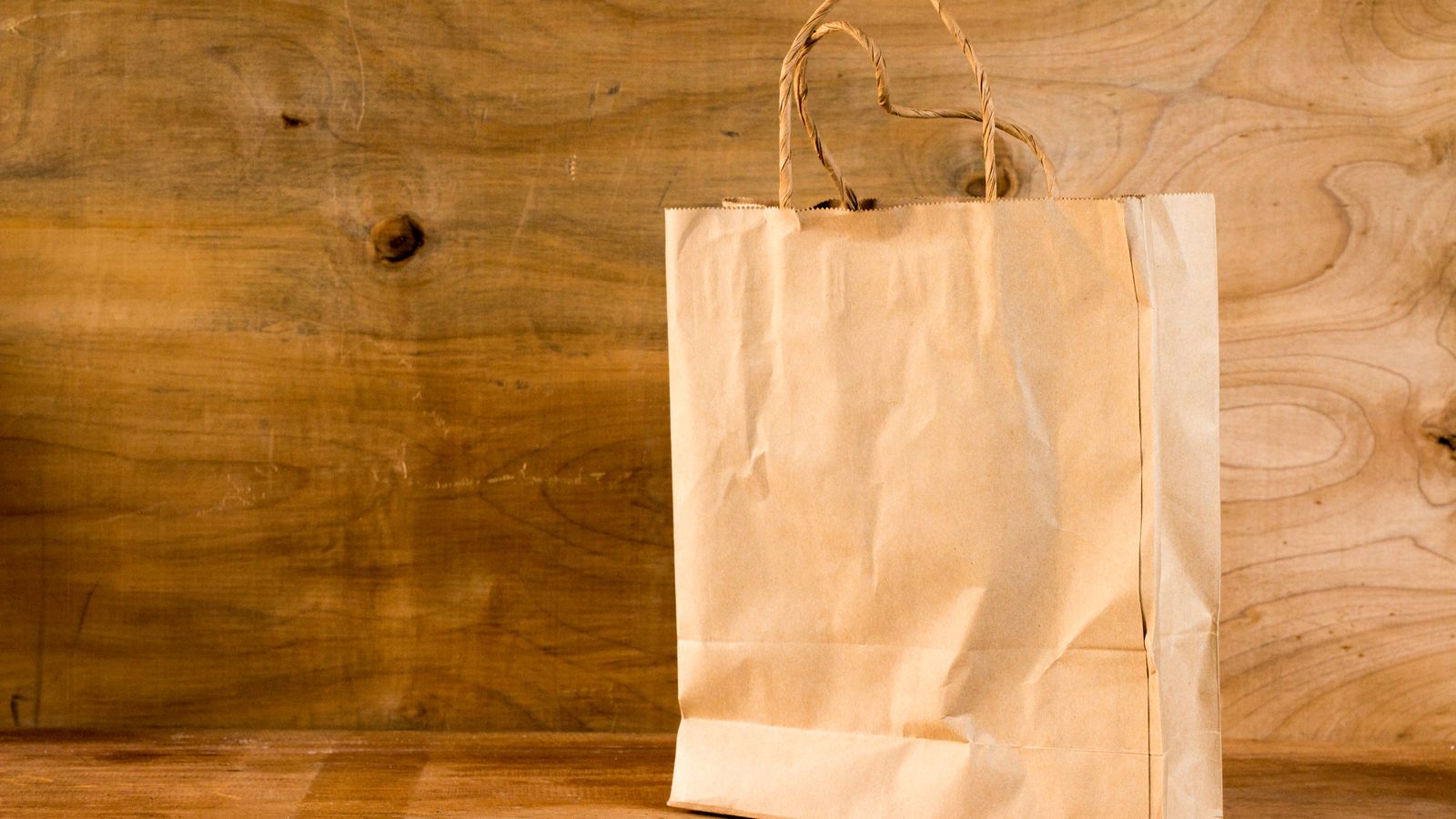
A whiter substrate prints brighter, more accurate colour and cleaner contrast. That is the single strongest reason to pay for bleached kraft. Ink is semi-transparent, so the paper beneath it is part of the final colour. A brown sheet dulls and shifts every ink laid over it, while a white sheet lets the ink read as intended. For a QSR logo with tight brand colours, that difference decides the order.
The mechanism is measurable. According to the Flexographic Technical Association, substrate white point is critical because some brand colours simply need a whiter sheet than typical papers provide, and ideal print contrast sits in a 40% to 60% band that is far easier to hit on a bright substrate. Absorbent, uncoated stock such as natural kraft also runs higher optical dot gain, the tendency of printed dots to spread and darken, which pushes mid-tones muddy without compensation on the plate.
This does not make brown unprintable. A one- or two-colour line print, a solid flood, or a deliberately rustic craft aesthetic all work well on natural kraft, and much of India’s retail and food-service bag printing is exactly that. The honest rule is to match the substrate to the artwork. Process-colour photographic work and precise brand palettes justify bleached; bold line art and single-colour branding do not. Our guide to paper bag printing, ink adhesion and registration covers the substrate-prep side of getting either finish to print cleanly.
How much more does bleached kraft cost?
Bleached kraft carries a meaningful premium over natural. As a working figure, expect brown to sit roughly 15% to 25% below white grades, though this is industry convention rather than a published Indian bag-kraft price. The extra chemical stages, yield loss during bleaching and lower supply volume all feed the gap. On a price-sensitive, high-volume carry-bag contract, that premium moves the margin line directly.
According to Fastmarkets, brown grades trade at roughly a 15% to 25% discount to white in the reference kraft markets, and 100% virgin kraft itself runs a further premium over high-recycled grades. Read these as directional. They establish that white is a deliberate cost decision, not a like-for-like swap. Get a current per-tonne quote for both finishes on your exact grade before you price a job, because the spread narrows and widens with pulp and chemical cycles.
The cost picture also compounds with the strength point above. If you choose bleached and then raise the grammage to recover strength, you pay the finish premium and the extra grams. For contracts where the buyer cares about landed cost per bag, that combined effect is often what tips the specification back to natural kraft. Our base paper procurement checklist sets out what to lock in the quote so the finish decision does not spring a cost surprise later.
Bleached vs Unbleached: A Converter’s Decision Matrix
No single finish wins on every axis, so score the options against the properties your order actually rewards. The matrix below rates the four common carry-bag finishes across strength, printability, food-contact suitability and cost, on a 1-to-5 scale where 5 is best for that criterion.
| Finish | Strength | Printability | Food-contact suitability | Cost (5 = cheapest) | Best for |
|---|---|---|---|---|---|
| Natural unbleached kraft | 5 | 2 | 5 | 5 | Heavy grocery and takeaway bags, price-led volume, rustic brand look |
| Semi-bleached / cream kraft | 4 | 3 | 4 | 4 | A lighter look without the full white premium; mid-tier retail |
| Fully bleached white kraft | 3 | 5 | 3 | 2 | Process-colour brand printing, premium retail, white shopping bags |
| White-top kraft (bleached top, brown back) | 4 | 4 | 3 | 3 | A white print face with retained strength on the back ply |
For load-bearing, cost-driven and food-contact bags, natural unbleached kraft is the default and usually the right answer. Reserve fully bleached white for orders where brand print fidelity is the deciding factor. White-top kraft is the useful middle path when a buyer wants a white printed face but the bag still has to carry weight, since you get a bleached surface for print and a brown ply for strength.
Food-Contact and Compliance: Where Bleaching Actually Matters
For direct food-contact carry bags, the finish decision carries a compliance dimension that has nothing to do with looks. Under the Food Safety and Standards (Packaging) Regulations, 2018, paper-based food-contact materials should be made from virgin pulp and free from optical brightening agents, and any printing ink must conform to IS 15495, with the printed surface kept off direct contact with the food. An optical brightening agent (OBA) is a fluorescent whitening additive used to make bleached paper look whiter, which is precisely the class of additive the food-contact guidance flags.
This is a genuine point in favour of natural kraft for food bags. Because unbleached paper is not chasing a high white point, it typically has no need for OBAs, which removes one migration concern at source. A bleached sheet destined for food contact should be specified as OBA-free and virgin-pulp, and you should hold the supplier’s declaration on file. The requirement to keep the printed surface off the food applies to both finishes, since it is a bag-construction and print-placement issue, not a colour one. Our guide to food-grade paper bag compliance under FSSAI covers migration testing and the ink-contact rule in full.
Where the food-contact requirement and a white-look request collide, say a QSR wanting a bright printed bag that also touches food, white-top kraft or an OBA-free bleached grade with the print kept to the outer face is usually the workable answer. State it explicitly on the purchase order. Do not assume the mill’s standard white grade is OBA-free.
Where Each Finish Makes Sense, and Where It Does Not
Natural unbleached kraft makes sense for the bulk of Indian carry-bag demand: grocery and takeaway bags that carry real load, price-led retail volume, food-contact bags where the OBA-free path is simplest, and any brand that wants a craft or sustainable visual. It does not make sense where a buyer needs faithful process-colour printing or a clean white shopping-bag aesthetic, because pushing brown there produces a dull, off-brand result and a rejected sample.
Fully bleached white kraft makes sense for premium retail, precise multi-colour brand work and white shopping bags where the look is the product. It does not make sense as a blanket default, since you pay a 15-to-25% premium and accept lower fibre strength for a whiteness many orders never needed. White-top kraft covers the overlap of a white print face with a strong back ply, and it is the finish most converters under-use.
The wider sustainability read is the same balanced one. Uncoated kraft in either finish is repulpable and recyclable, and both can be sourced PFAS-free unless a fluorochemical grease barrier is deliberately added. Bleaching is not automatically “less green” when done chlorine-free, but natural kraft avoids the bleaching chemistry entirely and carries the lower cost and higher strength with it. For the certification angle that export and QSR buyers increasingly ask about, see our guide to FSC, PEFC and sustainability certifications.
How to choose the base-paper finish for a carry-bag order
Work the decision in a fixed order so the finish is set by the order’s real requirements, not by the first mill quote:
- Read the artwork first. Process colour or a precise brand palette points to bleached or white-top; single-colour or line art stays on natural kraft.
- Set the load requirement. Fix the target burst factor and tear index for the bag’s intended weight, then check whether a bleached sheet can meet it at your planned GSM or needs a step-up.
- Apply the food-contact test. If the bag holds food directly, default to natural kraft or an OBA-free, virgin-pulp bleached grade, and require the supplier declaration and IS 15495-compliant inks.
- Price both finishes on your exact grade. Get current per-tonne quotes for natural and bleached at the same GSM, and add any grammage step-up needed to recover strength before you compare.
- Confirm on a sample reel. Print the actual artwork on both candidate substrates and check colour, registration and handle-pull before committing the full run.
Frequently Asked Questions
Is bleached or unbleached kraft stronger for carry bags?
Unbleached kraft is stronger at the same grammage. Bleaching removes lignin to whiten the sheet, and that delignification lowers intrinsic fibre strength. A BioResources study measured a 4.8% to 15.6% fall in zero-span tensile strength from the oxygen stage alone, with tear declining further along the sequence. For load-bearing bags, natural kraft or a higher-GSM bleached sheet is the safer specification.
What GSM difference offsets the strength loss from bleaching?
There is no fixed universal figure, because it depends on the pulp, the bleaching sequence and your load target. As a working approach, if a natural kraft meets your burst factor at a given GSM, expect to step a bleached equivalent up by a grammage band and re-test, then confirm the actual burst and tear on the supplier’s certificate rather than assuming a rule of thumb.
Can bleached kraft paper be used for food carry bags?
Yes, if it is specified correctly. Under the FSSAI Packaging Regulations 2018, food-contact paper should be virgin pulp and free from optical brightening agents, with IS 15495-compliant inks kept off the food-contact surface. Require an OBA-free, virgin-pulp declaration from the mill, and do not assume a standard white grade qualifies.
Which BIS standard covers kraft base paper for carry bags?
IS 1397:2020, “Kraft Paper for Packing and Wrapping (Third Revision),” is the correct Indian standard, classified into Grade 1, Grade 2 and Grade 3. There is no separate BIS specification for a paper carry bag itself, and IS 14490 (plain copier paper) and IS 1848 (writing and printing papers) do not apply. You specify the IS 1397 grade plus your own finish, brightness and food-contact line items.
Is unbleached kraft more sustainable than bleached?
Both are repulpable and recyclable when uncoated, and both can be sourced PFAS-free unless a grease barrier is added. Natural kraft avoids bleaching chemistry and carries lower cost and higher strength, so it is often the simpler sustainable choice, though chlorine-free bleached kraft is not disqualified. Judge it on the specific grade and certification, not the colour.
Last reviewed: August 2026
Choosing base paper for a printed carry-bag line? Pakka’s food-grade wrap and carry papers are engineered to hold print fidelity and bag strength together across bleached and natural finishes. Explore the range and download the technical spec sheets at pakka.com/product-category/food-wrap-carry. For a grade matched to your artwork, load target and food-contact requirement, talk to our technical team.
Browse all Pakka articles.
You may also like