Flexo, Gravure, or Digital on Paper Substrates: What Changes When You Move Off Film

Moving a job from film to paper changes the substrate more than the press. Flexo, gravure and digital can all print paper. What changes is how ink soaks in, how rough the sheet looks to a gravure cell, whether the print sits outside the pack, and how a sheet that moves with humidity holds register.
Most Indian flexible-packaging converters will meet this question on a gravure press. That press was set up for reverse-printed PET or BOPP, with solvent ink, and the print was buried under a laminate. Paper undoes several of those assumptions at once, starting with the ink and ending with the trial that decides whether the switch is worth making.
It is written for the print and process people at a converter or laminator, not for the brand owner choosing a pack. If you need the vocabulary first, our coating base paper glossary defines the terms used below. The specification side of the same base is covered in the hub on how to specify a release liner base paper.
What actually changes when a print job moves from film to paper?
Five things change: the substrate absorbs ink instead of holding it, its surface is rougher and less uniform, it is often printed on the outside instead of reverse-printed, it moves with humidity, and its surface energy comes from fibre and sizing rather than from corona treatment. The press is usually the smallest change of the five.
| What the printer relies on | Reverse-printed film (PET, BOPP) | Paper base (40-60 g/m², uncoated or lightly coated) |
|---|---|---|
| Ink holdout | Ink sits on a closed, non-absorbent surface | Ink is partly absorbed into the fibre network; holdout depends on sizing and calendering |
| Surface energy | Set by corona or flame treatment at extrusion and again before print | Set by fibre, fillers and sizing; corona is not the usual control |
| Drying | Solvent evaporates from the surface | Water or solvent evaporates and also penetrates the sheet |
| Where the print sits | Under the laminate, protected | Often on the outside, exposed to rub and to the next layer in the reel |
| Dimensional behaviour | Stretches under tension | Expands and shrinks with moisture, more across the web than along it |
| Typical ink system in India | Solvent-based gravure | Water-based flexo is common; solvent gravure still possible |
Each row is a separate source of print defects. Two of them have posts of their own: the rules for printed food packaging are in food-contact compliance for coated paper, and moisture behaviour on a light web is in running 40-60 GSM paper on a coating line.
Why does ink behave differently on paper than on film?
Ink behaves differently on paper because paper is porous and film is not. On film, ink dries on the surface and its adhesion is decided by surface treatment. On paper, part of the ink vehicle soaks into the sheet, so holdout, dot spread and drying speed all depend on how open the surface is.
Film converters know the surface-energy problem well. According to Vetaphone’s Jan Eisby, writing in Packaging South Asia, all plastic film for packaging is surface treated at extrusion, but the treatment decays over time and varies from roll to roll, so PP is re-treated by corona before printing (Packaging South Asia, 2021). Paper does not get that step. Its wettability comes from how it was sized and calendered at the mill, which the printer cannot correct on press. A paper job that wets out badly cannot be rescued by turning up a corona treater the way a film job can.
Drying changes the most. The Flexographic Technical Association notes that water-based inks evaporate more slowly than solvent inks, which limits press speed. It also says they typically need about 24 hours to cure for full adhesion and carry a higher surface tension than solvent inks (FTA). On an absorbent base, part of the water leaves by penetration, not evaporation. That helps drying but pulls colourant into the sheet and lowers density. How much depends on the base’s porosity and air permeability, the same property that decides silicone consumption on a release liner.

A heavily sized or clay-coated surface can behave much closer to film, with fast holdout and slow drying. A press set up for a coated sheet can then run poorly on an uncoated one of the same grammage. Specify the surface as well as the GSM.
Can rotogravure print a lightweight paper without missing dots?
Yes, if the surface is smooth enough and the press has electrostatic assist. Gravure prints by transferring ink from engraved cells, so any spot where the paper does not touch the cylinder stays unprinted. On rough or uneven paper this shows up as missing dots in the highlights and mid-tones.
Holmen’s Paper Academy describes missing dots as small unprinted areas caused by a surface that is too coarse, poor contact between substrate and cylinder, or static that stops cells emptying. Severity is measured as missing dots per 100 mm² or as a percentage of a perfect print, and the remedies are electrostatic printing assist (ESA) or a coarser screen (Holmen). Film rarely has this problem because its surface is closed and uniform.
The usual roughness measure for gravure is Parker Print-Surf. Under ISO 8791-4 it measures the average gap between the sheet and a flat ring pressed on it, over a range of 0.6 to 6.0 µm (PTS). For a benchmark, UPM’s supercalendered rotogravure paper UPM Max G lists PPS 10 roughness of 1.4 µm at 39 g/m² and 1.2 µm at 48-56 g/m² (UPM Max G datasheet), which gives a benchmark for paper made for gravure. A packaging base that was never supercalendered will usually be rougher.
Roughness alone does not settle it. A TAPPI coating conference paper on LWC rotogravure papers found that printability “may or may not correlate with PPS roughness”, and that pore structure mattered as much (TAPPI, 2000). Ask for PPS, but judge the base on a printed missing-dots test on your own cylinders.
How should a flexo printer set anilox and ink for paper?
Start from the ink supplier’s recommendation for the specific paper, then pick the anilox to suit. On an absorbent base you usually need somewhat more ink volume for the same solid density than on film. Fine process work still needs a fine screen with low volume, or dots fill in.
Harper’s published anilox ranges show the trade-off. Heavy lines and solids run at 180-330 lpi and 9-4 BCM, while process work runs at 500-1200 lpi and 2.8-0.9 BCM (Harper). The FTA notes that high-strength water-based inks can run spot colours on 2.5 BCM and process on 1.2 BCM (FTA). It also says that “in many cases, the volume will be dictated by the ink supplier” (FTA).
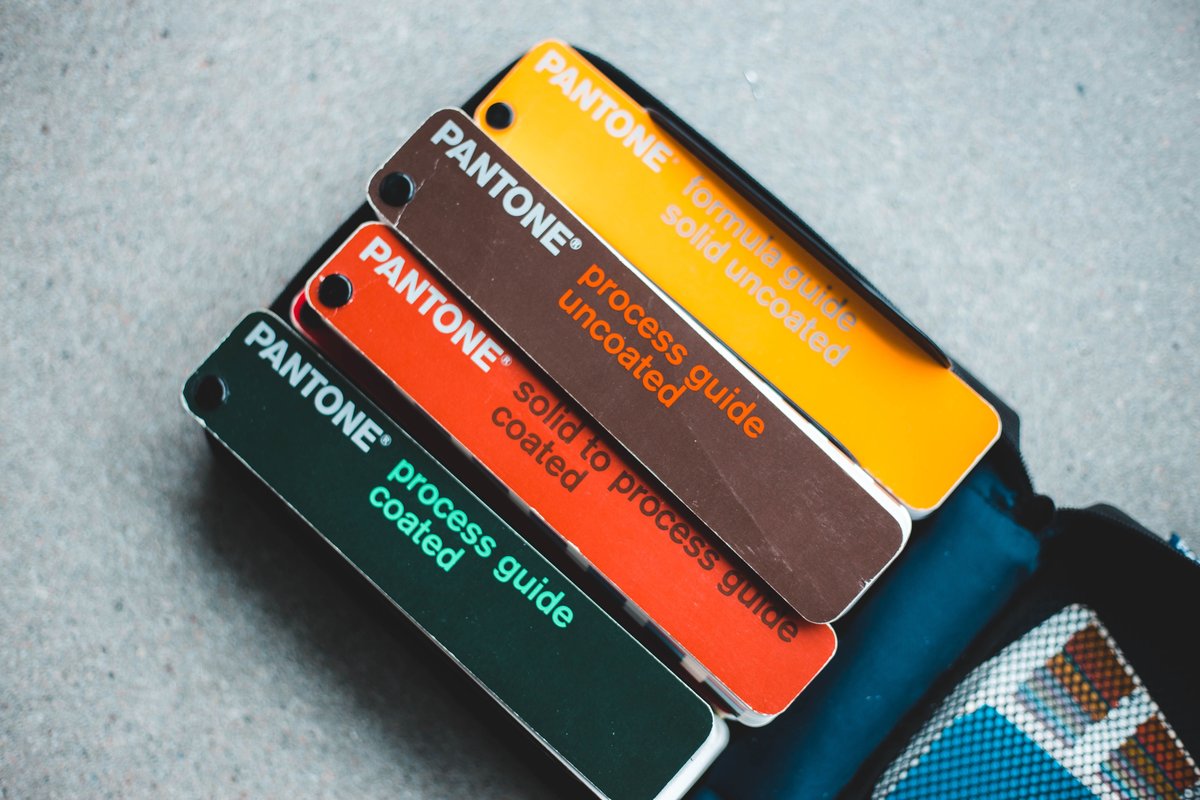
Colour standards need adjusting too. Colour references are issued separately for coated and uncoated stock because the same ink film looks different on each. A brand’s film target therefore cannot simply be reused on paper. ISO 12647-6 covers process-colour flexo for packaging and ISO 12647-4 covers gravure, so agree a paper-specific target with the brand before the first proof rather than after a rejected run. Our converters team covers the bag-side version of these problems in ink adhesion and registration on paper.
When does digital make sense for paper-based flexible packaging?
Digital makes sense for short runs, many SKUs and trial quantities, where plate or cylinder cost would dominate. Current liquid-toner web presses accept paper as well as film, so substrate is rarely the barrier. Width, speed and cost per square metre are what limit it.
HP’s published specification for the HP Indigo 200K is a useful reference. It takes webs from 400 mm to 762 mm wide and substrates from 10 to 400 µm thick, and lists paper alongside pre-laminates. In-line priming handles “virtually any substrate” (HP). Its stated speed is 56 m/min in enhanced productivity mode and 40 m/min in four-colour mode. A CI flexo or gravure line runs several times faster than that.
HP also states that its ElectroInk meets EU and FDA food-packaging requirements but adds that “converters must perform their own assessment” (same source). On paper that assessment matters more, because the print may be on the outside of the pack and in contact with the next layer in the reel. For a converter qualifying a new base, digital is the cheapest way to print trial packs for a brand without cutting cylinders.
Which process pays off at which run length?
In India the default is still gravure, and on long repeat runs it still wins. Gravure’s cylinder cost is paid once and spread across reruns. Flexo pays for plates on every run but makes short runs and frequent artwork changes cheaper. Digital is cheapest only below the point where plates would pay back.
Packaging South Asia reported in May 2026 that close to 90% of flexible packaging in India is still printed by gravure, with flexo growing at about 7% a year (Packaging South Asia, 2026). In 2015 a press supplier put gravure at around 95% (Packaging South Asia, 2015).
Two trade interviews explain the economics. Packaging South Asia reported that flexo plates can save perhaps as much as 15% against cylinders on short runs and arrive in a matter of hours, while a good CI flexo operator in India can cost twice a gravure operator (Packaging South Asia, 2018). Paharpur 3P’s chief executive argued that gravure prepress is “incurred only on the first run”, so after a few reruns gravure becomes the cheaper process (Packaging South Asia, 2019). These are opinions from people who sell or run one process, so read them as positions, not data.
This decision matrix scores each process for a converter printing a paper base. Scores run from 1 (weak) to 5 (strong) and are an editorial judgement from the sources above, not measured data.
| Criterion | CI flexo, water-based | Rotogravure, solvent | Digital, liquid toner |
|---|---|---|---|
| Cost on short or one-off runs | 4 | 2 | 5 |
| Cost on long repeat runs | 3 | 5 | 1 |
| Tolerance of a rough or open paper surface | 4 | 2 | 4 |
| Speed of artwork change and new SKUs | 4 | 2 | 5 |
| Fit with existing Indian press base and skills | 3 | 5 | 2 |
| Total (out of 25) | 18 | 16 | 17 |
| Best fit | Mid-length runs on uncoated or lightly coated paper | Long repeat runs on smooth, calendered paper | Trials, short runs, many SKUs |
The totals are close because no process wins outright on paper. If the base is rough, gravure loses the advantage it has on film. If runs are long and the paper is smooth, it keeps it.
What changes when the print is on the outside of the pack?
On film, the print sits under the laminate and never touches the product or the next reel layer. On a mono-paper or paper-outer structure, the print often sits on the surface. It then has to resist rub, it must not touch food, and it can transfer onto the inside of the next wrap in the reel.
The Food Safety and Standards (Packaging) Regulations, 2018 require that printing inks on food packages conform to IS 15495, and that the printed surface of packaging material does not come into direct contact with food (FSS Packaging Regulations, 2018). The regulations came into force on 1 July 2019 (Siegwerk Ink Safety Portal). IS 15495 was revised in 2020. The revision added toluene to its exclusion list, and it caps the combined lead, cadmium, mercury and hexavalent chromium in printing ink at 100 ppm (PrintWeek India, 2022). The food-contact post linked above covers the migration testing behind this.
Export work adds more. Switzerland’s amended ordinance on packaging inks took effect on 1 February 2024, with non-compliant inks allowed on the market until 31 January 2026 (Keller and Heckman). Low-migration ink systems built for that market are the usual reference point for exporters.
Rub resistance is the practical test. ASTM D5264 measures abrasion resistance of printed packaging on a Sutherland rub tester (ASTM). A surface-printed paper usually needs an overprint varnish or a coating over the ink to pass the rub level a reverse-printed film passes without one. Budget for that coating station or varnish unit before costing the switch.
How does paper’s moisture response affect print register?
Paper changes size as its moisture content changes, and it changes more across the web than along it. On a multi-colour press, a sheet that gains or loses moisture between stations can drift out of register. Film moves mainly under tension, which the press already controls.
Research on hygroexpansion in paper sheets confirms the cross-direction effect is larger than machine direction, because fibres lie mostly along the web and swell mainly in their width (Erkkilä et al., 2015). Water-based ink adds moisture at every station, so a light sheet can grow slightly across the web as it moves through a CI flexo press.
In practice, three controls help: condition reels to the pressroom before printing, keep pressroom humidity stable, and use automatic register control that corrects across the web. The runnability post linked earlier covers reel conditioning through the Indian monsoon in more detail.
What should a print trial on a new paper base record?
A print trial should record enough to reproduce or reject the result: the substrate, the press set-up, what came off the press, and how the print held up afterwards. Without these records, a good first trial cannot be repeated and a bad one cannot be diagnosed.
- Substrate data: grammage, PPS or Bendtsen roughness on the print side, Cobb value, moisture on arrival and at press, and which side was printed.
- Press set-up: process, anilox or cylinder specification, ink system and viscosity, dryer temperatures, line speed, and whether ESA was on.
- Print result: solid density, dot gain at the 25%, 50% and 75% patches, missing dots per 100 mm² on gravure, and register drift across the web over the length of the run.
- After press: rub resistance to ASTM D5264, set-off checked by unwinding a reel after storage, and ink adhesion by tape test once fully cured. FTA’s 24-hour cure guidance applies here.
- Waste and downtime: metres to colour, web breaks, and time spent on unplanned adjustment, measured against the film job the paper would replace.
Use the film job’s figures from the same press as the baseline, since a paper result only means something against what the line does today.
Where a paper coating base fits
A paper base suits a converter who already has a coating or laminating step and wants to replace film in part or all of a structure. It is a poor fit where the pack depends on reverse print buried under film, on gravure highlights on a rough sheet, or on a speed that only film achieves.
A light paper will not match film for register stability in a humid pressroom. An uncoated base will not hold gravure highlights the way a supercalendered sheet does. Surface print brings varnish, rub and set-off work that a reverse-printed laminate never needed. Where those constraints decide the job, staying on film or moving to a heavier coated paper is the honest answer.
Where they do not, a base designed to be coated gives the printer more control. Barrier, sealant or silicone goes on in a known order, and the print surface can be chosen to suit the process rather than inherited from a sheet built for something else.
This is the problem Pakka’s flexC base programme is aimed at. flexC base is a coating base paper in the 40-60 GSM band, bleached and unbleached, intended as a substrate for silicone, biopolymer and plastic barrier coatings applied by the converter (Pakka Limited, Investor Presentation Q1 FY2026-27, filed 18 August 2026, BSE 516030 / NSE PAKKA). It is a development programme, not a stocked grade. We are not publishing print or surface data for it until trial results exist and have been signed off.
flexC base is also a separate product from flexC. flexC is Pakka’s finished compostable flexible-packaging laminate, sold to brand owners. flexC base is the uncoated base a converter would print and coat.
Frequently asked questions
Can you print paper on a gravure press set up for film?
Yes, but expect changes. Paper needs ESA or a coarser screen to avoid missing dots, different ink viscosity and drying, and colour targets set for paper. Smooth calendered papers print well by gravure. Rough uncoated bases often do not.
Is flexo or gravure better for paper packaging?
Neither wins outright. Water-based CI flexo copes better with open, uncoated paper and short runs. Gravure is cheaper on long repeat runs and does best on smooth, calendered paper.
Why does print look duller on paper than on film?
Paper absorbs part of the ink and scatters light from its fibre surface, so solids print at lower density and colours look flatter than on clear or metallised film. A coated or calendered surface, or more ink volume, narrows the gap.
Which printing ink standard applies to food packaging in India?
The FSS (Packaging) Regulations, 2018 require printing inks on food packages to conform to IS 15495, revised in 2020. The printed surface must not come into direct contact with food.
Can digital presses print paper for flexible packaging?
Yes. Liquid-toner web presses such as the HP Indigo 200K list paper among supported substrates, with in-line priming. They suit short runs and trials, but run slower than flexo or gravure.
Last reviewed: October 2026
Trialling print on a paper coating base? If you are weighing flexo, gravure or digital for a paper structure and want a base to run alongside your current film job, send us a flexC base trial enquiry with your press type, ink system, web width and the film structure you print today. Technical brochures for our paper and packaging range are on the resources page, and general enquiries reach us through the same contact page.
Sources
- Packaging South Asia, Rajesh Kumar, It’s no longer about flexo versus gravure, May 2026
- Packaging South Asia, Flexo poised to capture market share in India, March 2015
- Packaging South Asia, Naresh Khanna, CI flexo catches on while faster and more automated gravure gets efficient, December 2018
- Packaging South Asia, Paharpur votes for gravure, May 2019
- Packaging South Asia, Nick Coombes, Know your dynes, September 2021
- Flexographic Technical Association, Important considerations for water-based and UV energy-curable inks
- Flexographic Technical Association, Understanding the anilox
- Harper Corporation, Anilox line screen
- Holmen Paper Academy, Preventing missing dots in printing
- PTS Papiertechnische Stiftung, Roughness Parker Print-Surf
- UPM Communication Papers, UPM Max G
- TAPPI Coating Conference 2000, Effects of pigment type and pore structure on optical properties and rotogravure printability of LWC paper
- HP, HP Indigo 200K digital press
- Food Safety and Standards (Packaging) Regulations, 2018, text; Siegwerk, Ink Safety Portal: regulations in Asia
- PrintWeek India, Stringent regulation for ink as per IS 15495:2020, March 2022
- Keller and Heckman, Swiss printing inks ordinance updated
- ASTM, D5264-98(2019) Practice for abrasion resistance of printed materials by the Sutherland rub tester
- A.-L. Erkkilä et al., Hygroexpansivity of anisotropic sheets, Nordic Pulp and Paper Research Journal 30(2), 2015
- Pakka Limited, Investor Presentation Q1 FY2026-27, filed 18 August 2026 (BSE 516030 / NSE PAKKA)
Browse all Pakka articles.
You may also like
