Sachet Paper: The Substrate Requirements Nobody Writes Down

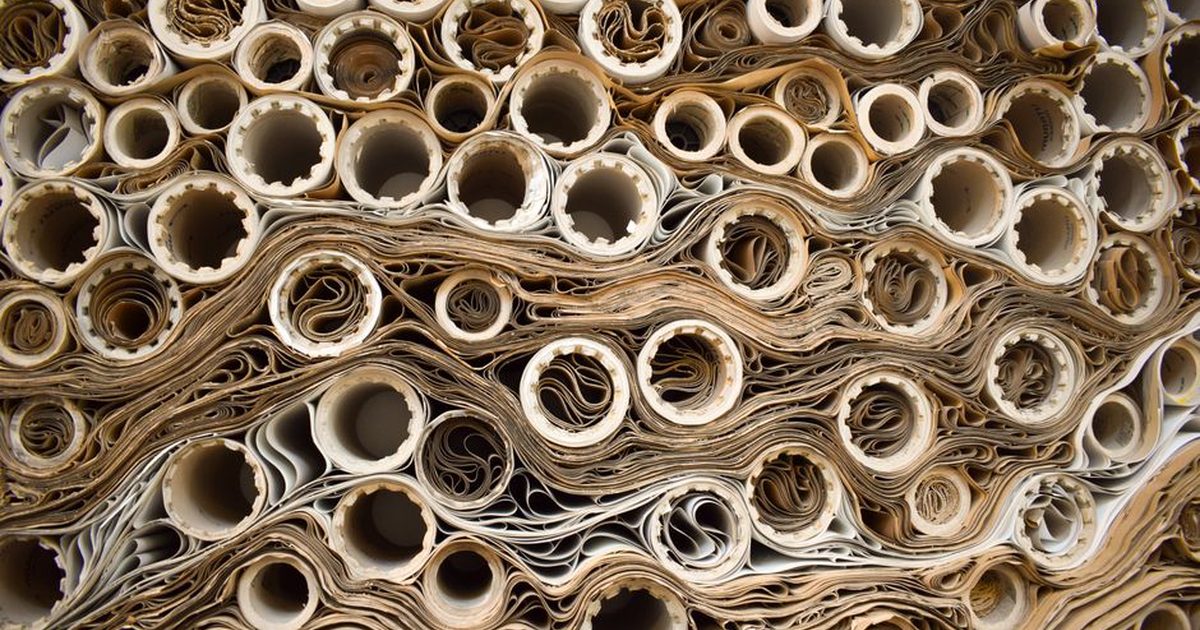
A sachet base paper is specified by what happens at the seal, not by what happens across the face. Four-side-seal sachets fail at crimped corners and folded edges long before the panel gives way, so a base is judged on how it behaves when it is crushed, creased and heated in the same half second.
That is the requirement almost no supplier datasheet describes. Grammage, thickness and brightness are on every certificate. Flex-crack behaviour, seal-through-contamination tolerance and edge-wick rate are on none of them, and those are the three properties that decide whether a paper sachet reaches a customer intact.
A sachet here means a small, flat, single-dose pack formed and filled in one pass on a form-fill-seal line: shampoo, ketchup, spice powder, oral rehydration salts, seed treatment, instant coffee. It is the highest-speed, lowest-margin format in flexible packaging, which is exactly why substrate variability hurts more here than anywhere else.
What does a sachet actually demand from its base paper?
A sachet base must do five things at once: accept a sealable coating without absorbing it, survive a crimped fold without cracking, resist wicking of the product along its cut edge, hold print through a hot jaw, and run at line speed without web breaks. No single number on a mill certificate reports any of them directly.
The reason is structural. A sachet is a paper problem only for a moment; the rest of the time it is a coating problem and a machine problem. What the base contributes is the surface the coating sits on and the fibre network the crimp has to survive. Surface closure decides how much sealant stays where it was applied, which is the same mechanism that governs porosity and silicone consumption in a coating base in the release-liner world. Fibre length and refining decide whether the crease folds or fractures.
Each of those five demands maps to a published method, which is what lets a converter write them into a purchase specification rather than argue after a failed run. Grammage goes to TAPPI T 410 and thickness to TAPPI T 411; the pair reveal apparent density, a better predictor of coating pick-up than either alone. Surface openness goes to TAPPI T 460 (Gurley) or ISO 5636-3 (Bendtsen). Water absorptiveness of the cut edge goes to the Cobb test, TAPPI T 441. Seal strength, once coated, goes to ASTM F88. The TAPPI standards catalogue carries the current revision numbers, and quoting the revision matters because test conditions change between them. Two clauses save arguments later. Where a property has two competing methods, as air permeability and roughness both do, name one and hold the supplier to it. And require conditioning under TAPPI T 402 standard atmosphere, 23 degrees Celsius and 50 per cent relative humidity, because paper properties move with moisture and an unconditioned result compares with nothing.
None of those methods tests the sheet in the geometry that actually fails, which is the catch. A Cobb value measures absorption into a face, not capillary travel along a knife-cut edge under a filled head of liquid product. A converter who has only face data has characterised the wrong surface, and the honest response is a filled-pack trial rather than a tighter certificate.
How light can a sachet base paper go before the seal starts failing?
Lower grammage does not by itself weaken a seal. What it weakens is the sheet’s tolerance for everything else going slightly wrong: less material to absorb a jaw that runs hot, less stiffness to hold the web flat into the sealing station, and less margin between a crimp and a crack. The failure is usually a compound of thin gauge and an unforgiving line.
Sachet formats have always run light because the pack is small and the material cost per unit is the whole commercial argument. Standard glassine release grades, by comparison, sit at roughly 50 to 80 g/m². That band is a useful benchmark, because glassine is the most tightly controlled lightweight paper in commercial production and it shows what the industry treats as manageable at the light end. A sachet base below that band is not unprecedented, but it removes the forgiveness that made the incumbent structure reliable.
Two mechanical properties carry the load once grammage falls. Tensile strength in the machine direction sets how much web tension the line can apply before a break, and burst strength indicates how the sheet resists the out-of-plane stress at a filled corner. Both are already familiar territory to any converter who has worked through burst factor, tear index and porosity testing on a heavier grade; the methods do not change, the tolerances do. The cross-direction moisture profile matters more than either at low grammage, because a wet streak across the web arrives at the sealing jaw as a soft band that seals differently from the reel next to it.
The limit is real and worth stating plainly: at some point a paper sachet stops being a paper problem and becomes a laminate problem, because the structure needs a film ply to carry the barrier and the seal. A converter evaluating a light base should be asking which of those two products they are actually buying, and a supplier who will not answer that is selling optimism.

Why do paper sachets leak at the corners rather than through the face?
Because the corner is the only place in the pack where four material states meet at once: a fold, a cut edge, a crimp under pressure, and a sealant film being asked to bridge a step change in thickness. The face of a sachet is under almost no stress by comparison. Leak testing that only checks the panel will pass packs that fail in the box.
The mechanism has two parts. First, flex cracking: repeated or sharp folding fractures a coating or metallised layer, opening pinhole paths that were not there when the reel left the mill. That is measurable. ASTM F392 defines the Gelbo flex durability method for flexible barrier materials, and it exists precisely because barrier measured on a flat sheet overstates barrier in a folded pack. Second, edge wick: the cut edge of a paper web exposes open fibre ends, and a liquid or oily product will travel along them by capillary action even when the face is well coated. Crimp tooling makes both worse in the same place, because the tooth profile that grips the web also concentrates strain on the coating exactly where three folds converge. Neither failure shows up in a face-side barrier number, which is why a structure can carry a good transmission figure on its datasheet and still lose packs in a distribution trial.
Both are testable before a commercial run. ASTM F1929 covers dye penetration for detecting seal leaks in porous packages, which is the appropriate family of method for a paper-based structure, and ASTM D3078 covers bubble-emission leak testing under vacuum for a filled pack. Run both on packs that have been deliberately abused first: dropped, box-compressed, held through a temperature cycle. Packs taken straight off the machine are the population that never fails, which is why testing them proves very little.
Both methods have a blind spot. Dye penetration and vacuum bubble tests find gross leaks and channel defects, not slow moisture ingress through an intact but marginal barrier. A pack can pass both and still fail shelf life. That is a different test and a different property, which is the subject of the next section.
Which barrier does a sachet really need, and which barrier is oversold?
Barrier requirements for sachets vary by more than an order of magnitude across product classes, and specifying to the hardest case by default is one of the most common sources of avoidable cost in the format. A spice powder and an effervescent tablet are not the same packaging problem, and a structure that suits one is wasted on the other.
The controlling variables are the product’s own water activity, its oxygen sensitivity and its intended shelf life. Moisture transmission is measured as MVTR or WVTR under ASTM F1249, and oxygen transmission under ASTM D3985, both at a stated temperature and relative humidity. A transmission figure quoted without its test conditions is not a specification, it is a number. Indian conditions make this less theoretical than it sounds: the same pack that holds through a dry winter can fail across a monsoon, which is the reasoning behind MVTR benchmarks set against monsoon humidity rather than against a laboratory default.
| Sachet product class | Dominant sensitivity | What the structure has to deliver | Where paper alone falls short |
|---|---|---|---|
| Dry spice, seasoning, instant mixes | Moisture and aroma loss | Moderate MVTR, grease hold at the seal, aroma retention | Aroma barrier is weak without a coated or laminated layer |
| Liquid personal care (shampoo, oil) | Edge wick, seal integrity | Liquid-tight seal, edge resistance, chemical compatibility with the sealant | Cut-edge wicking; needs edge protection or a sealable coating carried to the edge |
| Oral rehydration salts, effervescents | Moisture, aggressively | Very low MVTR, no pinholes after flexing | Paper structures rarely reach foil-level MVTR |
| Sauces and oily condiments | Grease and seal-through contamination | Grease resistance, sealant that seals through product residue | Grease resistance without fluorochemicals needs a coating, not a base property |
| Seed and agri-input packs | Breathability control, print, handling | Controlled permeability, tear and print performance | Requirements vary by product; no single structure covers the class |
The oversold half of the answer: aroma and oxygen barrier are frequently specified for products that are consumed within weeks and stored indoors, where the true constraint is seal reliability, not transmission rate. Oxygen barrier is genuinely load-bearing for fats that go rancid and for oxygen-sensitive actives. It is largely decorative on a single-dose spice sachet with a three-month turn. Reviewing the actual shelf-life requirement before the structure is the cheapest saving in the format, and it is one a converter can raise with a brand customer credibly.
One class of product sits outside this argument entirely. Anything carrying a regulated shelf-life claim or a pharmaceutical registration cannot be value-engineered on this logic, because the structure is part of the filing. Those decisions belong with the customer’s regulatory function, not with the packaging spec.

How does paper behave on an HFFS or VFFS sachet line?
Paper runs differently from film in three specific ways: it is stiffer in bending but weaker in tension, it carries moisture that changes with the room, and it does not stretch to recover from a tracking error. A line set up for a film laminate will usually need its tension profile, jaw temperature and dwell re-established rather than adjusted.
Sealing is where the difference concentrates. A film structure conducts heat quickly through a thin section; paper is an insulator, so the jaw has to hold longer or run hotter to bring the sealant layer to temperature, and both of those choices have a cost. Longer dwell reduces the cycle rate, which shows up directly in packs per minute. Higher jaw temperature narrows the gap between the sealant’s activation point and the paper’s scorch point, and on a light base the visible result is a brittle, discoloured crimp. The workable answer is a properly established seal window, meaning a mapped set of jaw temperature, dwell and pressure combinations that produce an acceptable ASTM F88 seal strength. A single set point copied across from the film job is not that.
Hot tack is the property that catches converters out. Seal strength is measured on a cooled seal; hot tack is the strength of the seal in the moment the jaws open and the product drops against it. On a vertical line filling a dense powder, hot tack failure looks exactly like a seal defect and is caused by machine timing, not by the base paper. Web tension compounds it: paper has less elastic recovery than film, so a tension setting inherited from a film job tends to run high and drives edge tears at the former.
Print behaves differently too, and for the same reason as coating. An open sheet absorbs ink vehicle and dulls the print; a closed sheet can starve ink adhesion. The trade-offs mirror those already worked through in ink adhesion and substrate preparation on paper, and for food-contact work the ink system itself carries a compliance obligation. IS 15495:2020 is the Indian code of practice for printing inks used on food packaging, and it sits alongside the wider FSSAI food-contact requirements that a converter already handles for food-grade paper packaging.
It is worth saying that some sachet lines cannot be made to run paper economically at all. A machine built for a 12-micron film laminate at high speed, with fixed jaw geometry and no tension zone control, may lose enough output converting to paper that the material saving disappears. That verdict is reachable in a one-shift trial, and it is cheaper to reach it early than to discover it in a contract.

What belongs on a sachet paper specification before you place the order?
A sachet paper specification needs eight properties, each with a named test method, a target and a tolerance. A specification without methods is a wish list, because two mills will measure the same property differently and both will be entitled to say they conformed.
The list below is the working minimum. It deliberately separates properties of the base from properties of the finished structure, because a base paper supplier can be held to the first group and cannot be held to the second.
| Property | Method | Why it belongs on the sheet |
|---|---|---|
| Grammage | TAPPI T 410 | The commercial basis of the purchase and the input to every yield calculation |
| Thickness (caliper) | TAPPI T 411 | With grammage, gives apparent density, which is the real predictor of coating pick-up |
| Air permeability | TAPPI T 460 (Gurley) or ISO 5636-3 (Bendtsen) | Governs how much sealant or barrier coating the sheet absorbs |
| Cobb value | TAPPI T 441 | Indicates water absorptiveness, relevant to edge behaviour and to coating |
| Tensile strength, MD and CD | TAPPI T 494 | Sets the safe web tension window on the converting line |
| Burst strength | TAPPI T 403 | Proxy for resistance to out-of-plane stress at a filled corner |
| Moisture content and CD profile | TAPPI T 412 | The most common cause of reel-to-reel sealing variation |
| Roughness or smoothness | ISO 8791 (Bendtsen) or TAPPI T 538 (Sheffield) | Governs coating uniformity and print quality; specify one method, not both |
Two additions worth writing in beyond the property table. First, a reel specification: width tolerance, core diameter, splice frequency and splice marking, and a maximum permitted diameter variation. Splices that arrive unmarked on a high-speed sachet line are a running cost, not a quality note. Second, an acceptance protocol: how many reels are tested, against which methods, and what happens when one fails. The same discipline applies here as in any structured base paper procurement, and the vocabulary behind these properties is set out in the paper converter glossary if any of it needs unpacking.
Structures for a paper-based sachet divide into four families, and each asks something different of the base beneath it.
| Structure | What the base has to deliver | Barrier ceiling | Seal robustness | End-of-life story |
|---|---|---|---|---|
| Paper with a heat-sealable coating | High surface closure, clean edge, uniform coating pick-up | Low to moderate | Moderate; sensitive to seal-through contamination | Strongest, being closest to a mono-material paper stream |
| Paper laminated to a sealant film | Consistent lamination surface, bond strength, dimensional stability | Moderate | Good | Mixed; depends on ply ratio and local recovery infrastructure |
| Paper with a metallised or high-barrier ply | Smoothness and flatness for the barrier ply, flex tolerance | High | Good | Weak; multi-material by construction |
| Conventional all-plastic laminate (incumbent) | Not applicable, no paper ply | High | High | Weak; the reason the substitution question exists at all |
Read down the columns rather than picking a row. Barrier and end-of-life pull in opposite directions in every paper sachet decision, and the structure that is right is the one whose barrier ceiling clears the product requirement identified in the previous section, not the one with the highest ceiling on offer.
Where a paper coating base fits
Start with the limits. Paper does not match a metallised film or a foil laminate for moisture and oxygen barrier at equal thickness, and no amount of surface treatment on the base changes that; barrier on a paper structure comes from what is coated or laminated onto it. Cut-edge wicking is a genuine weakness of paper in liquid sachets. Porosity is the hardest property to hold consistently at low grammage, and it is the property most likely to vary reel to reel. Any supplier quoting a porosity, holdout or barrier figure for a base paper that has not completed pilot production is quoting an intention, and a converting technologist is right to discount it.
That is the frame for our own work. Pakka is developing flexC base, a coating base paper in the 40-60 GSM band, in bleached and unbleached form, intended as a substrate for barrier chemistries generally rather than for one coating system: silicone, biopolymer or plastic. Sachets are one of the eight target applications the company has disclosed for it, alongside confectionery wraps, snack pouches, medical packaging, seed packs, release liners, dry food liners and tea pouches (Pakka Limited, Investor Presentation Q1 FY2026-27, filed 18 August 2026, BSE 516030 / NSE PAKKA).
The naming needs care, because two products share it. flexC is Pakka’s finished compostable flexible-packaging laminate, sold to brand owners as a converted material. flexC base is the uncoated coating base paper described here, sold to the coater or converter who applies their own barrier chemistry. Different products, different buyers, and a specification written for one does not describe the other.
We are not attaching performance numbers to flexC base. No air permeability, Cobb, tensile, barrier or seal figures are published for it, because it is a development programme and pilot data does not exist yet. Publishing a number now would be marketing rather than specification, and this reader can tell the difference. The conversation worth having at this stage runs on requirements: which product class you are packing, which structure family you are converting, what your seal window looks like today, and what a trial would have to demonstrate before a reel is worth qualifying.
Frequently asked questions
What paper is used for sachets?
Sachet packs are generally built on a lightweight coated or laminated paper rather than on paper alone, because the sealant and the barrier are applied to the base rather than being properties of it. The base itself is a coating base paper: uncoated, made to receive a functional coating downstream, and selected for surface closure, edge behaviour and strength at low grammage rather than for appearance.
Can a paper sachet replace a plastic laminate sachet?
For some product classes, yes; for others, not at current barrier performance. Dry products with short shelf lives and indoor storage are the most substitutable, because their true constraint is seal reliability rather than transmission rate. Products needing near-foil moisture barrier, such as effervescents and oral rehydration salts, remain difficult on a paper structure. The decision should follow a measured shelf-life requirement, not a category preference.
How do you test whether a paper sachet seal is sound?
Use a leak method suited to a porous structure alongside a strength method. ASTM F1929 covers dye penetration for seal leaks in porous packages, and ASTM D3078 covers bubble-emission leak testing of a filled pack under vacuum. Seal strength itself is measured under ASTM F88. Run the leak tests on packs that have been dropped, compressed and temperature-cycled first, rather than on packs taken straight from the machine.
Why does my paper sachet crack at the fold?
Because folding fractures the coating or barrier layer rather than the paper, opening pinhole paths that were absent in the flat sheet. ASTM F392 defines the Gelbo flex durability test for exactly this failure mode, and it exists because barrier measured flat consistently overstates barrier in a folded pack. Fibre length, refining and the flexibility of the coating all affect the result; a barrier figure quoted without a flex test tells you about the reel, not about the pack.
What GSM is right for sachet paper?
There is no single correct grammage, because the target depends on the structure, the product weight and the machine. Lower grammage reduces material cost and reduces the sheet’s tolerance for a hot jaw, a high tension setting or a wet streak in the reel. Establish the seal window and the tension window on the specific line first; the grammage that runs reliably inside both is the right one, and it will not be the same across two lines running the same product.
Last reviewed: August 2026.
Specifying a base paper for a sachet structure and want to test these assumptions against your own line? Talk to our technical team. Mark the enquiry as a flexC base trial enquiry and tell us the product class, the structure family you convert and the seal window you run, and we will answer with what we can and cannot yet evidence. Contact Pakka. Technical brochures and material documentation for our current paper and packaging range sit on the resources page.
Browse all Pakka articles.
You may also like