Winter Reel Handling: Moisture, Curl, and the Runnability Problems That Only Show Up in Q4


Most winter runnability problems on a paper bag machine trace back to moisture. A reel that sat overnight in an unheated godown arrives at the machine colder and drier on its outer wraps than in its core. Kraft paper moisture content then shifts across the web as it unwinds, which is when curl, cracked folds, glue failures and static start.
This guide is for converters running W-cut, D-cut and flat-handle machines in north and central India, where November to February brings cold nights, foggy mornings and dry afternoons. It covers what moisture the reel should carry, why curl gets worse in Q4, how long to condition a reel before it goes on the unwind stand, and what to change in storage and in the purchase spec before December. If any of the terms are new, our paper converter glossary defines them.
Why do paper bag machines run worse in winter?
Paper bag machines run worse in winter because the paper and the room stop agreeing on moisture. Paper is hygroscopic, so it takes up water from humid air and gives it back to dry air, and its dimensions change as it does. In a north Indian winter the hall air swings from foggy and near-saturated at dawn to dry by mid-afternoon, while a cold reel lags behind both.
Three things happen together in Q4, and each one shows up on the machine in a different way:
- A reel stored in an unheated godown overnight can be several degrees colder than the hall. If its surface is colder than the hall’s dew point, moisture condenses on the outer wraps.
- As relative humidity falls through the day, the exposed web loses moisture faster than the wound reel, so the first metres off the reel behave differently from the rest.
- Drier kraft is more brittle at the fold and builds static more easily, which affects sheet transfer, handle patching and stacking at delivery.
The paper as made is usually within spec. What has changed is the gap between its equilibrium moisture and the room it runs in. Equilibrium moisture content is the moisture a paper settles at when it has been left long enough in a given temperature and humidity; change the room and the paper drifts towards a new value.
What moisture content should kraft paper have at the bag machine?
Kraft paper for bags should arrive within the moisture band you agreed with the mill and should be run at a moisture close to the equilibrium of your own hall. The Indian standard sets only a ceiling. Table 1 of IS 1397:1990, the BIS kraft paper specification, sets moisture content at 9 percent maximum for all three grades, measured “as received without conditioning” (IS 1397:1990, Table 1). The standard was revised as IS 1397:2020, so check the current table on your copy before you write it into a purchase order. A reel at 8.5 percent passes the standard, but if your hall sits at a low humidity on a December afternoon, that reel will lose moisture as it runs, and the web will shrink across its width while it does. The figure that matters on the line is the difference between the reel and the room, and the difference across the reel’s width.
The physics gives a rough sense of scale. According to Charles Green’s dimensional stability notes, a 10 percent change in relative humidity approximates a 1 percent change in paper moisture, and the coefficient of moisture expansion is typically 0.03 to 0.06 percent per percent of moisture in the machine direction and 0.07 to 0.17 percent in the cross direction (Green, Dimensional Stability Notes). Hygroexpansion, the change in a paper’s dimensions as its moisture changes, is therefore two to three times larger across the web than along it. That is why winter trouble on a bag machine usually shows up in the cross direction first: tube width, side-seam overlap and gusset folds.
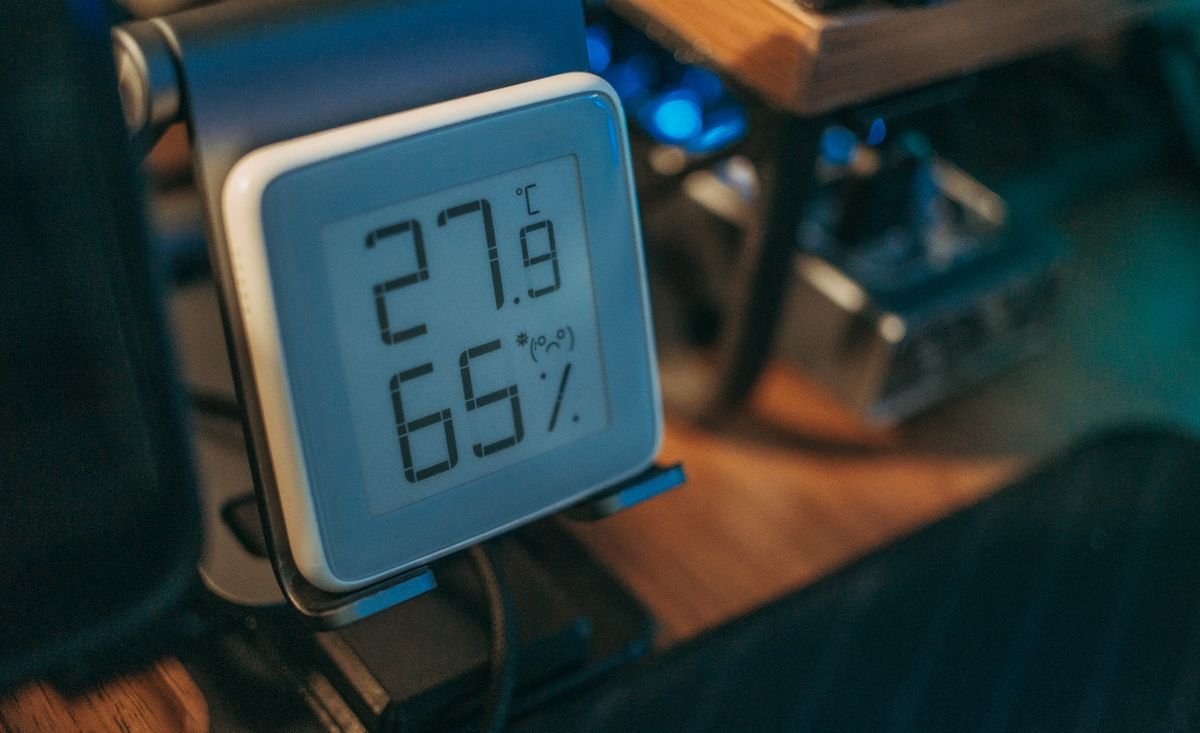
For testing, the reference atmosphere matters. ISO 187 sets 23 °C and 50 percent relative humidity as the standard atmosphere for conditioning and testing paper and board, and allows 27 °C and 65 percent in tropical countries where the first is hard to reach (ISO 187:2022). If your lab tests a winter reel straight out of a cold store and compares it with a summer certificate, you are comparing two different things. Our testing guide for base paper buyers covers how conditioning changes burst and tear results.
Why does paper reel curl get worse in Q4?
Paper reel curl gets worse in Q4 because the two faces of the web, and the outside and inside of the reel, end up at different moistures. Kraft is made two-sided: the wire side and the top side differ in fibre orientation and fines, so they expand by different amounts for the same moisture change. When one face dries faster than the other, the web curls towards the drier face.
Winter makes that gradient steeper in three ways. The outer wraps of a reel that travelled on an open truck through a cold night are drier or wetter than the core, depending on whether it met dry air or fog on the way. The exposed web between the unwind stand and the forming section dries on one face if the hall is dry and a heater or fan blows across it. And reels taken from the bottom of a stack on a cold floor pick up moisture at the lower edge, which gives you a reel that is tighter at one end than the other.
On the machine, curl shows up as:
- Side-seam glue lines that open because the overlap is fighting the curl.
- Tubes that wander on the forming plate, so the tube width varies along the run.
- Bottom folds that crack on the score line, more often on heavier grades.
- Flat handles that peel at the patch because the patch and the bag body curl in opposite directions.
- Bags at delivery that will not stack flat, which slows counting and baling.
If curl appears on the first few hundred metres and then settles, the reel was out of balance with the room and corrected itself as you ran into the core. If it lasts the whole reel, look at the paper’s two-sidedness and at your own unwind tension. The machine compatibility guide covers how W-cut, D-cut and flat-handle lines differ in their tolerance for a curly web.
Which winter runnability problem points to which cause?
Most winter faults trace back to one of four causes: a moisture gradient through the reel, a temperature gap between reel and room, low humidity in the hall, or adhesive behaving differently in the cold. The table below maps the common symptoms to a likely cause and the first check worth making before anyone changes a machine setting.
| Symptom on the line | Likely winter cause | First check | Quick fix to try |
|---|---|---|---|
| Curl on the first 200 to 500 m, then settles | Outer wraps out of balance with the hall | Moisture of outer wraps vs 20 mm in | Condition reels longer; strip one more wrap |
| Curl along the whole reel | Two-sidedness plus dry hall air | Which face the web curls towards | Check unwind tension; ask the mill about two-sidedness |
| Cracking on the bottom fold or score line | Paper too dry and stiff at the fold | Moisture at the fold area; fold direction vs grain | Raise hall humidity; check score depth |
| Side-seam or bottom glue opening | Cold adhesive, cold paper, or curl pulling the lap | Adhesive and paper temperature at the start of shift | Warm the glue store; let reels reach hall temperature |
| Water marks or wavy edges on outer wraps | Condensation on a cold reel | Reel surface temperature vs hall dew point | Keep reels wrapped until they reach hall temperature |
| Sheets clinging at delivery, misfeeds | Static in dry air | Hall relative humidity in the afternoon | Ionising bars; humidify the delivery end |
| Tube width drifting during the run | Cross-direction shrinkage as the web dries | Tube width at start vs after 30 minutes | Shorter exposed web path; avoid heaters blowing on it |
The table gives a first check. Record moisture and hall humidity alongside every complaint for a few weeks and you will see which rows apply to your line. The converting line quality control guide sets out tolerances for the checks above.
How long should a reel be conditioned before it goes on the line?
A reel should stay wrapped in the hall until its outer wraps are at the hall’s temperature, and only then be unwrapped and run. For a full-width kraft reel that typically means planning at least a day between moving it out of an unheated godown and loading it, and longer for large-diameter reels, because the core lags the surface. The protective wrap is what stops condensation and moisture pickup while the reel warms up, so taking it off early defeats the purpose. The condensation risk is easy to work out. At a hall temperature of 25 °C and 60 percent relative humidity, the dew point is about 17 °C (our calculation, using the standard Magnus approximation). A reel brought in from a godown that fell to 10 °C overnight will collect moisture on any surface that is still below 17 °C. That moisture goes into the outer wraps, and those wraps then run wavy, stick or tear at the splice.
A simple conditioning routine for the winter months:
- Move the next day’s reels from the godown into the hall at the end of the previous shift, still in their wrap.
- Stand them on pallets, off the floor and away from doors, heaters and fans.
- Before unwrapping, check the outer wrap temperature with an infrared thermometer against the hall reading.
- Unwrap only when the reel is within a couple of degrees of the hall, then strip the damaged or wavy outer wraps.
- Measure moisture at three points across the width with a pin or handheld moisture meter, and note it against the reel number.
- Load the reel, and run the first few hundred metres while watching tube width and glue lines.
- Log any reel that misbehaves with its moisture and the hall humidity at the time.
After a month the log shows which suppliers’ reels need longer and which faults go away once conditioning is done properly. Our post on reducing waste on the converting line shows how to cost the start-up waste that a badly conditioned reel adds.

What happens to glue, static and print in a dry winter hall?
In a dry winter hall the adhesive sets differently, static builds on the web, and flexo inks dry faster, so settings that worked in September can fail in December without any change in the paper. These are separate problems from moisture curl, but they arrive in the same months and are easy to blame on the reel.
Water-based bag adhesives thicken in the cold. If the glue drum sits overnight in a cold store, the first hour of the shift runs a heavier, slower-wetting line, and a cold web absorbs it more slowly. Keeping the adhesive store at hall temperature and letting the paper reach that temperature too removes most early-shift glue failures. If the adhesive supplier gives a minimum application temperature, check it against your morning readings.
Static comes with dry air. When hall humidity falls low, kraft webs and finished bags hold charge, and you see it as bags clinging to the delivery table, misfeeds on handle patching, and dust picked up on printed areas. Ionising bars at the delivery end help, and so does raising the humidity locally.
Inline flexo on a bag machine also changes behaviour. Faster drying in a dry hall can leave ink on the anilox and plate, which shows as fill-in and loss of fine detail. A cross-direction shrink of a fraction of a percent can also push multi-colour registration out on wide bags. Coaters face the same moisture-profile issue at lower grammages, and our guide to running 40 to 60 GSM paper on a coating line covers web tension and breaks in more depth.

What should converters change in storage and the purchase spec before December?
Before December, converters should fix storage so reels stay wrapped, dry and off cold floors, and should put a moisture band and a packing requirement into the purchase order. Both cost little compared with a winter of start-up waste and customer complaints about split bags.
On storage, the main points are:
- Keep reels on pallets, never directly on a concrete floor that stays cold and draws moisture into the lower edge.
- Store reels on end with the wrap intact until they move to the hall, and rotate first-in, first-out so nothing sits through several weeks of temperature swings.
- Keep the godown closed at night; open doors on a foggy morning bring saturated air straight onto cold reels.
- Put a thermometer and hygrometer in both the godown and the hall, and read them at the start of each shift.
On the purchase spec, add:
- A moisture band, not just a maximum, with the test method named, and ask for the reading on each lot’s certificate of analysis.
- Moisture-proof wrapping and end caps on every reel, with damaged wraps noted at receipt.
- Two-sidedness or curl tendency as a discussion point with the mill if curl persists after proper conditioning.
Our base paper procurement checklist has a full template for those clauses.
Conditioning and storage fix most winter problems, but they cannot make a reel with poor moisture uniformity across its width run like a good one. If moisture varies noticeably from one edge of the reel to the other, the fix has to come from the mill.
How Pakka supports converters through the winter
Pakka supplies kraft and poster base paper for carry bags and wraps, and our technical team can share moisture and test data for each lot so you can set your conditioning routine against measured numbers. If your line is seeing the same curl or glue failures every winter, we can review your moisture logs with you and suggest which grade suits your machine and your hall. If the cause turns out to be storage or hall humidity, we will tell you that.
Frequently asked questions
What moisture content should kraft paper have for paper bag making?
Kraft paper for bags should be within the moisture band agreed with your mill and close to the equilibrium moisture of your hall. Table 1 of IS 1397:1990 caps moisture at 9 percent as received; the standard was revised in 2020, so confirm the current figure on your copy.
Why does my paper reel curl only in winter?
Winter widens the moisture gap between the reel’s faces and between its outer wraps and core. Cold storage, foggy mornings and dry afternoons all change the web’s moisture unevenly, and kraft’s two-sidedness turns that into curl towards the drier face.
How long should I keep a paper reel in the hall before running it?
Keep it wrapped in the hall until the outer wraps reach hall temperature, which for a full-width kraft reel usually means at least a day after it leaves a cold godown. Unwrap only then, so condensation does not form on the cold surface.
Can low humidity cause static on a paper bag machine?
Yes. In dry winter air kraft webs and finished bags hold static charge, which causes bags to cling at delivery, misfeeds at handle patching and dust on printed areas. Ionising bars and local humidification at the delivery end reduce it.
Last reviewed: November 2026
Ready to set a winter moisture band with your supplier? Explore Pakka’s food wrap and carry base papers, where spec-sheet PDF downloads are available for each grade. For a specific question about your line or your reels, contact our technical team.
Browse all Pakka articles.
You may also like