Why Packaging Converters Are Switching to Bagasse-Based Substrates: Technical Fit, Economics, and Regulatory Drivers

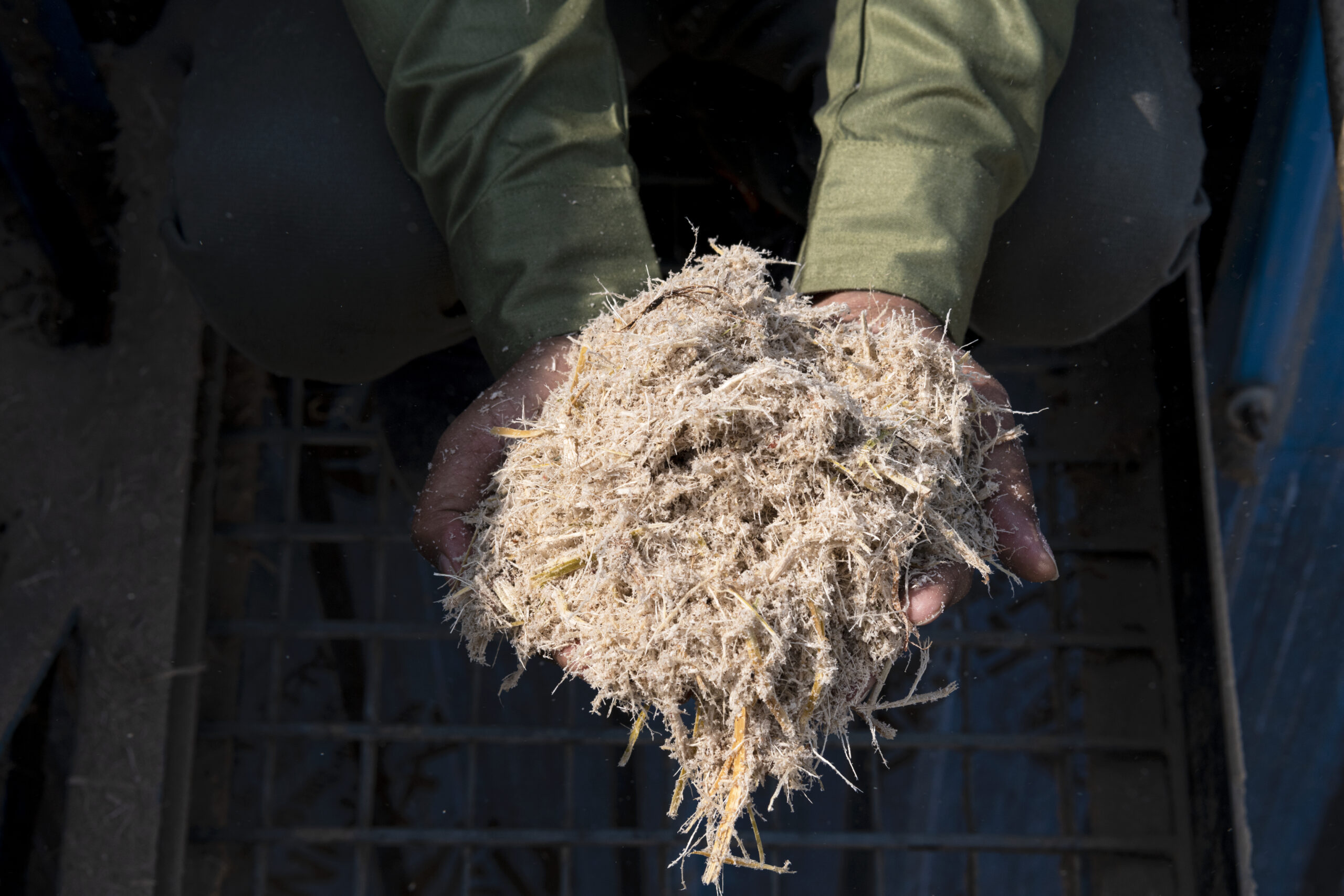
The packaging converting industry in India is adjusting to a market where the materials entering the factory are changing. End-brand customers are asking for substrates that meet EPR requirements, that carry compostability certification, and that do not create the end-of-life problems that conventional multilayer structures do. Converters who can process these materials are winning contracts. Converters who cannot are losing them.
India’s paper and board packaging market reached USD 14.2 billion in 2025 (Mordor Intelligence, 2025). Within that market, alternative fibre substrates — primarily bagasse — are the fastest growing segment because they address the regulatory and brand requirements that virgin wood pulp and recycled paper cannot fully satisfy.
This article covers the technical properties that make bagasse substrates convertible, the economics at Indian market prices, and the regulatory factors driving adoption.
Key takeaways
- Bagasse-based substrates run on standard converting equipment: die-cutters, thermoformers, flexographic printers, and laminating lines. Process adjustments are needed for moisture sensitivity and tear characteristics, but no capital equipment changes are required.
- India generates over 100 million tonnes of bagasse annually from sugarcane crushing. Raw material availability is not a constraint; it is an advantage.
- Bagasse paper achieves burst strength, tear resistance, and stiffness comparable to equivalent GSM virgin wood kraft. The fibre is shorter than wood pulp, which affects some converting behaviours.
- EPR for Packaging Rules (April 2026) create demand pull: brand clients want IS 17088 certified compostable packaging, and converters who offer it are preferred suppliers.
- The cost premium for bagasse substrate over recycled paper is 10 to 25%. The premium over virgin wood kraft is 0 to 15%, depending on grade and volume.
Material properties: what converters need to know
Bagasse fibre has a different profile from wood pulp fibre. Understanding the differences prevents converting problems.
Fibre length. Bagasse fibres are shorter than softwood kraft fibres (0.8 to 1.5 mm vs 2 to 4 mm for softwood). Shorter fibres produce paper with lower tear strength in the machine direction but more uniform formation. For moulded fibre products, shorter fibres actually improve mouldability and surface smoothness.
Bulk and stiffness. Bagasse paper at equivalent GSM has slightly higher bulk (thickness per unit weight) than wood kraft. This gives bagasse paper higher stiffness at the same GSM, which is advantageous for food service products where rigidity matters.
Strength properties. Well-processed bagasse paper meets the mechanical requirements for food packaging:
| Property | Bagasse paper (70 GSM) | Virgin wood kraft (70 GSM) | Test method |
|---|---|---|---|
| Burst strength | 2.0 to 2.8 kPa.m2/g | 2.5 to 3.5 kPa.m2/g | IS 1060 |
| Tear resistance (MD) | 5.5 to 7.0 mN.m2/g | 7.0 to 9.0 mN.m2/g | Elmendorf |
| Tensile strength (MD) | 45 to 60 Nm/g | 55 to 70 Nm/g | IS 1060 |
| Stiffness (Taber, MD) | 0.20 to 0.30 mN.m | 0.18 to 0.25 mN.m | TAPPI T489 |
Bagasse is slightly lower on burst and tear strength but higher on stiffness. For food service products (plates, trays, containers), stiffness is usually the critical property, which means bagasse performs well in the application where demand is highest.
Heat resistance. Bagasse substrates thermoformed at 150 to 200 degrees C produce products that handle service temperatures up to 220 degrees C. This exceeds the requirement for all food service applications.
Grease resistance. Uncoated bagasse has moderate inherent grease resistance. With PFAS-free water-based coatings, grease resistance reaches Level 12 on the 3M KIT scale. Coated bagasse paper handles hot oil contact for 45 to 60 minutes.
Converting compatibility
Thermoforming
Bagasse pulp thermoforms well on standard equipment. The shorter fibre length and natural pliability of bagasse pulp produce smooth, detailed moulds. Cycle times are comparable to conventional moulded fibre lines. Modern thermoforming equipment running bagasse pulp achieves throughput rates of 800 to 1,500 products per hour per mould set, depending on product complexity.
Die-cutting and creasing
Bagasse paper die-cuts cleanly but has different tear propagation than wood kraft. The paper tears more easily along the grain direction. For die-cut products (folding cartons, tray blanks), ensure the cutting direction accounts for grain orientation. Crease quality is good; the higher bulk of bagasse paper produces clean, sharp folds.
Printing
Bagasse paper accepts flexographic and offset printing. Surface smoothness on well-calendered bagasse paper is adequate for 4-colour process printing. Dot gain is slightly higher than on equivalent wood kraft due to the fibre structure, requiring print profile calibration. Ink adhesion is good with standard water-based and UV-curable inks.
For metallised bagasse paper (used in flexible packaging), print on the metallised surface delivers high-quality graphics with metallic visual effect.
Laminating and coating
Bagasse paper accepts water-based barrier coatings, biodegradable lamination, and vacuum metallisation. The key consideration is moisture sensitivity: bagasse paper absorbs moisture more readily than wood kraft, which can cause curl during coating operations if ambient humidity is not controlled.
The economics at Indian market prices
| Substrate | Price per kg (INR, 2026) | Key advantage | Key limitation |
|---|---|---|---|
| Post-consumer recycled paper | 45 to 55 | Cheapest | MOSH/MOAH risk for food contact |
| Virgin wood kraft (imported) | 65 to 80 | High strength | Import dependency, price volatility |
| Virgin wood kraft (domestic) | 55 to 70 | Moderate strength | Limited domestic supply |
| Bagasse paper (domestic) | 55 to 75 | Compostable, domestic supply | Seasonal raw material |
Bagasse paper prices in 2026 are competitive with domestic virgin wood kraft and 10 to 25% above recycled paper. The premium over recycled paper is justified by food-contact safety (no MOSH/MOAH contamination) and compostability (IS 17088 certification potential).
For converters, the relevant calculation is not just substrate cost but the contract value: brand clients paying for IS 17088 certified compostable packaging are willing to pay higher per-unit prices than clients buying generic food packaging paper. The substrate premium is passed through, and in many cases, converters earn higher margins on compostable products than on conventional ones.
The regulatory pull
Brand clients are driving the conversion to compostable substrates because of their own regulatory obligations:
EPR for Packaging Rules (April 2026). Brand owners must ensure their packaging is recycled or composted. Brands choosing compostable packaging need converters who can process IS 17088 certified substrates. Converters who offer this capability become preferred suppliers.
Export market requirements. The EU’s PPWR mandates recyclable or compostable packaging by 2030. Indian converters serving export brands need substrates that meet EN 13432 (aligned with IS 17088). Bagasse paper with the right certifications serves both domestic and export markets.
QSR and foodservice demand. QSR chains transitioning to compostable tableware need converters with thermoforming and moulded fibre capability on bagasse substrates. This is the highest volume, most consistent demand segment.
Converters who invest in bagasse processing capability now are positioning for contracts that will grow as EPR enforcement tightens and more brands transition.
Implementation: from trial to production
Stage 1: Material evaluation (Week 1-2). Request trial quantities of bagasse substrate in your required grades and GSM. Run laboratory tests for burst, tear, tensile, stiffness, and moisture content.
Stage 2: Process optimisation (Week 3-4). Run the substrate through your converting equipment. Adjust settings for die-cutting, printing, laminating, or thermoforming as needed. Measure reject rates, cycle times, and output quality.
Stage 3: Pilot production (Week 5-6). Produce a pilot batch of finished product for brand client evaluation. Confirm food-contact compliance, print quality, structural performance, and IS 17088 certification status.
Stage 4: Scale-up (Week 7+). Establish regular supply agreements with substrate suppliers. Lock in volume pricing and delivery schedules. Begin production for brand client orders.
The entire evaluation and pilot cycle can be completed within a single quarter with minimal capital risk, since no new equipment is typically needed.
Frequently asked questions
Does bagasse paper require different converting equipment?
No capital equipment changes are needed. Bagasse paper runs on standard die-cutters, thermoformers, flexographic presses, and laminating lines. Process adjustments (cutting parameters, tension settings, print profiles) are needed but do not require new equipment.
How does bagasse paper compare to wood kraft on strength?
Slightly lower on burst and tear strength, slightly higher on stiffness at equivalent GSM. For food service products where rigidity is the critical property, bagasse performs well. For applications requiring high tear strength (heavy-duty bags), wood kraft may be preferred.
Is the raw material supply reliable year-round?
Sugarcane crushing runs October to April, concentrating bagasse availability. Integrated suppliers manage year-round supply through pulp stockpiling and inventory management. Confirm supply continuity and lead times with your substrate supplier.
What IS 17088 certification does a converter need?
The finished product (substrate + coating + printing) must be IS 17088 certified. If you are converting a certified substrate, the certification may need to be extended to cover your specific coating and printing. Work with the substrate supplier and a testing laboratory to ensure the finished product is certified.
What margins do converters earn on compostable products vs conventional?
Typically higher. Brand clients pay premium per-unit prices for IS 17088 certified compostable packaging. The substrate cost premium is passed through, and the conversion value-add commands higher margins than commodity food packaging.
How do I manage the moisture sensitivity of bagasse paper?
Control ambient humidity in the converting environment (target 50 to 60% RH). Store substrate rolls in climate-controlled areas. Adjust tension and speed settings if curl or dimensional instability occurs. Most converting issues related to bagasse moisture sensitivity are resolved through environmental control and process optimisation.
Evaluating bagasse substrates for your converting operations? Talk to our team about trial quantities, substrate grades, and IS 17088 certification support.
Browse all Pakka articles.
You may also like