Imported Base Paper vs Domestic Supply: A Cost, Quality, and Lead-Time Comparison for Indian Converters

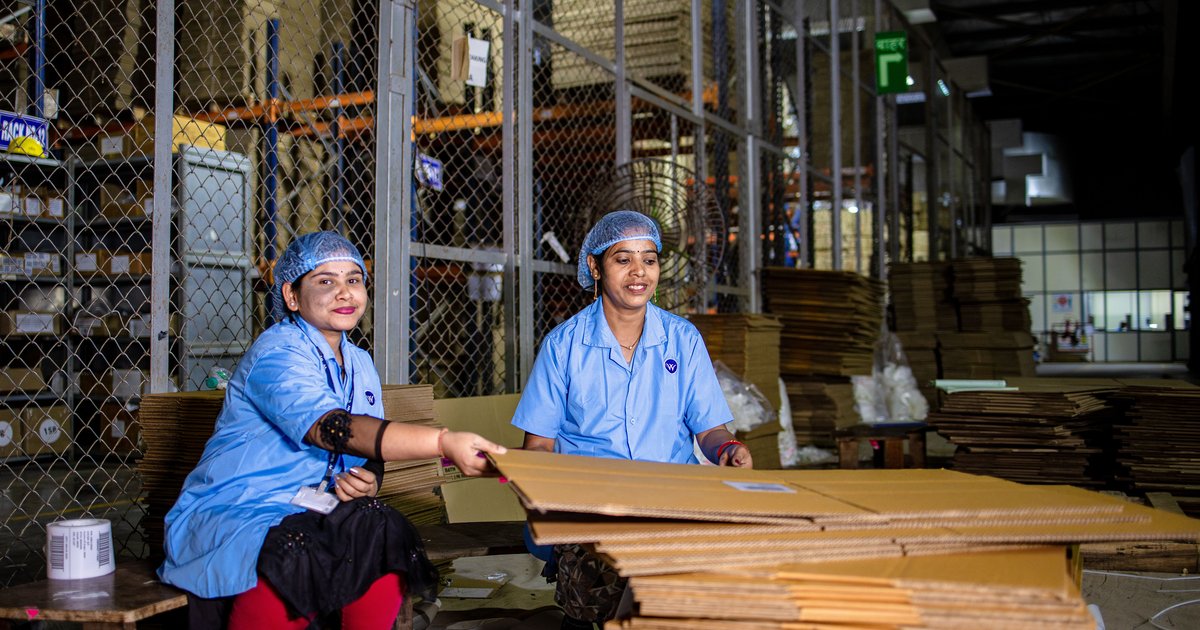
For most Indian paper carry bag converters, domestic base paper wins on lead time and small-order flexibility, while imported kraft can win on landed cost and sheet consistency for large, planned runs. The right answer is rarely all-or-nothing. It depends on your order book, your working capital, and how tightly your QSR and retail contracts specify the sheet. This guide compares the two routes on the three axes that move a converter’s margin: cost, quality, and lead time.
The decision matters more now than it did two years ago. India’s paper and paperboard imports crossed 2 million tonnes in FY25, worth about ₹14,629 crore, roughly double the level of four years earlier, according to the Indian Paper Manufacturers Association (IPMA). Imports have become a structural part of the base-paper supply, not an occasional top-up. A converter who understands the trade-offs sources better than one who defaults to whatever the last reel came from.
Is imported or domestic base paper cheaper for Indian converters?
Neither is reliably cheaper once you compute landed cost. Imported kraft can undercut domestic mill prices on the invoice, but the gap narrows or reverses after Basic Customs Duty, surcharge, IGST, freight, and the working capital tied up in a 30 to 60 day sea transit. Domestic supply carries no duty and shorter payment cycles, but mill list prices track international pulp and can sit above landed import prices when global paper is soft.
Landed cost is the total per-tonne cost of base paper delivered to your converting line: material price, customs duty, surcharge, IGST, inland freight, insurance, and the financing cost of transit and credit terms. This is the only number worth comparing across sourcing routes. An ex-mill or FOB price tells you almost nothing on its own.
The duty structure is the first thing to model, because it is the part converters most often leave out of a price comparison. For uncoated kraft paper and paperboard under HS heading 4804, imports into India typically attract Basic Customs Duty of 10%, a Social Welfare Surcharge of 10% levied on that BCD, and 12% IGST on the assessable value. On a China-origin invoice that stack adds up quickly, and it lands before you have paid a rupee of ocean freight, inland transport, insurance, or the interest on a letter of credit that stays open for the length of the voyage. A quoted FOB price that looks 8 to 10% below the domestic mill can close that gap entirely once duty and financing are added back. That is why the sourcing origin drives the economics as much as the sourcing route does, and why the comparison has to be run per shipment rather than settled once as a rule of thumb.
Why does the country of origin change the maths so much?
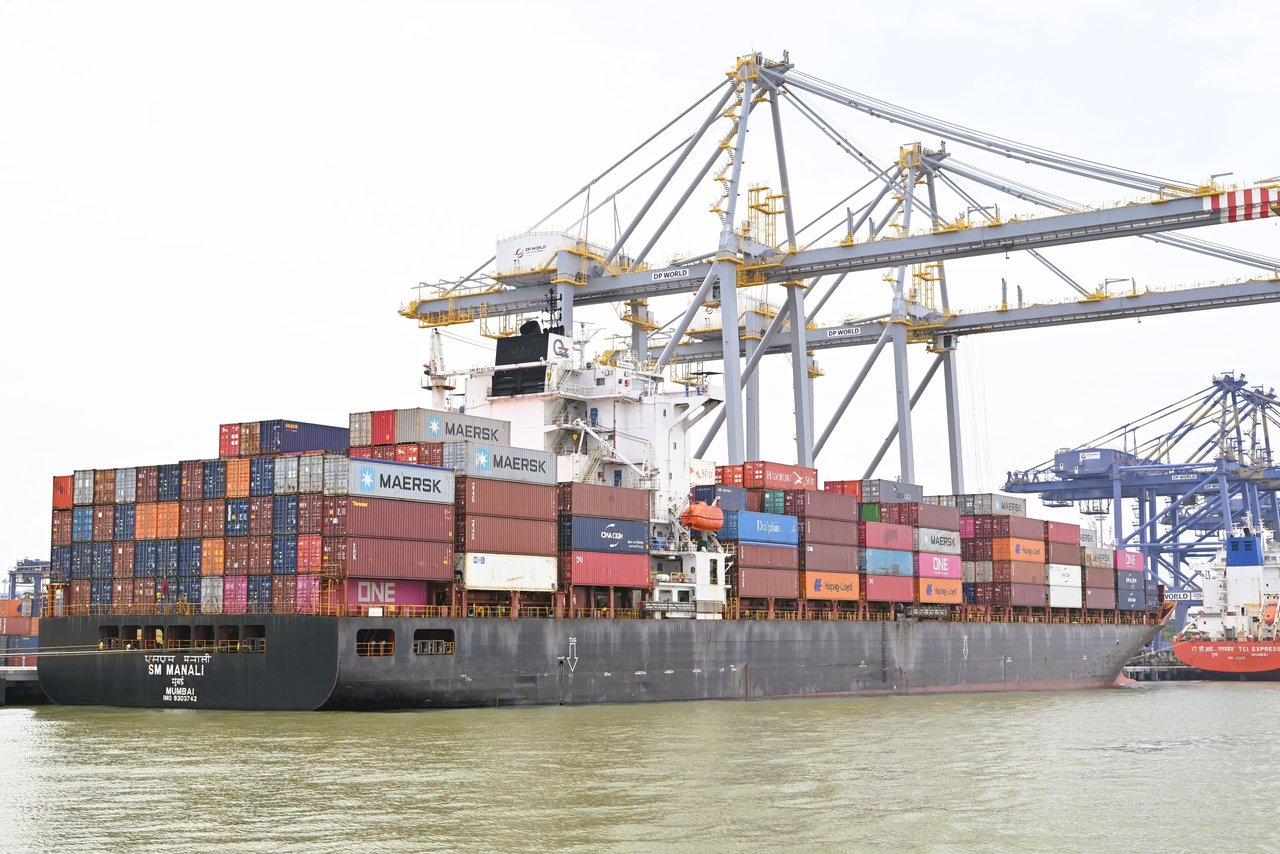
Because a free trade agreement can erase the single largest cost line on an import. Under the ASEAN-India Free Trade Area (AIFTA), kraft paper and paperboard from member countries such as Indonesia and Thailand can enter at 0% Basic Customs Duty, while the same grade from China attracts the full 10%. Origin, backed by a valid Certificate of Origin, is the difference between a duty-free landed cost and one carrying a double-digit tariff.
This is visible in the trade data. Imports from China still surged 28% to 143,000 tonnes in the April to June 2025 quarter, keeping China the single largest source, while ASEAN shipments rose to 92,000 tonnes over the same period, per IPMA figures reported in August 2025. Converters are buying from both, but for different reasons: China for grade availability and price at scale, ASEAN for the duty advantage.
Basic Customs Duty (BCD) is the primary import tariff levied on the assessable (CIF) value of goods entering India. It is set by the customs tariff schedule and falls to nil under a qualifying free trade agreement. For kraft base paper, BCD is the swing factor between an attractive and an unattractive import.
Two caveats keep this from being a simple “import from ASEAN” rule. First, anti-dumping duties apply on specific origins and grades, sack kraft from certain countries among them, so the tariff position must be checked against the current ICEGATE notification for the exact HS line and origin, not assumed. Second, FTA duty savings only hold if the Certificate of Origin survives scrutiny; a rejected certificate turns a duty-free plan into a 10% bill after the reels have already shipped.
Which route delivers faster, and why lead time is a margin question
Domestic supply wins decisively on lead time, and for a converter running against QSR and retail delivery windows, that speed protects margin as directly as price does. A domestic mill or stockist can put reels on your floor in days to two or three weeks. An import from ASEAN or East Asia runs 30 to 60 days door to door once you add production scheduling, sea freight, port clearance, and inland movement, and every one of those days is working capital sitting in transit.
Lead time is the elapsed time from placing a firm order to the base paper being available on your converting line. It covers the supplier’s production queue, transport, and, for imports, customs clearance. Long lead times force converters to forecast and pre-buy, which raises inventory risk on any grade tied to a specific customer.
The lead-time gap changes how you can bid, and it does so in a way that shows up directly in cash flow. A converter on short domestic lead times can quote a QSR or retail buyer on a fast turnaround, commit to a delivery date with confidence, and hold less inventory against the order. A converter dependent on imports must either carry buffer stock, which ties up cash and warehouse space, or accept that it cannot serve urgent top-up orders at all. For seasonal peaks, the festive and wedding-season carry bag rush among them, an import-only base-paper strategy is structurally exposed, because the demand signal usually arrives well inside the 30 to 60 day import lead time. If you are sizing those peaks, our paper bag demand forecasting guide sets out where the seasonal volume concentrates and who tends to capture it.
Domestic supply also shortens the feedback loop on quality. When a reel from a mill 400 km away runs badly on your machine, a line trial and a corrective batch are a phone call and a week away. When the problem reel is one of forty in a container that cleared customs a month ago, your options are narrower and slower, and the commercial recourse is harder to enforce across a border.
How do imported and domestic base paper compare on quality?
On paper specification, both can meet converter requirements; the difference that matters is consistency and recourse, not headline grade. A reputable ASEAN or East Asian kraft mill and a reputable Indian mill can both supply base paper that meets the burst factor, tear index, Cobb value, and GSM tolerances a carry bag needs. What varies is reel-to-reel and batch-to-batch consistency, and how easily you can hold a supplier to the spec when a batch drifts.
Imported kraft from large, modern mills is often praised for sheet uniformity and formation on long, planned runs, which matters for high-speed converting and clean printing. Domestic base paper gives you something imports cannot: the ability to run a line trial before committing to volume, to specify against a known standard, and to escalate a non-conforming batch through a supplier who is one jurisdiction away. For base paper intended for carry bags, the relevant Indian benchmark is IS 1397:2020, Kraft Paper for Packing and Wrapping, which defines grades 1 to 3 for packing kraft; note there is no BIS specification for the finished carry bag itself, so quality is contracted at the base-paper level.
Whichever route you choose, the acceptance discipline is the same, and it is the converter’s responsibility, not the mill’s. Test incoming reels against your agreed spec before they reach the line. Our base paper testing guide covers what to check and why, and the base paper procurement checklist sets out what to verify before an order is placed at all. These matter more on imports, where a rejected batch is far more expensive to unwind.
This is also where Pakka’s own position sits. Pakka manufactures food-grade base paper for the wrap-and-carry segment against defined IS 1397 kraft grades, supplied domestically with a technical team that matches grade to a converter’s specific end-use and machine, which is precisely the recourse and lead-time advantage this section describes. Where an imported grade genuinely fits a large planned run better, that is worth saying plainly rather than pretending domestic is always the answer.
Sourcing decision matrix: four routes compared
The table below scores the four practical sourcing routes an Indian converter uses, on a 1 to 5 scale where 5 is strongest. Treat it as a starting frame, not a verdict; weight the columns by what your contracts demand.
| Sourcing route | Landed cost | Quality consistency | Lead time | MOQ flexibility | Supply risk |
|---|---|---|---|---|---|
| Domestic mill (direct) | 3 | 4 | 5 | 3 | 4 |
| ASEAN import (AIFTA, 0% BCD) | 4 | 4 | 2 | 2 | 3 |
| China import (10% BCD) | 3 | 4 | 2 | 2 | 2 |
| Domestic trader / stockist | 2 | 3 | 5 | 5 | 3 |
Read across, not down. A converter with steady, forecastable QSR volume and working capital to fund transit leans toward ASEAN import for landed cost. A converter serving variable retail top-ups with tight cash leans toward a domestic mill or stockist for lead time and small-order flexibility. Most established converters run a blend: a domestic anchor for responsiveness and an import lane for planned bulk.
Minimum order quantity (MOQ) is the smallest volume a supplier will accept for an order. It is typically far higher for a direct mill or import, often a full container or several tonnes, than for a domestic stockist who breaks bulk. MOQ is where many small converters are quietly forced toward domestic supply regardless of the cost comparison.
How to decide for your own order book
Work through this in order; each step narrows the choice before the next.
- Compute landed cost, not invoice price. Build the full stack for each candidate origin: material price, BCD (0% under AIFTA with a valid Certificate of Origin, 10% otherwise), 10% Social Welfare Surcharge on BCD, 12% IGST, ocean and inland freight, insurance, and the financing cost of transit plus credit terms. Compare that number against the domestic delivered price.
- Verify the tariff position for the exact HS line and origin. Check the current customs notification and any anti-dumping duty on ICEGATE before assuming a rate. A grade-specific or origin-specific duty can erase the import case entirely.
- Map the order against your lead-time exposure. If the volume serves an urgent, seasonal, or variable contract, weight lead time heavily; import lead times of 30 to 60 days cannot serve demand that materialises inside that window.
- Match MOQ to your run size. If your per-grade requirement is below a container or a mill’s minimum, a domestic stockist may be the only viable route irrespective of unit cost.
- Test before you commit volume. Run a line trial on domestic base paper, or a pre-shipment sample on an import, against your acceptance spec. Cost the risk of a non-conforming batch into the comparison, since that risk is far higher and slower to resolve on imports.
- Decide the blend, not the source. For most converters the outcome is a primary lane plus a secondary, not a single supplier. Cost discipline on the converting line, covered in our waste reduction and cost optimisation guide, often saves more per tonne than the import-versus-domestic price gap itself.
The base-paper vocabulary that runs through this decision, GSM, burst factor, Cobb value, kraft grades, is collected in the paper converter glossary if any term here needs grounding.
When imports genuinely make sense, and when they do not
Imports earn their place on large, planned, forecastable volume where a duty-free origin and mill-scale consistency outweigh the lead time and transit financing. They are a poor fit for urgent top-ups, small per-grade runs below a viable MOQ, cash-constrained operations that cannot fund 30 to 60 days of transit, and any contract whose demand signal arrives inside the import lead time. Domestic supply is the mirror image: stronger on responsiveness, small orders, quality recourse, and working capital, and weaker on headline landed cost for large runs when global paper is cheap.
For most Indian converters, neither route is a strategy on its own. The mills that surged imports 28% from China and lifted ASEAN volumes in 2025 are supplying converters who also buy domestically, because the two routes solve different problems. Build the landed-cost model, know your lead-time exposure, and let the order book decide each time rather than defaulting to one lane.
Frequently asked questions
Is imported kraft paper cheaper than domestic base paper in India?
Not reliably. Imported kraft can beat domestic prices on the invoice, but after 10% Basic Customs Duty (nil under AIFTA from ASEAN origins), 10% Social Welfare Surcharge, 12% IGST, freight, and 30 to 60 days of transit financing, the landed cost often narrows to or exceeds the domestic delivered price. Compare landed cost, never invoice price.
What is the import duty on kraft paper in India in 2026?
Uncoated kraft paper and paperboard under HS 4804 typically attracts 10% Basic Customs Duty, plus a 10% Social Welfare Surcharge on the BCD, plus 12% IGST. Under the ASEAN-India Free Trade Area, BCD can be 0% for qualifying ASEAN origins with a valid Certificate of Origin. Anti-dumping duty may apply on specific grades and origins, so verify the exact HS line on ICEGATE.
How long does imported base paper take to reach an Indian converter?
Plan for 30 to 60 days door to door from a firm order, covering the mill’s production queue, sea freight, customs clearance, and inland movement. Domestic mills and stockists typically deliver within days to two or three weeks, which is why domestic supply suits urgent and seasonal demand that imports cannot serve in time.
Which base paper standard applies to kraft carry bags in India?
For packing kraft base paper, IS 1397:2020 (Kraft Paper for Packing and Wrapping) defines grades 1 to 3. There is no BIS specification for the finished paper carry bag itself, so quality should be contracted at the base-paper level against an agreed acceptance spec, whether the reel is imported or domestic.
Should a small converter import base paper directly?
Usually not directly. Direct mill and import orders carry high minimum order quantities, often a full container or several tonnes per grade, plus transit financing that strains working capital. A domestic mill or a stockist who breaks bulk is generally the better route for small or variable per-grade volumes, even when the unit price looks higher.
Last reviewed: September 2026
Sourcing base paper for your carry bag line? Pakka manufactures food-grade kraft base paper for the wrap-and-carry segment against defined IS 1397 grades, supplied domestically with short lead times and a technical team that matches grade to your end-use and machine. Explore grades and download spec sheets on the food wrap and carry range, where technical spec-sheet PDFs are available for each grade. For a sourcing or specification discussion, talk to the Pakka team. Where an imported grade genuinely fits a large planned run better than our own, we will say so.
Browse all Pakka articles.
You may also like