Dry Food Liner Paper: Grease Resistance Is Where Paper Wins, and Moisture Is Where It Does Not

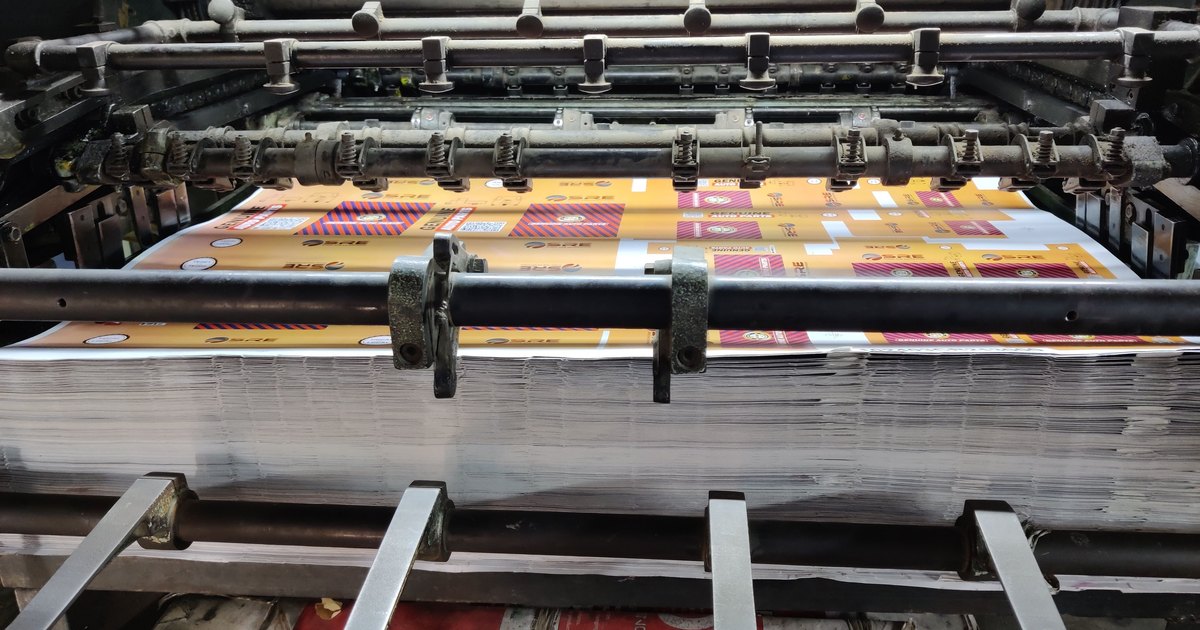
A dry food liner is the paper layer sitting between a dry food and its outer carton, tin or pouch. Its first job is grease containment and its second is moisture control. Paper is genuinely good at the first, because grease resistance can be built into the fibre structure itself. Moisture is a different problem and it needs a coating.
Most liner enquiries go wrong at that split, because the two requirements arrive bundled into one line on a purchase order that reads “food grade, grease resistant”. Grease resistance and moisture resistance come from different mechanisms, are measured by different test methods, and fail in different ways on your line. A base paper that is excellent at one can be ordinary at the other.
What follows is written for the person specifying and buying the reel, not for the brand owner whose logo goes on the carton. It covers what a liner is actually asked to do, how paper holds grease without fluorochemicals, which grease test belongs on your spec sheet, what changed in 2024 and 2026, and where paper stops being the answer.
What is a dry food liner, and what is it actually being asked to do?
A dry food liner is an inner paper layer that separates a dry food from its outer pack. It carries no structural load and usually no print. It exists to stop fat and oil migrating outward into the carton wall, to keep fines and dust contained, and to give the product a clean, food-contact-approved surface to sit against.
The distinction matters because a liner is specified against the food, not against the pack. A carton holding roasted nuts, namkeen, biscuits or a fat-containing snack mix is asking the liner to hold oil for the whole shelf life at Indian ambient temperature. A carton holding tea, spice powder or a dry premix is asking it to hold fines and to slow moisture pickup. Those are different sheets.
India’s own packaging rules recognise the format explicitly. The Food Safety and Standards (Packaging) Regulations, 2018 list, among the suggested packaging options for confectionery and similar products, “Paper and Paper Board setup boxes with or without grease proof paper placed inside” (FSSAI, Packaging Regulations 2018, Schedule III). The regulation treats the liner as a distinct component of the pack, which is exactly how it should be specified and bought.
A converter quoting a carton and a liner as one item will usually price the liner off grammage alone, because grammage is the only number both parties are certain about. Grammage tells you very little about whether the liner will hold oil in month four. The properties that decide that are structural, and they are not visible on the reel.
How does paper resist grease without a fluorochemical coating?
Paper resists grease structurally, by having almost no continuous void path through the sheet for oil to travel along. Greaseproof and glassine grades achieve this through prolonged refining, which hydrates and fibrillates the pulp until the fibres collapse together into a dense, closed sheet. No barrier chemical is involved. The resistance is the sheet.
This is the mechanism that makes paper interesting for dry food liners in the first place. A grease barrier built from fibre structure cannot delaminate, cannot be scratched off, does not depend on a coating window being held on a coater, and does not complicate the recyclability or compostability story downstream. It is also the oldest barrier in packaging and it is very well characterised.
The standard test method is named after the mechanism. TAPPI/ANSI T 454 om-25 is titled “Turpentine test for voids in glassine and greaseproof papers”, and it measures grease resistance in these grades by measuring voids. It works by placing silica sand on the sample, saturating the sand with dyed turpentine, and timing how long the dye takes to show through. A denser, more closed sheet takes longer.
A machine-glazed kraft carrying a dispersion coating is doing something completely different. It is a reasonably open base sheet with a film applied on top, and its grease resistance lives in that film. Both routes produce a liner that passes a grease test. They behave differently when the sheet is creased, when it runs over a hot sealing jaw, and when the carton is dropped. If you are switching between the two, you are not switching grades, you are switching mechanisms.

Kit value or turpentine time: which grease test should be on your spec sheet?
Specify the test that matches the mechanism. Use the turpentine void test for uncoated greaseproof and glassine grades, and the Kit test for surface-treated or coated sheets. Quoting the wrong one produces a number that is technically correct and tells you nothing about how the liner will perform.
The Kit test, TAPPI T 559, was written for paper treated with fluorochemical sizing agents. It works by placing a drop from one of twelve numbered mixtures of castor oil, heptane and toluene on the surface for fifteen seconds and checking whether the sheet darkens. The mixtures get progressively more aggressive, and the highest-numbered solution that does not cause failure is the Kit rating, from 1 (least resistant) to 12 (most resistant).
The turpentine method is explicit about where it does not apply. TAPPI T 454 states that it may not be applicable to grades given grease or oil resistance by means of a coating or an internal treatment. The two methods were written for two different families of paper, so a supplier who answers a turpentine question with a Kit number has quietly substituted one for the other. That accounts for most of the confusion in liner enquiries.
| Test method | What it measures | Designed for | Result form | Where it misleads |
|---|---|---|---|---|
| TAPPI/ANSI T 454 om-25 (turpentine) | Time for dyed turpentine to penetrate voids in the sheet | Uncoated glassine, greaseproof, vegetable parchment | Time to penetration | Not applicable to sheets made grease resistant by a coating or internal treatment |
| TAPPI T 559 (Kit test) | Resistance to a graded oil and solvent mixture held on the surface for 15 seconds | Surface-treated and coated papers | Kit rating 1 to 12 | A short surface test; says nothing about long-term oil hold-out through the sheet |
| TAPPI T 507 | Grease resistance of flexible packaging materials | Finished flexible structures and laminates | Pass or fail against a defined regime | Tests the finished structure, not the base you are buying |
A spec sheet should therefore name the method, the version and the acceptance limit, in that order. “Grease resistant” on its own is not a specification. “Kit 7 minimum, TAPPI T 559” is a specification, and so is a stated minimum turpentine penetration time to T 454. If your supplier cannot tell you which method produced the number they quoted, you do not yet have a number.
Neither test replicates a real product. T 454 says so directly, describing itself as preliminary to, and not a substitute for, tests with prototype end products containing the oils or greases of interest. For a fat-heavy dry food at Indian ambient temperature, a shelf-life trial with the actual product is not optional, whatever the certificate says.
What changed in grease resistance between 2024 and 2026?
The chemistry that made grease resistance cheap and easy has been withdrawn from two of the world’s largest markets in the space of two years. That is the single biggest change in this category, and it pushes specification back toward structural grease resistance of the kind greaseproof grades provide.
In the United States, the Food and Drug Administration announced on 28 February 2024 that per- and polyfluoroalkyl substances used in grease-proofing agents for food packaging are no longer being sold in the US market. The phase-out was voluntary, negotiated with manufacturers after a post-market safety assessment, and it covered exactly the applications a liner buyer cares about: fast-food wrappers, microwave popcorn bags, takeaway paperboard containers and similar paper and paperboard packaging.
In the European Union, the Packaging and Packaging Waste Regulation, Regulation (EU) 2025/40, applies from 12 August 2026. Its Article 5 restricts substances of concern in packaging, and for food-contact packaging it sets limit values of 25 parts per billion for an individual PFAS and 250 parts per billion for the sum of PFAS by targeted analysis excluding polymeric PFAS, alongside a 50 parts per million limit for total PFAS including polymeric species. Packaging at or above those values may not be placed on the market.
India has not set an equivalent numeric PFAS limit for food-contact paper. That is a real gap and it should be stated plainly rather than glossed over. What it means in practice is that an Indian converter supplying only the domestic market faces no such limit today, while the same converter exporting a lined carton to the EU is governed by the destination market’s rule regardless of where the reel was made. Two customers, one product, two different specifications. If any part of your volume is export or is destined for a multinational brand owner applying a global standard, assume the tighter rule.
Moisture is the harder problem, and paper on its own does not solve it
Uncoated paper is not a moisture barrier. It slows liquid water for a while and it does essentially nothing about water vapour. A dry food that goes soft, loses crispness or cakes is failing on water vapour transmission, and no amount of refining or calendering of an uncoated base will fix that. It needs a coating, a laminate or a different pack architecture.
The mismatch is visible in the test methods. The Cobb value, measured to TAPPI T 441 om-24 or ISO 535, reports how many grams per square metre of liquid water a sheet absorbs from a standing pool in a fixed time, conventionally sixty seconds. It is a sizing and wettability measure. Water vapour transmission is measured on a completely different apparatus and reported as a rate over time. A low Cobb number tells you the sheet will not wick a spill quickly. It does not tell you the biscuit will still be crisp in September.
This matters more in India than the imported literature suggests. Ambient humidity across most of the country during the monsoon sits far above the conditions in which European and North American shelf-life data was generated, and moisture ingress is the most common cause of complaint on paper-based dry food packs here. The barrier arithmetic for a humid market is set out in more detail in our work on moisture barrier benchmarks for paper-based pouches, and the logic carries directly across to a carton liner.
So the honest position on a paper dry food liner is this. For grease, oil and fines containment, an uncoated greaseproof or glassine-type base is a strong answer and often a better one than a coated sheet, because the resistance is built into the fibre structure and cannot be scratched, cracked or delaminated during converting. For moisture, an uncoated base is a partial answer at best. Refining and calendering close the sheet against liquid water, which lowers the Cobb value, but neither operation creates a continuous film, and water vapour moves through the sheet regardless. The pack therefore has to earn its shelf life somewhere else: an outer barrier layer, a coated liner, a metallised laminate, or a shorter declared shelf life agreed with the brand owner. Anyone selling you a single uncoated paper that does both is describing a product that does not exist.
Greaseproof, MG kraft, or a coated base: which liner fits which dry food?
There is no single best liner base. The choice follows the fat content of the food, the shelf life claimed, whether the pack is exported, and what the converting line can actually run. The table below scores four routes across the criteria that decide real liner purchases.
| Option | Grease resistance | Moisture performance | Converting ease | Recyclability and compostability | Best fit |
|---|---|---|---|---|---|
| Uncoated greaseproof or glassine base | Strong, and structural so it survives creasing and folding | Weak against water vapour; moderate against liquid water | Good, though denser sheets need attention to moisture profile and web tension | Strong, a single-material paper stream with no coating to separate | High-fat dry foods where the outer pack or a separate layer carries moisture duty |
| Machine-glazed kraft with a dispersion coating | Good while the coating film is intact | Moderate, depends entirely on the coating chosen | Moderate, coating window and drying add process risk | Moderate, depends on coating chemistry and local recycling acceptance | Mid-fat foods needing some moisture help in one layer |
| Vegetable parchment | Strong, and it holds up wet and at temperature | Moderate | Good, but a specialist grade with a narrower supply base | Strong | Fatty or damp products, and applications involving heat |
| Coated or laminated barrier liner | Good | Strong, this is the only route on this list that genuinely solves vapour | Lower, added layers and added cost | Weakest, multi-material structures complicate end of life | Long shelf life, humid market, or a moisture-critical product |
Read the table as a set of trade-offs rather than a ranking. The recurring error in liner selection is choosing the highest barrier available and paying for moisture performance a dry, low-fat product never needed. The opposite error, choosing an uncoated base for a product whose complaint history is softening rather than oil strike-through, is more expensive because it shows up after launch.

What does FSSAI actually require of a paper liner in India?
The Food Safety and Standards (Packaging) Regulations, 2018 set both general conditions on paper in food contact and a list of Indian Standards that specific grades must meet. The requirements are shorter and more concrete than most people expect, and they are worth quoting rather than paraphrasing.
Regulation 4(1) covers paper and board materials intended to come into contact with food products. It requires that the material “shall be of uniform formation, thickness and substance” and that it “shall be free from visible specks, grease marks, cuts, pinholes and other blemishes”. It requires that paper meant to be in direct contact with food shall be of food grade and free from contaminants, and that materials used for containers packing or storing food shall conform to the Indian Standards listed in Schedule I.
Schedule I of the same regulation names the grades. For a liner buyer the relevant entries are grease proof paper to IS 6622, vegetable parchment or grease proof paper or aluminium foil laminate to IS 7161, and general purpose packing or wrapping paper to IS 6615. Folding box board to IS 1776 and corrugated fibre board boxes to IS 2771 cover the outer pack. If a supplier claims a liner is food grade, IS 6622 is the specification that claim should be made against.
Three general clauses catch converters out. Regulation 3(9) requires that printing inks used on food packages conform to IS 15495. Regulation 3(10) states that the printed surface of packaging material shall not come into direct contact with food products, which is precisely why an unprinted liner exists at all. Regulation 3(11) prohibits newspaper or any such material from being used for storing or wrapping food, a clause that is still routinely breached in Indian food service and which any converter selling into that segment should be able to explain to a customer.
The regulation stops well short of a full liner specification. It sets no PFAS limit, no water vapour transmission requirement and no mandatory grease test acceptance level for liners. The acceptance level is a commercial matter between you and your customer, which is exactly why the test method needs to be named on the specification. Our converter-side guide to food-contact compliance for paper packaging in India covers the migration and ink side of this in more depth.
How do you qualify a new liner base before committing a line?
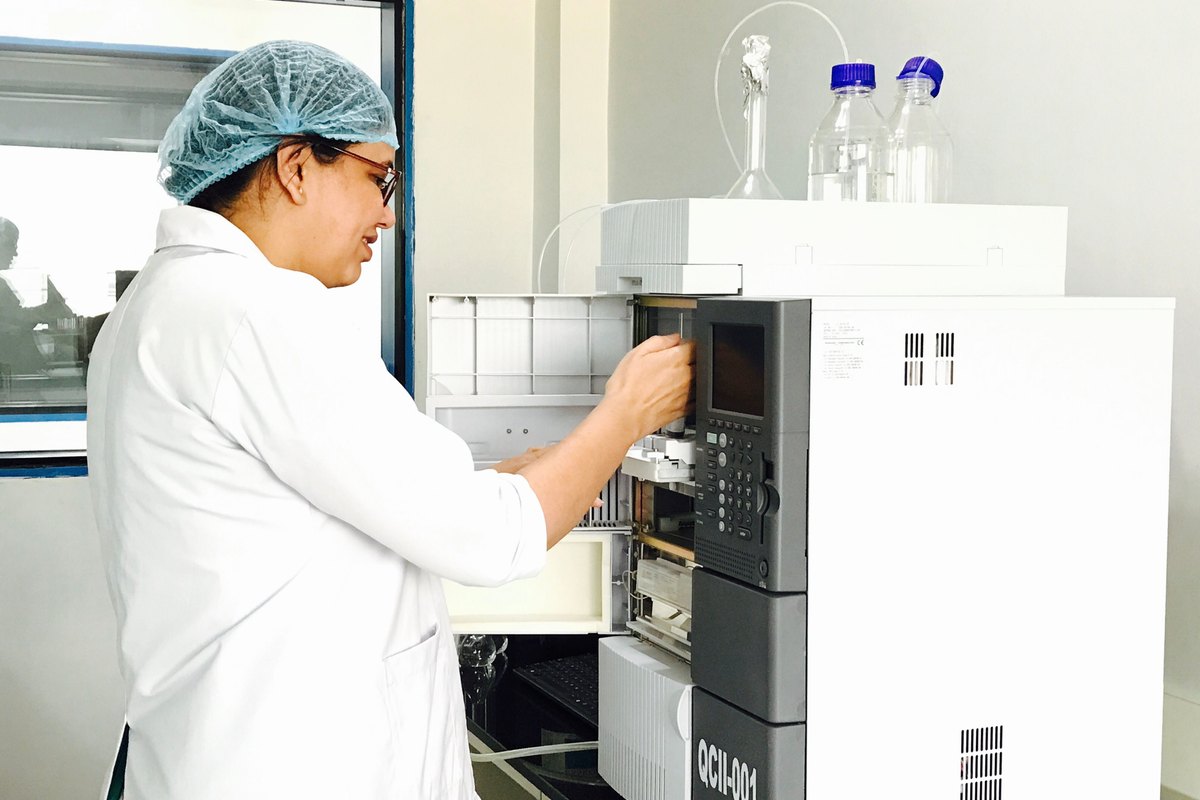
Qualification is a sequence, and skipping steps is where the cost lands. The following order front-loads the cheap tests and defers the expensive ones until the sheet has earned them.
- Fix the food first. Record fat content, moisture content, particle size, declared shelf life, storage conditions and export destinations. Every later decision follows from these.
- Choose the mechanism, structural or coated, before choosing a supplier. This determines which grease test applies and narrows the supply base immediately.
- Name the test method and acceptance limit on the enquiry. State the method, the version and the number you will accept, and ask for the supplier’s own data against it.
- Run incoming tests on the reel you were sent, not on a hand sheet. Grammage, Cobb to T 441, the applicable grease test, and formation. Formation is the one most commonly skipped and the one that most often explains inconsistent grease results across a reel.
- Run a short machine trial for runnability before any shelf-life work. Web tension behaviour, moisture profile across the reel width, and behaviour at the sealing or folding station.
- Put the actual product in the actual pack for a real shelf-life trial at the worst ambient condition you ship into. T 454 says explicitly that laboratory grease testing is preliminary to this, not a substitute for it.
- Repeat the incoming tests on a second and third reel, from different production runs, before you approve the grade. Reel-to-reel variation is what turns an approved sample into a rejected delivery.
Step seven is the one that gets dropped under commercial pressure and the one that causes the most damage. The property that matters most in a liner is not the peak number on the certificate, it is the spread across reels, and a single-reel qualification cannot see it. Our note on porosity and air permeability in coating base paper explains why that variation exists in the sheet in the first place, and the paper converter glossary defines the test terms used above if any are unfamiliar.
Where a coating base paper fits in a dry food liner
A coating base paper is a substrate, not a finished liner, and that rules out a good number of liner enquiries straight away. It arrives uncoated and it is bought by a coater or converter who will put a functional layer on it or use it as the paper component of a laminate. If you want a liner you can put straight into a carton with no further processing, a coating base is the wrong purchase and a finished greaseproof or parchment grade is the right one. A coating base also carries no moisture claim of its own, for the reason set out earlier in this article: an uncoated sheet does not stop water vapour, and nothing about being a coating base changes that.
Where it does fit is the case where you are building the liner yourself. If your business coats, laminates or converts, then the base sheet decides the economics of everything you put on it. How much coating disappears into the sheet, how evenly it lays down, and how consistently the reel behaves across a shift are all properties of the base, and they are settled before your coating head ever touches it.
Pakka is developing flexC base, a coating base paper in the 40-60 GSM band, available bleached and unbleached, intended as a substrate for barrier chemistries including silicone, biopolymer and plastic coatings. Dry food liners are one of the eight applications named for it, alongside confectionery wraps, snack pouches, sachets, medical packaging, seed packs, release liners and tea pouches. These details are disclosed in Pakka Limited’s Investor Presentation for Q1 FY2026-27, filed on 18 August 2026 (BSE 516030 / NSE PAKKA). It is a development programme rather than a shelf product, and it carries no published performance data, so no barrier, porosity or grease figure should be attributed to it.
One naming point, because the two are routinely confused. flexC base is the coating base paper described above. flexC is a different and separate product: a finished compostable flexible-packaging laminate that Pakka already supplies to brand owners, with its own published specifications. A converter buying a substrate to coat wants the first. A brand owner buying a ready laminate wants the second.
For a converter weighing the two routes: if grease containment is your requirement and moisture is handled elsewhere in the pack, an uncoated structural grade is likely to serve you better and cheaper than anything with a coating on it. If you need both, you are buying a coated structure, and then the base underneath it is the variable that decides your coating cost. Those are two different conversations and it is worth being clear which one you are having before anyone quotes you a price. Our companion pieces on sachet paper substrate requirements and on how to specify a release liner base paper work through the same logic for two of the other applications, and the testing guide for burst, tear and porosity covers the mechanical properties this article has deliberately left aside.
Frequently asked questions
Is greaseproof paper the same as parchment paper?
No. Greaseproof paper gets its resistance from heavily refined, densified fibre. Vegetable parchment is made by treating paper with sulphuric acid, which regenerates the cellulose into a much denser, more uniform sheet. Parchment generally performs better when wet and at temperature, and it costs more. FSSAI’s Schedule I lists them under separate Indian Standards, IS 6622 and IS 7161.
What Kit value do I need for a dry food liner?
There is no regulated minimum in India, so the answer comes from your product. Low-fat dry goods often need very little; high-fat snack and confectionery applications typically call for a mid-to-high Kit rating. The important discipline is to set the acceptance limit against the named method, TAPPI T 559, and to confirm it with a real shelf-life trial rather than treating the laboratory number as the answer.
Can a paper liner replace a plastic or foil liner completely?
For grease, fines and light protection, often yes. For water vapour, not on its own. An uncoated paper liner does not deliver the vapour barrier that a metallised or polymer layer provides, so a straight substitution on a moisture-sensitive product usually shortens shelf life. The realistic routes are a coated paper structure, a change in pack architecture, or a revised shelf-life claim.
Does FSSAI require a specific grease test for food-contact paper?
No. The Food Safety and Standards (Packaging) Regulations, 2018 require paper and board in food contact to be of food grade, free from contaminants and blemishes, of uniform formation, and to conform to the Indian Standards in Schedule I. It sets no mandatory grease-test acceptance level for liners, which is why the specification has to name the method and the limit commercially.
Will PFAS rules in the EU and US affect an Indian converter?
Only if your product reaches those markets, but the effect is then complete. The US phase-out announced by the FDA on 28 February 2024 removed PFAS grease-proofing agents from that market, and the EU’s Regulation (EU) 2025/40 sets PFAS limits for food-contact packaging from 12 August 2026. A converter exporting a lined pack is governed by the destination market’s rule, whatever the domestic position is.
Last reviewed: September 2026.
Specifying a coating base for a liner application? Pakka’s flexC base programme covers the 40-60 GSM band in bleached and unbleached, for coaters and converters building their own barrier structures. If you would like to discuss a trial, get in touch with a flexC base trial enquiry and tell us the application, the coating chemistry and the reel width you run. Technical brochures for our paper and packaging range are on the resources page, and general enquiries reach us through the same contact page.
Sources
- Food Safety and Standards Authority of India, Food Safety and Standards (Packaging) Regulations, 2018 (Compendium, Version II) – Regulations 3 and 4, Schedules I and III
- TAPPI, Turpentine test for voids in glassine and greaseproof papers, TAPPI/ANSI T 454 om-25
- TAPPI, Grease resistance test for paper and paperboard, T 559
- TAPPI, Water absorptiveness of sized (non-bibulous) paper, paperboard and corrugated fiberboard (Cobb test), T 441 om-24
- US Food and Drug Administration, “Market phase-out of grease-proofing substances containing PFAS”, announced 28 February 2024 (fda.gov; the FDA site refuses automated requests, so it is cited here without a hyperlink)
- European Union, Regulation (EU) 2025/40 on packaging and packaging waste (PPWR), Article 5, applicable from 12 August 2026
- Pakka Limited, Investor Presentation Q1 FY2026-27, filed 18 August 2026 (BSE 516030 / NSE PAKKA)
Browse all Pakka articles.
You may also like