Lightweighting a Release Liner: What Changes Below 60 GSM

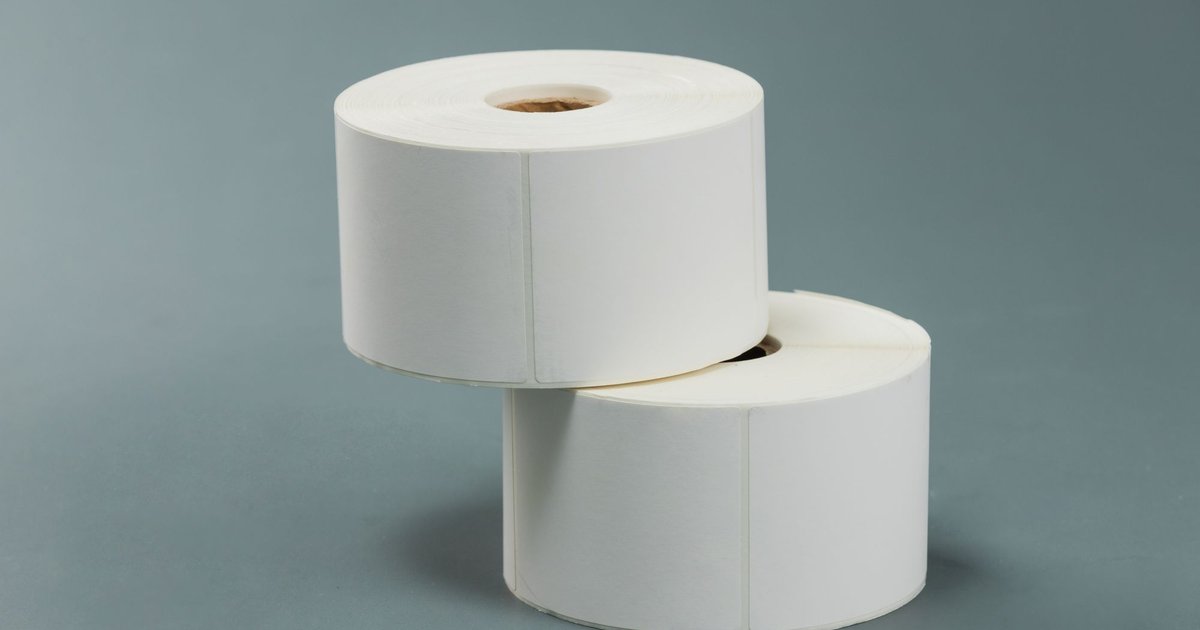
Below 60 GSM, a release liner gives you more square metres per tonne and more labels on a roll of the same diameter, and it leaves less paper behind as waste. In exchange it is thinner, and that eats into the die-cutting margin. The liner’s caliper tolerance becomes the number that decides whether the labels strip, dispense and stay put.
This article looks at the liner after it leaves the coater: on the label press, at the die station, on the applicator and in the waste bin. How a lighter base behaves on the silicone coating line itself is covered in our piece on running 40-60 GSM paper on a coating line. The upstream specification is in the hub on how to specify a release liner base paper.
It is written for the coater or release-liner producer deciding whether to offer a lighter grade, and for the technical buyer at a label converter who will have to run it. If any term below is unfamiliar, the coating base paper glossary defines it.
What does “below 60 GSM” mean for a release liner?
Below 60 GSM puts a paper liner in the lighter half of the glassine range. According to Mondi, glassine liners for labels run from 35 to 120 gsm. Lecta’s Linerset Glassine is made from 45 to 78 g/m². In the trade, the usual glassine release base band is about 50 to 80 g/m².
A release liner is the siliconised carrier that holds a self-adhesive label until it is dispensed. Its paper substrate, before silicone, is the release base paper. In India this has had its own Bureau of Indian Standards specification since 1998: IS 14619, Release base paper — Specification, under the paper sectional committee CHD 15. A first revision was circulated as a draft for comment in November 2024. According to its foreword, it splits the product into two grades by method of manufacture and grammage.
Three base families compete in the band. Glassine is a heavily refined, supercalendered sheet with low porosity and high transparency. Supercalendered kraft (SCK) and clay-coated kraft (CCK) are the cheaper commodity alternatives, and Mondi lists single-side siliconised CCK from 30 gsm. Our glassine, SCK and CCK comparison scores them against each other. The question below is what happens to any of them when the grammage comes down.
How much does a lighter liner actually save?
A lighter liner saves area per tonne in direct proportion to the grammage. It also saves roll changes, because the label construction gets thinner and more labels fit on a roll of the same diameter. Area per tonne is plain arithmetic. Labels per roll depends on how thick the whole construction is, not the liner alone.
Area per tonne is one million grams divided by grammage:
| Liner grammage | Square metres per tonne | Change against 60 g/m² |
|---|---|---|
| 60 g/m² | 16,667 | baseline |
| 55 g/m² | 18,182 | +9% |
| 50 g/m² | 20,000 | +20% |
| 45 g/m² | 22,222 | +33% |
| 40 g/m² | 25,000 | +50% |
The gain at the applicator is smaller, because the liner is only one layer of the laminate. A worked example: take a paper face of about 80 µm, adhesive of about 20 µm and a glassine liner of about 55 µm, which totals roughly 155 µm. Cut the liner to about 40 µm and the construction is roughly 140 µm. Roll length for a fixed outside diameter scales inversely with thickness, so the same roll holds about 11% more labels. Your figure will differ with the face stock and adhesive, so measure your own construction rather than borrowing this one.
Avery Dennison made the same argument for film. When it launched its ThinStream PET liner at 12 microns, against the 24-micron film it replaced, the company said users got 17% more labels per roll and less liner waste. The physics carries over to paper. What does not carry over is film’s thickness tolerance, which is the subject of the die-cutting section below.
Liner waste is the other half of the case. TLMI, the North American label industry association, estimates paper and film liner production at nearly 600,000 tons a year, and almost all of it is discarded once the labels are applied. A lighter liner does not solve the end-of-life problem, but it shrinks the tonnage that has to be collected, landfilled or reported. For how coated paper waste is treated under Indian producer responsibility rules, see our note on EPR for coated paper packaging.
Does a lighter glassine lose strength?
Not necessarily in tensile, but it always loses caliper. A well-refined, supercalendered glassine can hold almost the same tensile strength at a lower grammage, because strength comes from fibre bonding and density as much as from mass. What it cannot hold is thickness, and thickness is what the die station sees.
HERMA’s published data for two of its supercalendered glassine liners makes the point:
| Property (test method) | HERMA PH 515, honey | HERMA PH 545, yellow | Change |
|---|---|---|---|
| Grammage (ISO 536) | approx. 53 g/m² | approx. 45 g/m² | -15% |
| Caliper (ISO 534) | approx. 47 µm | approx. 38 µm | -19% |
| Tensile MD (DIN 53112) | approx. 66 N/15 mm | approx. 65 N/15 mm | about the same |
| Tensile CD (DIN 53112) | approx. 32 N/15 mm | approx. 30 N/15 mm | -6% |
| Transparency (DIN 53147) | approx. 50% | approx. 59% | higher |
The lighter sheet is denser (about 1.18 against 1.13 g/cm³, calculated from the figures above). Caliper falls faster than grammage. Tensile barely moves, and transparency goes up. Both grades are sold for labelling machines with optical scanners, so the lighter sheet gives nothing away on detection.
The limitation is that these are two finished products from one supplier, made on the same refining and calendering route. A lighter sheet made by taking fibre out of an open base, without the refining and calendering to close it, will not behave like this. It will lose tensile and tear, and it will be more porous, which drives up silicone demand. Our article on base paper porosity and air permeability explains why. The grammage on the spec sheet tells you little until density and air permeability sit beside it.
Why does die-cutting get harder as the liner gets thinner?
Die-cutting gets harder because the die has to cut through the face and adhesive and stop on the liner surface, and a thinner liner leaves less room for error. If the liner’s caliper varies by more than the die’s tolerance, some labels are cut too deep and some not deep enough.
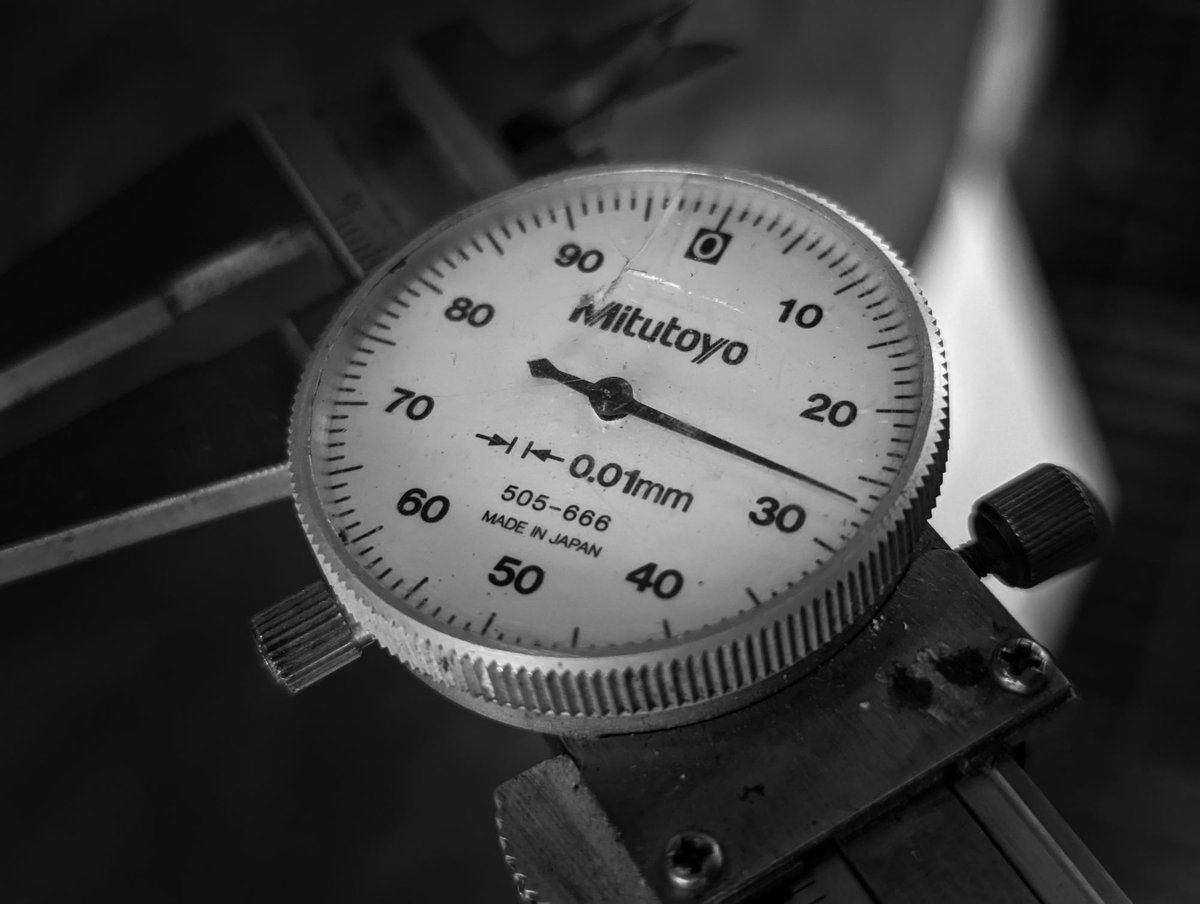
Writing in Labels & Labeling, a flexible-die maker reported that glassine liner thickness had already been cut from 0.065 mm to 0.045 mm under cost pressure. The same piece noted that glassine liners show height differences of 10 µm and more, called a die height tolerance of ±2 µm “a must”, and observed that magnetic cylinder concentricity of 10 µm is not unusual on working presses. Against a 38 µm liner, a 10 µm swing is roughly a quarter of the liner’s thickness. RotoMetrics, the rotary tooling maker, put the margin between acceptable and unacceptable die strike at 2.5 µm. It recommended liner strike testing at the start of each run and at the end of each master roll. Liner strike is damage to the liner surface where the die has cut into the silicone layer or the paper.
The failure modes run in both directions. Harveer Sahni, writing for FINAT, puts it plainly: “If the liner gets thinner, the die will not cut resulting in labels lifting with the matrix.” A die set for a heavier liner and left unchanged under-cuts. A die set deeper to compensate, on a liner with high spots, pierces it, and Sahni notes that exposed paper fibres then grab the adhesive and break the waste ladder. That narrow window is why the release liner market moved film liners into the thinnest constructions. Film is made to a few microns of thickness tolerance. Paper is not, and supercalendering narrows the gap but does not close it. A paper liner below 60 g/m² is workable on a well-maintained die station with adjustable anvils and current dies. On a station with worn cylinders, it is a source of waste.
What happens at matrix stripping and the dispenser?
Matrix stripping and dispensing put the liner under tension at the moment it carries the least material. Both depend on the release force between silicone and adhesive as much as on the liner’s strength. A lighter liner leaves less tensile reserve when the release is tight, the stripping angle is sharp or the line runs fast.
The industry measures release at two speeds. FINAT FTM 3 is a low-speed release force test, a 180° peel at 300 mm per minute, and maps to label application. FINAT FTM 4 measures high-speed release force at 10 to 300 metres per minute and maps to converting, including matrix peel. A lightweighting trial needs both, because a liner can pass at low speed and still tear at the stripping roller.
Sahni gives the release-side rules. If the release is too tight, the matrix tends to break under tension. If it is too easy, labels lift with the ladder. If the gap between labels is 2 mm or less, the matrix breaks repeatedly. A lighter liner causes none of these failures, but it leaves less margin before each one appears.
The dispenser is the last check. At the peel plate the liner turns through a tight radius under tension while the label carries on straight. Converters often blame a lighter liner for tears at the peel edge that actually start at a liner strike mark left at the die station. RotoMetrics notes that tests now exist to check die-strike damage specifically for high-speed dispensing. Run that check before you blame the grammage.
When is a sub-60 GSM liner the wrong choice?
A sub-60 GSM paper liner is the wrong choice when the die station cannot hold tolerance, the application needs stiffness, or the labels are cut from film. Lightweighting pays on high-volume, automatically applied paper labels on well-maintained presses. It costs more than it saves on short, varied runs on older equipment.
| Situation | Sub-60 g/m² paper liner | Heavier glassine (60-80 g/m²) | Film liner (PET, 12-30 µm) |
|---|---|---|---|
| High-volume paper labels, automatic application, modern die station | Good fit; most gain in labels per roll | Works, but leaves gain unused | Works; higher material cost |
| Film face stocks (clear, conformable) | Risky; liner caliper variation shows as strike | Workable with care | Usual choice; tight thickness tolerance |
| Older die station, worn cylinders, fixed anvils | Poor; strike and matrix breaks | Safer margin | Poor; least forgiving of runout |
| Sheeted labels, hand application, laser or inkjet sheets | Poor; curl and handling suffer | Better lay-flat and stiffness | Rarely used |
| Recyclability as a stated goal | Less tonnage to recover; paper stream | More tonnage; paper stream | Separate film stream needed |
For the thinnest constructions on film faces, a film liner beats any paper liner on the property that matters most at the die station. Paper competes on cost and on the material stream, not on tolerance.
What should a lightweighting trial measure?
A lightweighting trial should measure the liner where it will fail, not only where it is made. That means caliper and its variation across and along the reel, release at both speeds, strike at the die station, and break and tear rates at stripping and dispensing. Compare everything against the current liner on the same press.
- Measure caliper to ISO 534 across the web and along each reel, and record the range, not just the mean. The range is what the die sees.
- Check density and air permeability. Grammage alone will not tell you whether the lighter sheet is closed enough to hold silicone. Our article on silicone holdout and coat weight covers the coating side.
- Run FINAT FTM 3 and FTM 4 on the siliconised liner with the target adhesive, after ageing, against the current liner.
- Re-set the die or the anvil gap for the new liner. Run a liner strike test at the start and the end of each master roll, as RotoMetrics recommends.
- Record matrix breaks per thousand metres at production speed, with the label gap the customer actually uses.
- Run the labels on the customer’s applicator. Count missed or flagged labels and liner tears at the peel plate.
- Weigh the liner on a finished roll and count the labels, so the saving you quote is measured rather than read off the grammage table above.
Set a go or no-go threshold for each line before the trial starts, so the result is a decision the customer can check.
Where a paper coating base fits
A lighter paper base fits a coater or release-liner producer who already controls caliper closely and supplies label converters running modern, well-maintained die stations. It is a poor fit where the end user’s presses are old, the labels are cut from film faces, or the customer needs a stiff liner for sheeted labels.
The honest limitations come first. A lighter paper liner will not match film for thickness tolerance. It will not survive a die station that cannot hold a few microns. And it will not keep its strength and holdout unless it is refined and calendered to stay dense and closed. The porosity point is the hardest, for any mill making a light base. Where those constraints decide the job, a heavier glassine or a film liner is the right answer.
Where they do not, the case for a lighter base is practical: more square metres per tonne for the coater and more labels per roll for the user, with less liner left over to dispose of. The work is to prove that on your own press, under the trial protocol above.
This is the problem Pakka’s flexC base programme is aimed at. flexC base is a coating base paper in the 40-60 GSM band, bleached and unbleached, intended as a substrate for silicone, biopolymer and plastic barrier coatings applied by the converter. Release liners are one of eight target applications the company has disclosed (Pakka Limited, Investor Presentation Q1 FY2026-27, filed 18 August 2026, BSE 516030 / NSE PAKKA). It is a development programme, not a stocked grade. We are not publishing caliper, porosity, release or strength data for it until trial results exist and have been signed off.
flexC base is also a separate product from flexC. flexC is Pakka’s finished compostable flexible-packaging laminate, sold to brand owners. flexC base is the uncoated base a converter would coat.
Frequently asked questions
What is the lightest glassine release liner available?
Mondi lists glassine liners for labels from 35 gsm, and its single-side siliconised CCK range starts at 30 gsm. Most label stock still runs on glassine between about 50 and 80 g/m². The very light grades need tight caliper control and a well-maintained die station.
Does a thinner release liner cause die strike problems?
It can. The die must stop on the liner surface, and a thinner liner leaves less margin. Glassine can vary by 10 µm or more in height, while tooling suppliers call for die height tolerances of about ±2 µm. Run a liner strike test at the start and end of each master roll.
How many more labels per roll do you get with a lighter liner?
It depends on the whole construction. In a typical paper label of face, adhesive and liner, cutting a 55 µm liner to 40 µm gives roughly 11% more labels on a roll of the same diameter. Measure your own construction before quoting a figure to a customer.
Is a lighter paper liner weaker?
Not always in tensile. HERMA’s 45 g/m² glassine lists almost the same machine-direction tensile as its 53 g/m² grade. Caliper drops by about a fifth, though, and that affects die-cutting more than strength does.
Is there an Indian standard for release base paper?
Yes. IS 14619:1998, Release base paper — Specification, is the BIS standard, maintained by the CHD 15 paper committee. A first revision was circulated as a draft for comment in November 2024.
Last reviewed: October 2026
Trialling a lighter release liner base? If you are weighing a sub-60 GSM base for a release liner and want to run it against your current glassine, send us a flexC base trial enquiry with your coater type, silicone system, current liner grade and the label presses your customers run. Technical brochures for our paper and packaging range are on the resources page, and general enquiries reach us through the same contact page.
Sources
- Mondi, Release liner for labels
- Labels & Labeling, Lecta introduces Linerset Glassine release liners
- Bureau of Indian Standards, IS 14619:1998, Release base paper — Specification, CHD 15, listed on the BIS Know Your Standards portal; draft first revision IS 14619:20XX, circulated for comment November 2024
- HERMA, PH 515 glassine liner data and PH 545 glassine liner data
- Labels & Labeling, Flexible dies face thin liner challenge
- Labels & Labeling, RotoMetrics, Cutting die technology for ultra-thin film liners
- FINAT, Harveer Sahni, Waste matrix removal in label production, February 2018
- FINAT, FINAT Test Methods; FILK Freiberg, FINAT FTM 3 testing of release force
- Packaging Insights, Avery Dennison meets customer demand for thinner materials with ThinStream
- TLMI, Rosalyn Bandy, Getting to know TLMI’s newest initiative, January 2025
- Pakka Limited, Investor Presentation Q1 FY2026-27, filed 18 August 2026 (BSE 516030 / NSE PAKKA)
Browse all Pakka articles.
You may also like
