EPR and Coated Paper Packaging in India: Which Category It Falls In and What It Costs


In India, coated paper packaging carries a live EPR obligation only when the coating counts as plastic. Paper laminated or extrusion-coated with polyethylene is “multilayered plastic packaging”, Category III under the Plastic Waste Management Rules, and its producer must register and meet recycling targets now. Uncoated paper falls under a separate EPR regime that is still only a draft.
So the coating decides the category, and the category decides the cost. A converter who swaps a PE extrusion coat for something else is changing a regulatory status as well as a barrier. Few specification sheets say so.
This piece is for coaters, laminators and converters who put a barrier or sealant layer on paper, and for the technical buyer who signs off the structure. It reads the rules as written in the Gazette, sets out where they are silent, and shows what a shortfall costs. It is not legal advice. Where the text does not settle a question, we say so rather than guess.
Is there an EPR obligation on coated paper packaging in India today?
Yes, if the coating or laminate is plastic. Paper carrying a polyethylene, polypropylene or similar polymer layer is multilayered plastic packaging under the Plastic Waste Management (PWM) Rules, 2016, and the EPR Guidelines in Schedule II place it in Category III. Paper with no plastic layer has no live EPR obligation in October 2026.
The reason is that India has two EPR tracks for packaging, and only one is in force. The plastic track runs on the PWM Rules and the Guidelines on Extended Producer Responsibility for Plastic Packaging, notified as G.S.R. 133(E) on 16 February 2022. Its registrations, targets and returns all go through the CPCB portal, which is still titled the “Centralized EPR Portal for Plastic Packaging”.
The paper track is a draft. MoEFCC published draft EPR rules for packaging made from paper, glass and metal in December 2024, proposing a 1 April 2026 start. We found no final notification on the e-Gazette, MoEFCC, CPCB or PIB sites as of 15 October 2026. A Parliament answer published by PIB on 23 March 2026 lists the waste streams with notified rules, and paper packaging is not on it. Our converters desk tracks that status in Paper Packaging EPR in India: Is It in Force Yet?.
There is one edge case to flag early. A plastic-coated paper structure does not escape the plastic track because the paper is the heavier layer. The Category III definition turns on the presence of a plastic layer, not on its share of the weight.
When does a coated paper become “multilayered plastic packaging”?
A coated paper becomes multilayered plastic packaging once it has at least one layer of plastic and at least one layer of something else. That is the Category III wording in paragraph 5.1 of the 2022 EPR Guidelines. A PE extrusion coat on kraft, a PET film laminated to paper, or a PP-coated sachet paper all meet it, whatever the share of paper by weight. The definition has two parts. First, PWM Rule 3(o) defines plastic as a material containing “as an essential ingredient a high polymer”, and names PET, HDPE, vinyl, LDPE, PP, polystyrene resins and multi-materials such as ABS, polycarbonate and PBT. Second, Rule 3(n) defines multilayered packaging as at least one layer of plastic as the main ingredient combined with layers such as paper or paperboard, “either in the form of a laminate or co-extruded structure”.
The 2024 amendment, G.S.R. 201(E) of 14 March 2024, removed “metallised layers” from that list of non-plastic layers. A metallised film is still plastic, so paper laminated to metallised PET is still Category III. The change only means a metallised layer no longer counts as the “other material”.
The Guidelines split plastic packaging into five categories. For a paper converter the useful ones are these:
| Category | Wording in Schedule II (2022, as amended 2024) | Where coated paper lands |
|---|---|---|
| I | Rigid plastic packaging | Rarely relevant to paper |
| II | Flexible plastic packaging of single or multiple plastic layers, sheets, carry bags, sachets, pouches | All-plastic laminates, not paper |
| III | Multilayered plastic packaging: at least one plastic layer and at least one layer of another material | PE-coated, PP-coated or film-laminated paper |
| IV | Sheets, carry bags and commodities made of compostable plastics | Paper coated with a certified compostable polymer (see below) |
| V | Sheets, carry bags and commodities made of biodegradable plastics | Added in 2024; paper coated with a biodegradable plastic |
For the vocabulary used here, such as extrusion coating, anchorage and barrier coat, see our coating base paper glossary for converters.
What about silicone, dispersion and biopolymer coatings?
None of the PWM instruments names silicone, polymer dispersion or barrier coatings on paper. We searched the full text of the 2016 Rules and the 2022, 2024, 2025 and 2026 amendments, plus CPCB’s environmental compensation guidelines and portal FAQ, and found no mention of any of them. For these coatings the category is a reading of the definitions, not a stated rule.
Silicone release coats. Silicone is a high polymer, but polysiloxane is not on the Rule 3(o) list, and the list is introduced with “such as”, so it is illustrative, not closed. A siliconised release liner is also usually discarded by the label user, not sold as the commodity’s packaging. Whether it is “packaging” at all is the first question. Our release liner base paper specification guide covers the technical side; the regulatory side has no published answer.
Water-based barrier dispersions. An acrylic or styrene-acrylic dispersion leaves a thin polymer film on the sheet. Whether a few grams of polymer per square metre is a “layer of plastic as the main ingredient” is exactly the point the text does not decide. Our converters team’s guide to water-based coatings on paper bags explains the chemistry. On regulation, treat it as unresolved.
Compostable biopolymer coats. Paper coated with a compostable plastic such as a PLA or PBAT blend moves towards Category IV. That route carries its own conditions under the 2024 amendment: conformity to IS/ISO 17088:2021, a certificate from CPCB “before marketing or selling”, and a label reading “compostable only under industrial composting”. Category IV recycling, for EPR purposes, means processing through industrial composting facilities.
Clay, starch and mineral coats. These are not plastics on any reading. A clay-coated kraft with no polymer layer stays on the paper track, which is a draft. Our glassine, SCK and CCK comparison covers how those grades behave on a coating line.
If your structure sits in a grey zone, ask CPCB in writing and keep the answer on file. A written classification is worth more than any blog post, this one included.
Who carries the obligation: the converter or the brand owner?
A converter that laminates or extrusion-coats paper with plastic is a “producer” under the PWM Rules, and producers must register with CPCB. Since March 2024 the definition also covers anyone making “intermediate material to be used for manufacturing plastic packaging”, so a coater selling PE-coated reels to a pouch maker is inside it too.
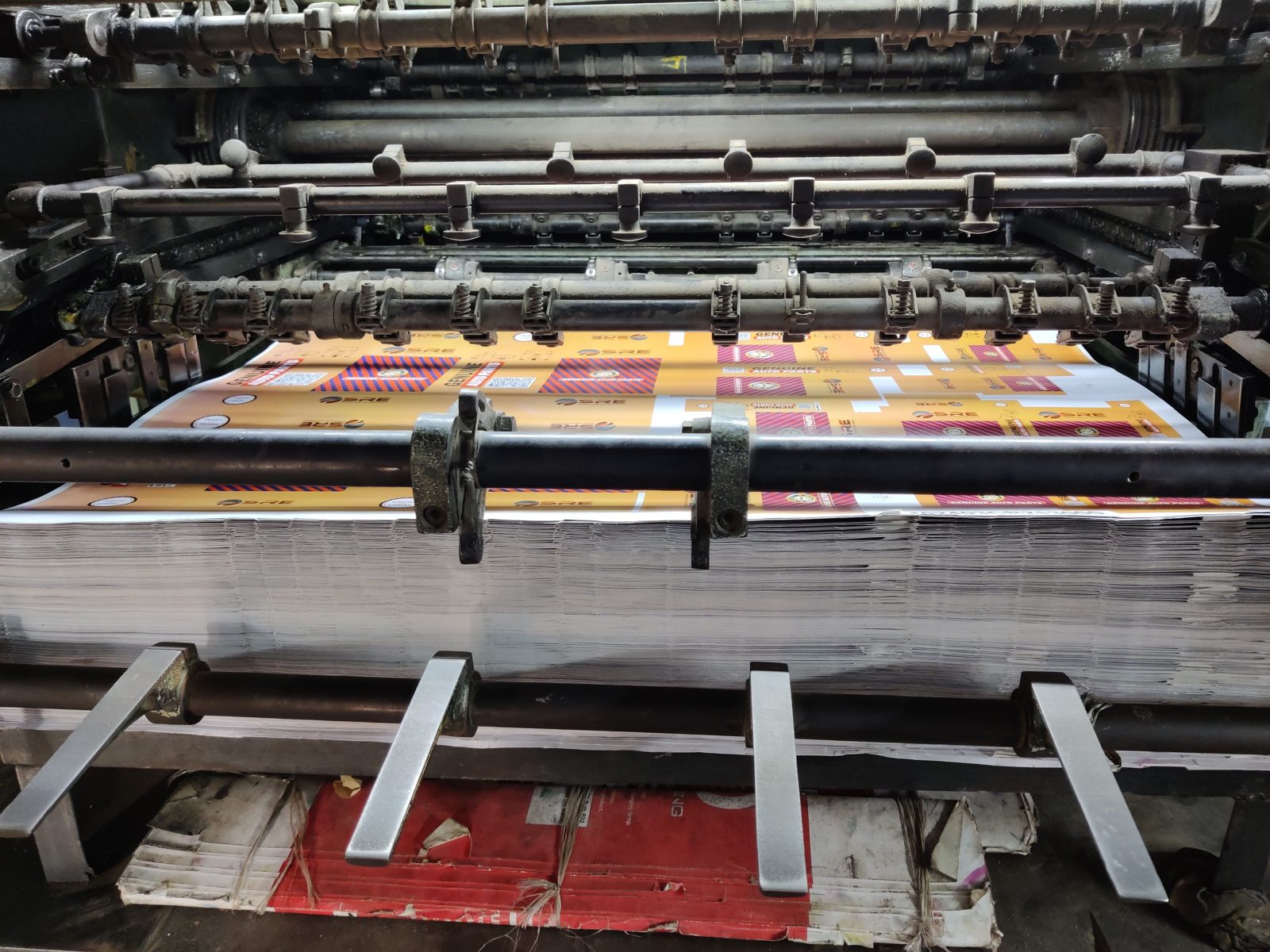
The current text of Rule 3(s), substituted by G.S.R. 201(E), reads: “producer means a person engaged in manufacturing of plastic packaging; and, includes a person engaged in manufacture of intermediate material to be used for manufacturing plastic packaging”. It also brings in contract manufacturers working for brand owners. Brand owners, importers, plastic waste processors and raw material makers are obligated as well.
Registration and target are different things, which is where most converters get confused.
- Registration applies to every producer. Paragraph 6.1 of the Guidelines, as amended in 2024, requires producers to register “including micro and small enterprises”.
- A producer’s EPR quantity excludes what it supplies to brand owners, because the brand owner then carries the obligation for that packaging.
- For micro and small producers, paragraph 7.8 says their EPR is fulfilled by the raw material supplier, but the recycled-content target stays with the producer.
- Coated paper you sell to unregistered buyers, or use to pack your own goods, keeps the obligation on your books.
This is our reading of the Guidelines, not a CPCB ruling. The food-contact compliance guide for coated paper covers the separate FSSAI and BIS obligations that sit alongside EPR.
What does EPR on Category III actually cost?
For a Category III producer, cost comes in three layers: a registration fee of ₹10,000 to ₹50,000 depending on volume, the price of EPR certificates bought to meet recycling targets, and environmental compensation of ₹7,900 per tonne on any shortfall, doubling on a second default. Certificates are where the money goes; the fees are small.
Start with fees. The CPCB portal FAQ lists application fees by annual plastic waste slab: ₹10,000 below 1,000 tonnes, ₹20,000 from 1,000 to 10,000 tonnes, and ₹50,000 above 10,000 tonnes. Renewal costs the same, and the annual processing fee is 25 per cent of the application fee. The FAQ labels these “proposed processing fees” and carries no date, so check the portal before you budget.
Category III producers must have a rising share of their EPR target recycled, and a separate minimum of recycled plastic in what they place on the market:
| Obligation (Category III) | 2024-25 | 2025-26 | 2026-27 | 2027-28 | 2028-29 on |
|---|---|---|---|---|---|
| Minimum recycling, % of EPR target | 30 | 40 | 50 | 60 | 60 |
| Recycled plastic content, % | n/a | 5 | 5 | 10 | 10 |
Sources: EPR Guidelines, G.S.R. 133(E), paragraphs 7.2 to 7.4; recycled-content table as restated by G.S.R. 237(E), 31 March 2026.
CPCB’s revised guidelines of August 2024 set EC for EPR shortfalls at ₹2,900 per tonne for Category I, ₹5,000 for Category II, and ₹7,900 for Categories III and IV, levied at twice the rate on a second default and three times on a third. Many secondary sites still quote the older April 2024 flat rates, which were superseded.
There is no fixed certificate price. Since the 2024 amendment, CPCB sets a floor and ceiling at 30 and 100 per cent of the EC rate, and trade happens inside that band on CPCB’s platform. On the August 2024 rate, that puts Category III certificates between ₹2,370 and ₹7,900 per tonne. That band is our arithmetic, not a published CPCB figure.
A worked example
Suppose a laminator’s Category III obligation for 2026-27, after deducting supply to registered brand owners, is 200 tonnes. The recycling target for that year is 50 per cent, so 100 tonnes must be covered by certificates. The laminator buys 70 tonnes’ worth and misses by 30.
- Certificates at the band floor: 70 × ₹2,370 = ₹1,65,900. At the ceiling: 70 × ₹7,900 = ₹5,53,000.
- EC on the 30-tonne shortfall, first default: 30 × ₹7,900 = ₹2,37,000.
- A second-year default on a similar shortfall: 30 × ₹15,800 = ₹4,74,000.
Paying EC does not discharge the target. Under paragraph 9.5 of the Guidelines the shortfall carries forward for three years, and the EC is refunded at 75 per cent if the gap is closed within one year, 60 per cent within two and 40 per cent within three. After that it is forfeited. CPCB’s April 2024 note also says EC is meant to sit about 15 to 20 per cent above prevailing certificate prices, so a shortfall is designed to cost more than compliance.
One question we could not settle from the text: whether a Category III target is counted on the full laminate weight or only on its plastic. The 2026 amendment limits the recycled-content obligation to “the weight of plastic layers present”, but says nothing equivalent for the recycling target. Ask CPCB how to declare your structure before you file.
What changed for multilayered packaging in 2025 and 2026?
Two amendments matter for a coated-paper converter. G.S.R. 73(E) of 23 January 2025 lets producers give the mandatory marking details by barcode, QR code or unique number from 1 July 2025. G.S.R. 237(E) of 31 March 2026 limits Category III recycled-content targets to the plastic layers and exempts food-contact packaging where law forbids recycled content.
On marking, Rule 11(1) has required since 2016 that every multilayered package print the name and registration number of the manufacturer. The 2021 amendment, G.S.R. 571(E), extended this to producers and brand owners. The 2025 change gives a digital alternative; it does not remove the duty.
The 2026 amendment’s note on Category III is helpful to paper-based structures: the recycled-plastic target applies only to “the weight of plastic layers present”. A 50 GSM paper with a 15 GSM PE coat is assessed on the PE alone.
Where a law or regulation, such as those of the Food Safety and Standards Authority of India, does not permit recycled plastic, the producer is exempt and must cite the law in its annual return. Shortfalls from 2025-26 on food-contact packaging can be carried forward for up to three years from 2026-27, clearing at least a third each year.
The 2026 amendment leaves the Category III definition, the compostable-plastic certificate and the paper track untouched. It also moves day-to-day enforcement towards local bodies and adds registered environment auditors for EPR audits.

What would the paper EPR draft mean for coated paper?
For now, nothing you can file. The December 2024 draft would bring paper packaging into its own EPR regime, but it has not been notified, and CPCB has no paper registration or return form. A coated paper with no plastic layer has no EPR return to make today, and no portal on which it could file one. The draft matters for planning in one way. If it is notified in anything like its draft form, a plastic-free coated paper would move from “no obligation” to “obligation on the paper track”, not stay outside EPR altogether. The draft’s category scheme and targets are reported in secondary sources; we could not reach the Gazette text, so we do not restate them here. Our converters team’s explainer, what the draft paper EPR rules would mean for converters, covers the proposal in more detail.
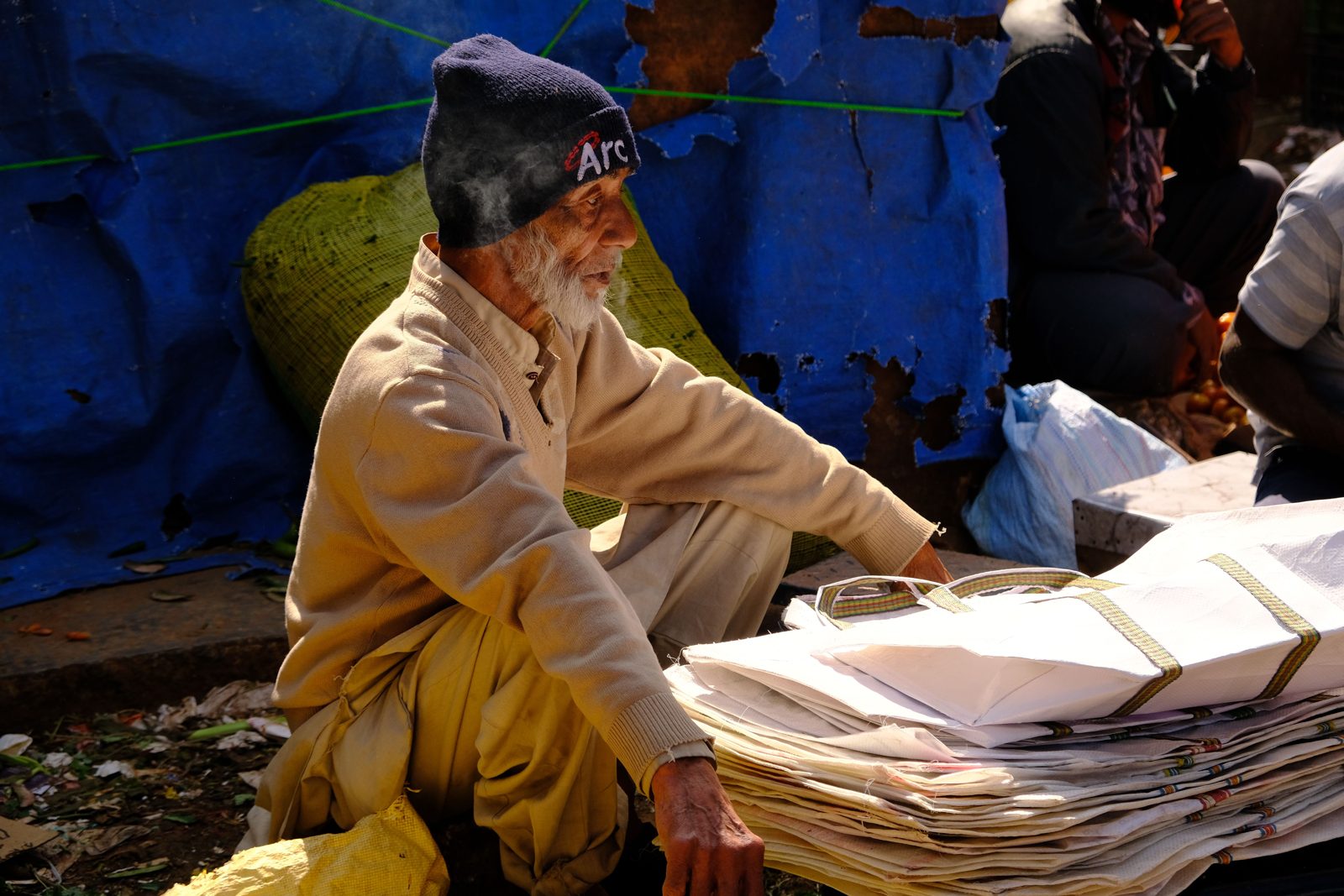
Two practical points follow. Do not pay anyone to register you for paper EPR; there is nothing to register for. And if you place plastic-coated paper on the market, your plastic EPR obligation exists now, whatever happens to the paper draft.
How does coating choice move a structure between categories?
The coating is the single specification decision that sets a coated paper’s EPR status. A polyolefin extrusion coat puts the structure in Category III, a certified compostable polymer moves it towards Category IV with its own certification burden, and a mineral or starch coat keeps it on the paper track. Dispersion and silicone coats sit in a grey zone the rules do not resolve.
| Coating on paper | Likely EPR status (Oct 2026) | Certainty | What it costs the converter |
|---|---|---|---|
| PE / PP extrusion coat or film laminate | Category III, live | High: matches the definition | Registration, Category III targets, EC exposure at ₹7,900/t |
| Certified compostable polymer (IS/ISO 17088:2021) | Category IV, live | High, if CPCB-certified | CPCB certificate, compostable labelling, industrial-composting targets |
| Water-based polymer dispersion | Unresolved | Low: thin polymer film, not named | Written CPCB view before you rely on it |
| Silicone release coat | Unresolved | Low: polymer not listed; “packaging” status unclear | Written CPCB view; check how the liner is disposed of |
| Clay, starch or mineral coat, no polymer | Paper track, draft only | High for today | No EPR return until the paper rules are notified |
Recommendation: if a structure is in an unresolved row, budget as if it were Category III until CPCB says otherwise. Over-preparing costs a registration fee; under-preparing costs EC plus a three-year carry-forward.
Changing the coating to change the category also has limits. A plastic-free barrier has to hold the same grease, moisture or seal performance on the line and in the pack, or the saving is false. And the brand owner will ask for evidence either way. EPR status is one criterion beside barrier, runnability and food-contact clearance, not a substitute for them.
Where a paper coating base fits
The base paper does not decide the EPR category; the coating does. The base still matters, because a coating that has to sit on an open, porous sheet needs a heavier coat weight, and heavier polymer coats are exactly what make a structure a multilayered plastic. A closed, consistent base is what lets a lighter or non-plastic coat do the job.
That needs two honest limitations first. A better base paper does not by itself move a structure out of Category III; if a PE layer is still there, the structure is still multilayered plastic packaging. And no base paper can make a dispersion or silicone coat “not plastic” for EPR purposes. That is a classification question for CPCB, not a substrate property.
Pakka is developing flexC base, a coating base paper in the 40-60 GSM band, bleached and unbleached, intended as a substrate for barrier chemistries including silicone, biopolymer and plastic coatings. Its eight named target applications are confectionery wraps, snack pouches, sachets, medical packaging, seed packs, release liners, dry food liners and tea pouches. These details are disclosed in Pakka Limited’s Investor Presentation for Q1 FY2026-27, filed on 18 August 2026 (BSE 516030 / NSE PAKKA). It is a development programme, not a stocked product, and it has no published performance data, so no barrier, porosity or coat weight figure should be attributed to it by anyone, including us.
The two names are easy to confuse. flexC base is the coating base paper described above, for coaters and converters who apply their own barrier. flexC is a separate product: a finished compostable flexible-packaging laminate that Pakka already supplies to brand owners, with its own published specifications. A converter weighing which coating to put on paper wants the first; a brand looking for a finished laminate wants the second.
If the EPR status of your structure depends on getting a lighter or non-plastic coat to work, the only real test is running that coat on candidate bases on your own line and checking the result in the pack. That applies to any supplier’s base, ours included.
Frequently asked questions
Is PE-coated paper covered under EPR in India?
Yes. Paper with a polyethylene coat or laminate has at least one plastic layer and one non-plastic layer, which is the definition of multilayered plastic packaging, Category III, in the EPR Guidelines under the Plastic Waste Management Rules. The producer must register on the CPCB portal and meet Category III recycling targets.
Is EPR for paper packaging in force in India?
No, as of October 2026. MoEFCC published draft EPR rules for paper, glass and metal packaging in December 2024 with a proposed 1 April 2026 start, but no final notification has been issued, and the CPCB EPR portal handles plastic packaging only.
What is the environmental compensation for EPR shortfall in Category III?
CPCB’s revised guidelines of August 2024 set environmental compensation at ₹7,900 per tonne for Category III shortfalls, doubling on a second default and tripling on a third. The obligation still carries forward for three years, and part of the EC is refunded if the shortfall is cleared in time.
Does a paper converter need to register on the CPCB EPR portal?
Only if it makes plastic packaging or intermediate material for it, such as PE-coated or film-laminated paper. Since the 2024 amendment, producers must register even if they are micro or small enterprises. A converter working only with uncoated paper has no plastic EPR registration to make.
Is silicone-coated release paper plastic packaging under EPR?
The rules do not say. Silicone is a polymer, but it is not on the illustrative list in the definition of plastic, and a release liner may not count as packaging at all. Ask CPCB for a written view on your specific structure before relying on either answer.
Last reviewed: October 2026.
Weighing a lighter or non-plastic coat on a paper base? Pakka’s flexC base programme covers the 40-60 GSM band in bleached and unbleached, for coaters and converters who coat, extrude or laminate their own webs. If you would like to discuss a trial, send us a flexC base trial enquiry with the coating you apply, the end application and your reel width. Technical brochures for our paper and packaging range are on the resources page, and general enquiries reach us through the same contact page.
Sources
- Plastic Waste Management Rules, 2016, G.S.R. 320(E), 18 March 2016, Rules 3 and 11
- Plastic Waste Management (Amendment) Rules, 2022, G.S.R. 133(E), 16 February 2022, Schedule II (Guidelines on EPR for plastic packaging)
- Plastic Waste Management (Amendment) Rules, 2024, G.S.R. 201(E), 14 March 2024
- Plastic Waste Management (Amendment) Rules, 2025, G.S.R. 73(E), 23 January 2025
- Plastic Waste Management (Amendment) Rules, 2026, G.S.R. 237(E), 31 March 2026 (Maharashtra Pollution Control Board copy of the Gazette)
- Central Pollution Control Board, Revised Guidelines for Assessment of Environment Compensation, August 2024, and EC guidelines of April 2024
- Central Pollution Control Board, EPR portal FAQs and Centralized EPR Portal for Plastic Packaging
- Press Information Bureau, Circular Economy Framework and EPR, 23 March 2026
- Pakka Limited, Investor Presentation Q1 FY2026-27, filed 18 August 2026 (BSE 516030 / NSE PAKKA)
Browse all Pakka articles.
You may also like
