Running 40-60 GSM Paper on a Coating Line: Web Tension, Breaks, and Moisture Profile

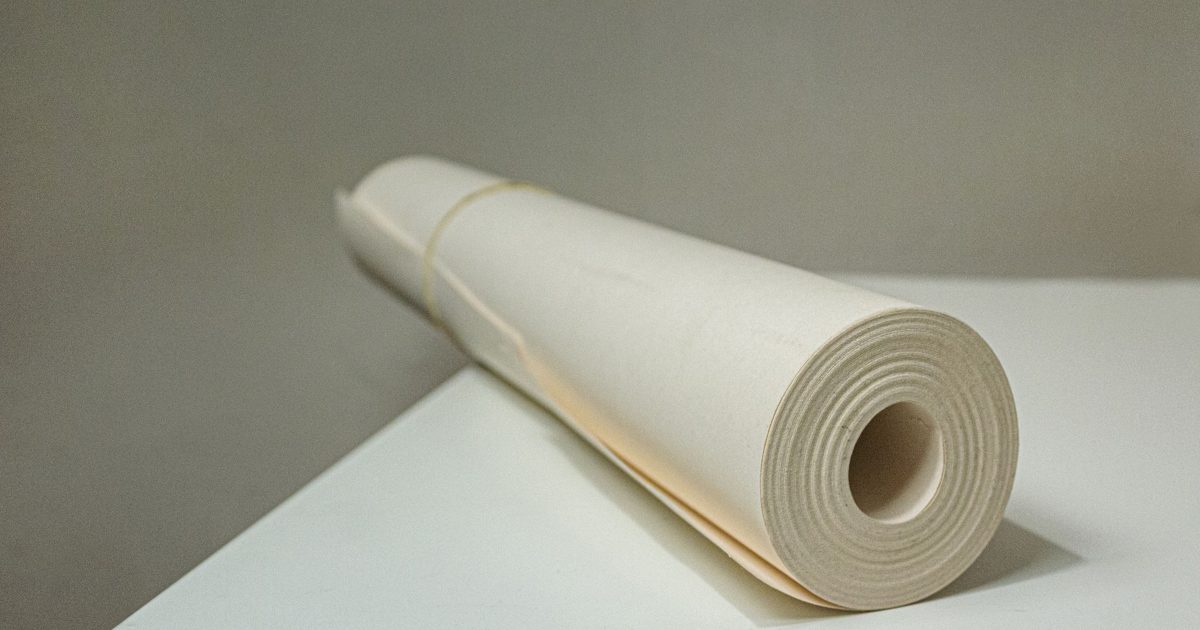
Yes, a coating line can run 40-60 GSM paper if web tension is set from the sheet’s measured tensile strength, not carried over from an 80 GSM base, and if moisture is even across the reel. Breaks on light paper usually start at the edges and at tension peaks, not in a sound sheet.
That is the short answer to the question every coater asks first about a lighter base: will it run? The longer one starts with tension, which has to come down in proportion to strength. The edges need protecting, since that is where cracks start. Moisture then has to be managed all the way from the warehouse to the rewinder, because a light sheet takes up humidity faster than a heavy one and has less fibre to soak up the change.
This piece is written for the production manager and the process engineer who would have to put a lighter base on their own coater, laminator or silicone line. It does not argue that a lighter base is always better. It sets out what changes in the physics, what the published research says about breaks, and what a trial should record before anyone signs off a new grade. For the specification side of the same decision, see our hub on how to specify a release liner base paper.
Is 40-60 GSM unusual for a coating base?
It is lighter than the usual band but no longer unusual. Standard glassine release bases run at roughly 50-80 g/m², and several European mills now sell release bases below that range, which means a 40-60 GSM sheet sits at the light end of normal practice rather than outside it.
Mills and coaters go lighter for more square metres per tonne and fewer reel changes. What they give up is fibre: there is less of it to carry tension, resist edge damage and buffer moisture. Most of this article is about that trade.
The suppliers’ own figures show where the market has moved:
| Grade | Grammage | What the maker says it delivers |
|---|---|---|
| delfort tersil ultralight | 35 g/m² | “40% lighter than current alternatives”; about 28,500 m² of label surface per tonne; fewer reel changes |
| Mondi EverLiner labelite | 47 g/m² | Same thickness as a standard 58 g/m² glassine with about 20% less raw material |
| Ahlstrom Acti-V glassine | 45-140 g/m² | Wide range of supercalendered glassine release bases |
| UPM Polar glassine (reference) | 65 g/m² | Data sheet: 57 µm, 6.5% moisture, tensile MD 6.7 kN/m, CD 2.4 kN/m |
Sources: delfort product blog; Packaging Europe, 16 February 2021; Ahlstrom product page; UPM Specialty Papers catalogue sheet, 2022. All are manufacturer figures and none is independently tested.
Two cautions sit under that table. First, these are claims from the makers’ own pages, and the runnability benefits are asserted rather than published as line data. Second, the film side of the market went light first: Avery Dennison’s 23 µm PET liner was promoted in 2009 on more labels per reel and less downtime. Paper is following, and the question is whether a given line can follow with it. For how the incumbent paper bases compare on cost and release, see our glassine, SCK and CCK decision matrix.
How much web tension should a lighter base run at?
Set web tension as a share of the sheet’s machine-direction tensile strength, not as a fixed number carried over from a heavier grade. The common working guideline is 10-20% of MD tensile, so a sheet with less tensile strength needs proportionally less tension to keep the same safety margin.
Web tension is the pulling force on the paper between two driven points on the line, usually expressed per unit width in N/m or kN/m. Our coating base paper glossary defines it alongside tensile strength and GSM. The 10-20% guideline appears in Steven Abbott’s Web Tension Calculator documentation, which points back to Roisum, Walker and Jones’s Web Handling Handbook. It is a rule of thumb, not a standard, and it exists because tension has to be high enough to track and wind the web flat and low enough to stay well clear of the breaking load.
A worked example shows why a heavy-grade setting is dangerous on a light sheet. UPM’s data sheet for a 65 g/m² glassine gives MD tensile of 6.7 kN/m, which works out to a tensile index of about 103 N·m/g. If a lighter sheet reached the same tensile index, which is an assumption and not a given, its strength would fall in step with grammage:
| Grammage | MD tensile at 103 N·m/g | Tension window at 10-20% |
|---|---|---|
| 65 g/m² | 6.7 kN/m | 0.67-1.34 kN/m |
| 60 g/m² | 6.2 kN/m | 0.62-1.24 kN/m |
| 50 g/m² | 5.2 kN/m | 0.52-1.03 kN/m |
| 45 g/m² | 4.6 kN/m | 0.46-0.93 kN/m |
| 40 g/m² | 4.1 kN/m | 0.41-0.82 kN/m |
Worked example by the author from the UPM Polar data sheet and the 10-20% guideline. It assumes a constant tensile index, which real lighter grades may not achieve. Measure your own base by TAPPI T 494 or ISO 1924-2.
Read the table from the bottom. A line set at 1.2 kN/m for a 65 g/m² base is inside that sheet’s window. The same setting on a 40 g/m² sheet with the same tensile index is close to 30% of its MD tensile, well outside the guideline, and every tension spike from a splice or an out-of-round reel lands on a sheet with far less margin. In that case the paper has not failed; someone forgot to move the setpoint.
The cross direction is the weaker one. The same UPM sheet gives CD tensile of 2.4 kN/m, about a third of MD. Tension is applied in the machine direction, but edge cracks open across the web, which is one reason a light sheet’s edges deserve more attention than its average strength.
What actually starts a web break on a lightweight base?
Most web breaks are started by tension peaks and edge damage, not by the paper being uniformly too weak. Research on pressroom breaks found that break frequency is extremely sensitive to applied tension, and that at normal running tension almost no breaks come from variation in the sheet’s strength.
That finding comes from Uesaka and Ferahi’s probabilistic model, presented at the 1999 International Paper Physics Conference. Within the normal pressroom range of 10-20 kgf/m (about 98-196 N/m), they found virtually no breaks caused by strength non-uniformity. Even a 40 mm centre crack in every roll gave only a modest rise in breaks as long as tension stayed in that range. They also named the ratio of MD tensile strength to elastic modulus, in effect how far the sheet can stretch before it fails, as one of the paper properties that matter most for runnability.
Øyvind Gregersen of NTNU reviewed the field at the 2005 Fundamental Research Symposium in Cambridge. He cited work showing that newsprint at 150-250 N/m only started to break once edge cuts exceeded 23 mm, although a cut that size should in theory hold 700-800 N/m. His explanation is that the breaks are triggered by forces the average tension does not show: baggy lanes, flutter, nip tack and tension peaks from flying splices and out-of-round rolls. The same paper notes that unwind tension is often lower at the edges, which leaves edge rolls with one tight edge and one slack edge, and that streaks in caliper, grammage or moisture produce an uneven tension profile across the web. None of these show up on a tension readout that reports one average figure for the full width, which is why a line can look stable on the display and still break.
The experts did not agree on everything. In the published discussion, Gregersen said camera systems linked about half of newsprint breaks to holes or cuts; Uesaka replied that across three or four datasets, defect-driven breaks were not the majority. For a coater, both positions point the same way. Control tension peaks, and protect the edges, because a light sheet gives you less margin on both.
The usual break initiators on a coating or laminating line, in roughly the order a coater can control them:
- Tension spikes at splices, reel changes and accelerations.
- Out-of-round or badly wound parent reels that pulse tension once per revolution.
- Edge cracks and nicks from slitting, handling or core damage.
- Slack or tight lanes caused by moisture or caliper streaks across the reel.
- Holes, shives and other point defects in the sheet itself.
Slitting quality is where a converter can lose a sound base before it reaches the coater. Our converters’ guide to quality control on the converting line covers edge inspection and tolerances on the bag-making side; the same discipline applies to a base reel.
Why does moisture profile matter more on a light sheet?
Moisture changes a paper’s strength, dimensions and runnability, and a light sheet responds to humidity faster because there is less fibre to buffer the change. An uneven moisture profile across the reel turns into uneven tension across the web, which shows up as slack edges, wrinkles and curl.
TAPPI’s oven-dry moisture method, T 412, says so in its own scope: moisture affects printability, shrinkage, dimensional stability, physical strength and paper runnability. The size of the effect is easy to underestimate. Valmet’s Paper Lab application note gives a rule of thumb that a 10 percentage point change in relative humidity, within the 20-60% range, moves paper moisture by about one percentage point. It also notes that thin papers reach equilibrium with the air in about 15 minutes, while heavily sized or thick grades can take 24 to 48 hours. A lighter base therefore follows the conditions in the hall almost as fast as they change, and any part of the reel exposed to different air (the edges, the outer wraps) changes first. This is one reason a base that measured well at the mill can behave differently on the line: the moisture on the certificate belongs to the conditions at the mill, not to an open reel standing in a humid hall.
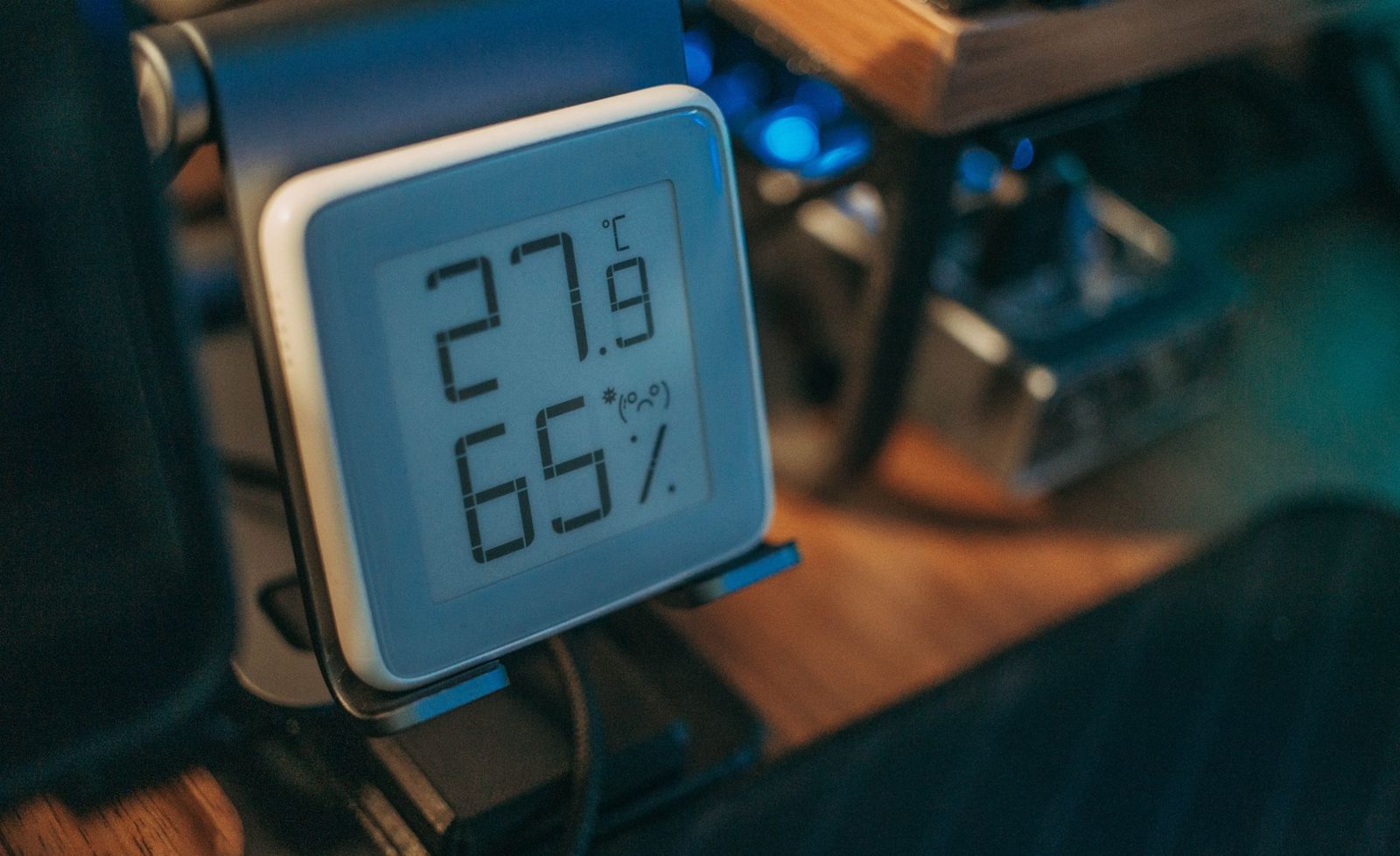
Dimensions move with moisture, and not equally in every direction or across the width. Erkkilä and colleagues, writing in Nordic Pulp and Paper Research Journal in 2015, measured samples from a production machine and estimated cross-direction drying shrinkage of 2.33-2.72% in the middle of the web against 5.36% at the front edge, while machine-direction shrinkage was close to zero. The paper lists misregistration, curl and calender wrinkles as the defects that dimensional instability causes. A sheet whose edges shrank more than its centre at the mill carries that difference into every later moisture change.
For a coater this has two practical consequences. Measure moisture at the edges and the centre of the reel, not one point. And treat a moisture streak as a tension problem: the lane that is wetter or drier than its neighbours will run slack or tight, and on a light base that difference is a larger share of the tension the sheet can carry. The same moisture-and-pore physics underlies coating absorption, covered in our piece on porosity and air permeability in coating base paper.
What happens to the base inside a silicone curing oven?
A silicone curing oven dries the paper as well as curing the coating, so the web leaves the oven drier, warmer and more prone to curl than it went in. Most release-liner lines cool the web and add moisture back with steam before winding, and a light base needs that step more, not less.
Patent US9212299B2 on a coated release liner substrate describes the sequence directly: cure, then cooling stations, then moisture added through jet steamers, then the winder. Its own cure test condition is 30 seconds at 150 °C. Momentive’s guidance for one solventless release coating (SilForce SL6961) recommends zoned ovens, with the first zone at 90-120 °C so the coating can level before full cure, and heat applied immediately after coating. How hard a line has to push the oven depends heavily on the base, a point covered in our piece on silicone holdout, coat weight and anchorage.
Remoisturising is how lines deal with the result. KPM Analytics, which makes moisture measurement equipment, describes steam re-moisturisers as a common fix for edge curl and lay-flat problems, notes that moisture difference between layers causes lay-flat trouble particularly at the high temperatures used for silicone-coated release liners, and gives typical operating details: steam at roughly 0-30 psig, with chill rolls bringing the paper to about 52 °C or below before the steam chamber.
We could not find a published source that puts numbers on how much faster a light base dries in the oven. The reasoning is straightforward (less mass to heat, less water to remove), but the size of the effect on your line is something only a trial will show. If the oven settings were tuned on a heavier base, expect to revisit dwell, temperature and steam together, and watch curl at the rewinder as closely as release.
How do troughs turn into wrinkles on a thin web?
Troughs come first and wrinkles follow. A trough is a lengthwise buckle in the free span between two rollers; a wrinkle forms when that buckle is carried onto a roller and folded into the web. Thin, low-stiffness webs buckle more easily, so a light base needs straighter, better-aligned web paths.
The definitions come from Good, Beisel and Yurtcu’s chapter in Advances in Pulp and Paper Research (Oxford, 2009), part of the Oklahoma State University web handling programme. They describe troughs as an out-of-plane instability of a web in a free span, and note that troughs alone can spoil coating quality. Wrinkles form as the web crosses a roller and can cause creases, fold-overs and bursts. Their analysis predicts troughs with linear buckling theory and wrinkles with a nonlinear post-buckling model, so in practice a trough is the early sign and the wrinkle is the damage.
The common causes are roller misalignment, uneven tension across the web and moisture or caliper streaks, which is where this section joins the previous two. A heavier, stiffer sheet hides small misalignments that a lighter one will show. Before trialling a lighter base, check roller alignment and the condition of spreader rolls on the coating line, because a trough that a heavier base tolerated may become a wrinkle on the new one.
How should Indian coaters condition reels through the monsoon?
Keep reels wrapped until they reach the line, give them time to reach the hall’s temperature before unwrapping, and measure moisture rather than trusting the mill certificate. Indian monsoon humidity is well above the conditions most base papers are made and tested for, and a light sheet adjusts to it quickly.
Paper is generally made to lie flat at about 21 °C and 50% relative humidity, and Monadnock Paper Mills’ conditioning guidance disclaims responsibility for paper used outside 40-60% RH. Indian conditions sit above that for much of the year. Across 215 stations from 1969 to 2007, Jaswal and Koppar found mean relative humidity in India of 63.9% (MAUSAM, 2011). In the monsoon months it is higher: IMD normals for Kolkata (Alipore) show 82-83% relative humidity in July and August, and Mumbai (Santacruz) about 81% in the same months.
Monadnock’s acclimatisation times show how long wrapped paper needs before it reaches the temperature of the room. They are written for skids and cartons, so a jumbo reel with more mass will need longer:
| Temperature difference, store to hall | Small load (about 0.17 m³) | Large load (about 2.7 m³) |
|---|---|---|
| About 6 °C (10 °F) | 5 hours | 15 hours |
| About 17 °C (30 °F) | 18 hours | 41 hours |
| About 33 °C (60 °F) | 54 hours | 115 hours |
Source: Monadnock Paper Mills, Paper Conditioning Recommendations, 2020. Volumes converted from 6 ft³ and 96 ft³.
The reason for keeping the wrap on is condensation. A reel brought from a cool store into a hot, humid hall will take moisture onto its outer wraps and edges the moment it is opened, and on a light grade those wraps can equilibrate within minutes. The same applies to the reel’s edges if the wrap is torn in transit, so check wrap condition on arrival and note it on the goods-in record.
What should a runnability trial on a lighter base record?
A runnability trial should record tensile strength in both directions, moisture across the reel, tension setpoints, every break with where it started, and curl and flatness after the oven, across several reels. Breaks per reel alone tells you that something went wrong but not why.
A workable protocol, drawing on the sources above:
- Test MD and CD tensile and stretch on samples from each trial reel by TAPPI T 494 or ISO 1924-2, and work out the tension window at 10-20% of MD tensile before the first reel goes on.
- Measure moisture at both edges and the centre of each reel by TAPPI T 412, after conditioning and immediately before unwrapping.
- Run at the low end of the tension window first, then step up, holding line speed, oven settings and steam constant at each step.
- Log every break with its position across the web (edge or body), the line position, and what happened just before it: splice, acceleration, reel change.
- Inspect slit edges on each reel under magnification before running, and note any nicks or cracks.
- Record troughs and wrinkles by location on the line, and check roller alignment where they appear.
- Measure curl and lay-flat after the oven and after remoisturising, with the steam settings recorded.
- Repeat on at least three reels from different production dates, and record the spread as well as the mean.
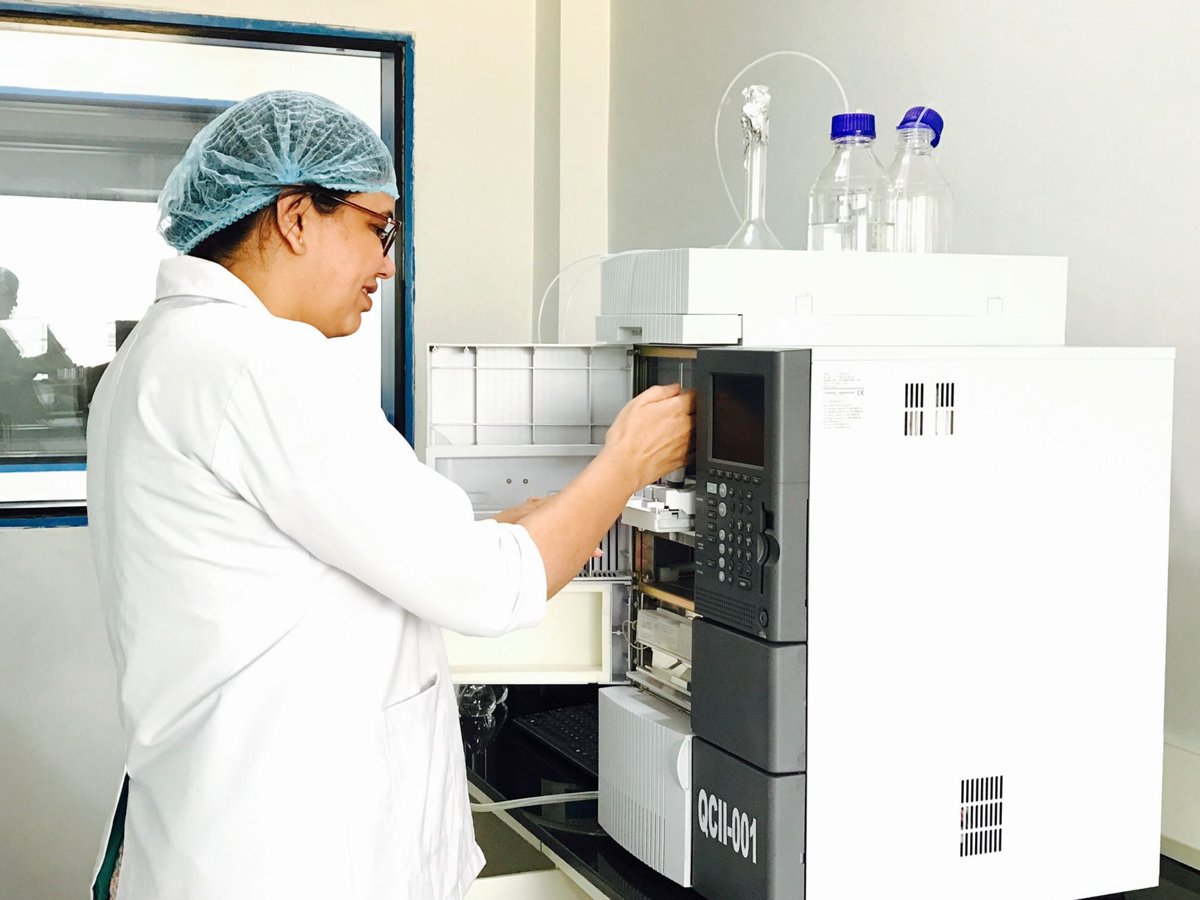
The output is a tension window and a set of oven and steam settings that the base runs inside, with the break record to show where it does not. That is a far more useful acceptance criterion than a supplier’s tensile figure, because it includes your line. If the trial is for a release liner, run the holdout tests in the same trial so the coat weight and the runnability verdicts come from the same reels. A base that runs cleanly at a coat weight your customers will not accept has not passed, and neither has one that coats well but breaks twice a shift.
Where a paper coating base fits
A lighter base is a poor choice for a line that is already struggling with breaks, wrinkles or curl on its current grade. Moving to less fibre will not cure a misaligned roller or an untuned oven; it will expose them. It is also a poor choice where the line runs at the top of its speed range with frequent flying splices and no tension control at the unwind, because those are exactly the conditions under which a smaller margin turns into breaks.
A lighter base is worth trialling where the line has good tension control, a remoisturiser after the oven and a stable humidity regime, and where the business case is clear: more area per tonne, fewer reel changes, lower freight per square metre, or a customer asking for a lighter liner. In every case the deciding evidence is the trial record above, not the grammage on the order.
Pakka is developing flexC base, a coating base paper in the 40-60 GSM band, available bleached and unbleached, intended as a substrate for barrier chemistries including silicone, biopolymer and plastic coatings. These details are disclosed in Pakka Limited’s Investor Presentation for Q1 FY2026-27, filed on 18 August 2026 (BSE 516030 / NSE PAKKA), which lists release liners, sachets, snack pouches and five other applications for it. It is a development programme, not a stocked product, and it has no published performance data. No tensile, moisture, porosity or runnability figure should be attributed to it by anyone, including us, until trial results are published.
The name sits close to another Pakka product, so to be clear: flexC base is the coating base paper described above, for coaters and converters. flexC is a separate product, a finished compostable flexible-packaging laminate supplied to brand owners with its own published specifications. A coater planning a runnability trial wants the first.
Frequently asked questions
What web tension should I use for lightweight paper?
A common guideline is 10 to 20% of the paper’s machine-direction tensile strength. Measure the tensile of the actual base, by TAPPI T 494 or ISO 1924-2, and work out the window from that. A setting carried over from a heavier grade can sit well above the window on a lighter sheet.
Why does thin paper break more often on a coating line?
Usually because tension was not reduced in step with strength, and because tension peaks and edge damage take a larger share of a light sheet’s margin. Research on pressroom breaks found that breaks are very sensitive to applied tension and that edge cuts, splices and out-of-round reels matter more than average strength.
What moisture content should base paper have before coating?
There is no single figure; agree it with your supplier for the grade and your process. As a reference point, one supplier’s 65 g/m² glassine data sheet gives 6.5%. What matters on the line is that moisture is even across the reel, so measure both edges and the centre.
How long should paper reels acclimatise before use?
It depends on the temperature difference between store and hall and on the size of the load. Monadnock Paper Mills gives 5 to 15 hours for a difference of about 6 °C, rising to 54 to 115 hours for about 33 °C, for wrapped skids. Jumbo reels need longer. Keep the wrap on until the reel reaches hall temperature.
What causes wrinkles in a paper web?
Wrinkles usually start as troughs, lengthwise buckles in the free span between rollers, which fold into wrinkles as the web crosses a roller. Misaligned rollers, uneven tension across the web and moisture or caliper streaks are the common causes. Lighter, less stiff webs show them sooner.
Last reviewed: October 2026.
Planning a runnability trial on a lighter coating base? Pakka’s flexC base programme covers the 40-60 GSM band in bleached and unbleached, for coaters and converters who apply their own silicone or barrier coatings. If you would like to discuss a trial, send us a flexC base trial enquiry with your line type, web width, oven and remoisturising set-up, and the grade you run today. Technical brochures for our paper and packaging range are on the resources page, and general enquiries reach us through the same contact page.
Sources
- Steven Abbott, Web Tension Calculator: user manual (referencing Roisum, Walker and Jones, The Web Handling Handbook)
- Y. Uesaka and M. Ferahi, Principal Factors Controlling Press Room Breaks, International Paper Physics Conference, TAPPI, 1999
- Ø. W. Gregersen, Runnability, Fracture and Pressroom Breaks, 13th Fundamental Research Symposium, Cambridge, 2005
- UPM Specialty Papers, UPM Polar product sheet, 2022
- TAPPI, T 412 om-22: Moisture in pulp, paper and paperboard
- Valmet, Measurement of paper and board moisture content, Paper Lab application report
- A.-L. Erkkilä et al., Hygroexpansivity of anisotropic sheets, Nordic Pulp and Paper Research Journal 30(2), 2015
- US9212299B2, Coated release liner substrate
- Momentive, SilForce SL6961 release coating, product information via ChemPoint
- KPM Analytics, Controlling steam re-moisturizers to reduce edge curl, 2024
- J. K. Good, J. A. Beisel and H. Yurtcu, Instability of webs: the prediction of troughs and wrinkles, Advances in Pulp and Paper Research, Oxford, 2009
- delfort, 35 gsm release base paper
- Packaging Europe, New paper-based release liner range developed by Mondi, 16 February 2021
- Ahlstrom, Glassine release papers
- FINAT, Thinnest-ever film release liner, 6 October 2009
- Monadnock Paper Mills, Paper Conditioning Recommendations, 2020
- A. K. Jaswal and A. L. Koppar, Recent climatology and trends in surface humidity over India, MAUSAM 62(2), 2011
- India Meteorological Department climate normals for Kolkata (Alipore) and Mumbai (Santacruz), as tabulated in Climate of Kolkata and Mumbai
- Pakka Limited, Investor Presentation Q1 FY2026-27, filed 18 August 2026 (BSE 516030 / NSE PAKKA)
Browse all Pakka articles.
You may also like
