EPR for Paper Packaging in India: What the Draft Rules Would Mean for Converters (and How to Prepare)

Status, September 2026: EPR for paper packaging is not yet law in India. It exists only as a draft: the Environment Protection (Extended Producer Responsibility for Packaging made from Paper, Glass and Metal as well as Sanitary Products) Rules, 2024, which the Ministry of Environment, Forest and Climate Change published for public comment on 6 December 2024 with a proposed commencement of 1 April 2026. No final gazette notification has been issued. The CPCB portal is still titled “Centralized EPR Portal for Plastic Packaging” and has no registration category or return for paper. There is nothing for a paper bag converter to file today. What follows is what the draft would require if it is notified as written, and the preparation that pays off either way. For the narrower question of what is legally in force today, and why a “paper EPR registration number” cannot exist yet, see paper packaging EPR in India: is it in force yet.
The direction of travel is clear even while the rules sit in draft. Export-facing brand owners already ask their paper bag suppliers for recycled-content data and chain-of-custody records, because the markets they sell into demand it. When the paper EPR rules are notified, that request generalises across the domestic brand base. The converters who have the paperwork ready will inherit the orders; the ones who treat it as a future problem will lose tenders to those who do not.
Key takeaways
Paper EPR is a draft, not a live obligation. The draft rules cover paper carry bags, multi-layered paper-based packaging, and paper used in primary, secondary, and tertiary packaging. If notified, converters would not be the obligated entity, but they would sit in the data chain that PIBOs (Producers, Importers, Brand Owners) need to file their returns.
The draft would require recycled-content disclosure, recyclability declarations, and traceable supply data from the paper chain. Converters who build this now win the export and tier-1 tenders that already ask for it, and are ready the day the rules commence.
Once EPR fees apply to paper, brand owners will pass part of the cost into supplier qualification. Expect downward pressure on bag prices and materially more documentation per order. Plan for it before it lands, not after.
The single-use plastic ban is already in force and has shifted demand toward paper. That shift is real today. Paper EPR, when it arrives, will reward converters whose paperwork holds up to brand audits.
The material side of the plastic ban is covered separately in our guide to what packaging materials are allowed for food delivery in India under FSSAI and SUP rules.
Five practical actions every paper bag converter can take now: document recycled content per batch, specify base paper to IS 1397, formalise FSC/PEFC chain-of-custody records, rewrite the standard supplier declaration form, and watch for the paper EPR portal to open. The current CPCB portal is plastic-only and does not yet accept paper registrations.
What EPR for paper packaging would mean in India
Extended Producer Responsibility is a framework that makes brand owners financially and operationally responsible for the end-of-life of the packaging they put on the market. EPR was first imposed on plastic packaging in 2022, and the plastic regime is live and enforced today; see our companion guide on what changed in the Plastic Waste Management Rules in 2026. The 2024 draft rules would extend a comparable framework to paper, glass, and metal packaging, with paper-specific category targets. Those rules have not been notified. Their proposed start date of 1 April 2026 is exactly that, proposed, and the aggregator pages reporting it as “in force” are repeating the draft’s target date, not a gazette notification.
The obligated entity under the draft is the PIBO. A converter who manufactures kraft paper bags on order for a retail chain is not the PIBO. The retail chain is. But the converter would sit inside the data chain the retailer must file, and that is where the operational burden would land.
The plastic EPR portal already carries tens of thousands of registered PIBOs, and each of them needs supply-side data on the plastic side that converters historically did not track: recycled fibre percentage, mill of origin, whether the paper used FSC or PEFC chain-of-custody, whether the bag is recyclable in Indian municipal streams without de-inking complications. When paper joins the regime, the same questions arrive on the paper side. A paper bag converter who can already answer those four questions in writing, on letterhead, will be first onto approved vendor lists, not last.

The Central Pollution Control Board administers India’s EPR framework. Paper packaging is not yet inside it: the draft rules are still in consultation.
Definition: Extended Producer Responsibility (EPR)
EPR is the regulatory framework making brands and importers financially responsible for end-of-life management of their packaging, including collection, recycling, and disposal targets enforced by CPCB. For paper packaging the framework is proposed, not yet in force. If notified, it would not place a direct obligation on paper bag converters, but the brands they supply would need batch-level recycled content and recyclability declarations to file their own returns. A fuller treatment of the term sits in our paper converter glossary.
Which paper packaging categories the draft rules would cover
The draft groups paper packaging into four categories, each with its own proposed obligation. These targets are drawn from the draft rules published for comment in December 2024 and could change before, or if, the rules are finalised. Nothing in this table is a live filing requirement today.
| Category | Examples | Proposed recycled-content target (draft, FY 2026-27) | Proposed filing frequency |
|---|---|---|---|
| Category I, Rigid paper packaging | Cartons, paper boxes, paperboard cases | 30% recycled fibre | Quarterly (proposed) |
| Category II, Flexible paper packaging | Paper carry bags, kraft paper bags, pouches | 40% recycled fibre | Quarterly (proposed) |
| Category III, Multi-layered paper packaging | Paper-laminated cartons, MLP with paper core | 30% recycled fibre, recyclability declaration | Quarterly (proposed) |
| Category IV, Compostable paper packaging | Bagasse-based, compostable-coated paper bags | Compostability certification (IS 17088 or equivalent) | Quarterly (proposed) |
The proposed 40% recycled-content target on flexible paper packaging is the highest in the draft framework. Recycled fibre content in Indian paper carry bags varies widely by mill route, and a good share of the market currently runs below 40% on the supply side, which is why, if the target is adopted as drafted, most converters would need to shift their mill source mix to meet it.
This is where commercial pressure would land. Brand owners with EPR exposure would preferentially route orders to converters whose mills can certify 40%+ recycled content without compromising the burst factor their buyers require. Converters running on lower-recycled-content kraft would see their bid win-rate drop on paper carry bag tenders unless they shift their supplier base. The converters who move early are buying themselves optionality; the ones who wait for the gazette will be shifting mills under time pressure.
Definition: PIBO (Producer, Importer, Brand Owner)
PIBO is the entity placing branded packaging on the Indian market and therefore the one that would carry the EPR obligation under the draft. Paper bag converters are not PIBOs unless they retail their own brand. Converters supplying to PIBOs should expect EPR-driven supply questions on recycled content, mill source, and certification trail once the rules commence.
What about bagasse, wheat-straw, and other agri-residue paper bags?
Under the draft, agri-residue paper bags fall under Category IV (Compostable paper packaging), not the 40% recycled fibre target that would apply to wood-pulp kraft. Different feedstock, different proof, different fee bracket. A converter running bagasse, wheat-straw, rice-straw, or corn-husk paper has a structurally different EPR posture from a converter running virgin or recycled wood kraft, and treating them as the same line of paper inside a brand’s EPR return would be a misclassification waiting to happen.
The draft’s logic is straightforward. The 40% recycled rule is written to pull wood-pulp mills off virgin forest input. Bagasse and other agri-residues already skip virgin wood entirely because the feedstock is a by-product of sugar, wheat, or rice processing that would otherwise be burnt. The regulator does not need a recycled-content lever on that path because the source itself meets the circularity intent. Category IV captures this through a compostability requirement instead.
What an agri-residue paper bag converter should hold and be ready to supply to brand customers:
- Compostability certification. IS 17088 is the Indian standard. ASTM D6400 (US) and EN 13432 (EU) are accepted by export-oriented brands and many tier-1 Indian PIBOs. The cert applies to the finished bag construction, not the base paper alone, so any coating, adhesive, or print system used on the line must also be compatible.
- Feedstock declaration. A statement on letterhead identifying the agri-residue source (bagasse, wheat-straw, rice-straw, etc.) and confirming non-wood origin. This is what would tell a PIBO to file the bag under Cat IV rather than Cat II.
- Category IV declaration on the supplier form. Procurement teams tend to default-classify paper bags as Cat II (Flexible) and only switch to Cat IV when the supplier explicitly states it. Without this, a brand would file the wrong category, pay the wrong fee, and the recycled-content gap would show up on audit even though the bag was never meant to meet that target.
- End-of-life pathway statement. Industrial-compostable, home-compostable, or both. Indian municipal infrastructure for industrial composting is patchy outside major metros, so home-compostable certification carries more practical weight for retail bags going to consumers.
Note that FSC and PEFC chain-of-custody do not apply to bagasse or agri-residue paper, because both schemes are forest-derived only. Some converters mistakenly chase FSC certification on bagasse grades and find it cannot be issued. The equivalent credibility comes from compostability certification plus a verified agri-residue feedstock audit.
For converters operating bagasse or agri-residue lines, the coming EPR shift is closer to an opportunity than a burden: a lower fee bracket, a cleaner sustainability narrative, and no scramble for recycled fibre supply. The work is in making sure brand customers and their eventual EPR portal filings actually reflect what the bag is.
How EPR would change the converter’s commercial conversation
When paper EPR commences, it will move three things in the converter’s commercial conversation: pricing, paperwork, and panel inclusion. Pricing gets squeezed. Paperwork multiplies. Panel inclusion tightens. None of this is live yet, but all of it is visible on the plastic side already, which is the best guide to how the paper side will behave.
On pricing. Once PIBOs pay EPR fees per tonne of paper packaging placed on the market, they absorb part of the fee and push part of it back into procurement budgets. On the plastic side this has already compressed negotiated prices. Paper bag converters should model a low-single-digit percentage of downward price pressure once fees apply, and price certified, compliant output at a premium to offset it.
On paperwork. A standard kraft paper bag order today needs an invoice, an e-way bill, and an IS 1397 test certificate. The same order under EPR would also need a recycled-content declaration, mill chain-of-custody, and a recyclability statement. Converters who have watched the plastic transition report that documentation per order rises sharply the moment the rules bite. Build the batch register before that happens, not during.
On panel inclusion. Brand procurement teams remove non-compliant suppliers from approved vendor lists, usually after one failed audit on data accuracy. Converters who treat a recycled-content declaration as a copy-paste exercise will be the first to drop off panels once paper EPR is enforced. Those who maintain auditable batch-level data will inherit those orders.
The single-use plastic ban is already in force, and the carry bag thickness rule has tightened plastic carry bag supply. That demand shift toward paper is real today. Paper EPR, when it arrives, will raise the bar to supply that demand, so the two forces will compound.

Under EPR, documentation starts at dispatch, not at year-end. Converters who bake compliance into the line now build a real commercial advantage for when the rules commence.
What kraft paper bag converters should be ready to supply
Kraft paper bag converters would not file EPR returns directly, but under the draft they would hold three documents PIBOs need to file theirs. Export and tier-1 brand customers already ask for these, so building them now serves the business today and readies it for the rules.
- Recycled content declaration per batch. A signed statement on letterhead specifying the percentage of recycled fibre in the kraft paper bags supplied, traceable to mill test certificates.
- Mill chain-of-custody (FSC, PEFC, or equivalent). The document that proves the wood pulp source and recycled fibre input ratio. Required for any bag carrying a sustainability claim and increasingly required by default by tier-1 brand owners.
- Recyclability declaration. A statement confirming that the finished bag is recyclable in Indian municipal recycling streams. This is straightforward for uncoated kraft. It gets complicated the moment any PE coating, foil lamination, or hot-melt adhesive enters the construction.
A converter who builds these three documents into the standard order pack does two things at once. First, brand panel placement gets safer. Second, the converter becomes the easier supplier to work with, and easier suppliers win repeat orders even when their pricing is not the lowest.
For converters running multiple grades and mill routes, an internal batch register that connects mill input certificates to outbound bag dispatches is the only system that holds up over time. Spreadsheets work for the first six months and break by month nine.
Decision matrix: how converters should prepare their compliance stack
Decision: which compliance posture should a paper bag converter adopt ahead of EPR? Three realistic options exist, scored across four criteria below. The right answer depends on order book mix, brand client profile, and capital availability for documentation systems. The scoring reflects where each posture lands once paper EPR is enforced and how well it serves export and tier-1 orders that already demand this data.
| Posture | Setup Cost | Audit Risk | Brand Panel Access | Margin Impact | Score (out of 12) |
|---|---|---|---|---|---|
| A. Reactive: respond to data requests order-by-order | Low (₹0–50,000) | High, inconsistent data triggers brand audit | Weak, exposed on export and tier-1 tenders now, more so under EPR | -3 to -5% (rework cost) | 4 |
| B. Standardised: single template for all orders, batch register, FSC/PEFC chain-of-custody filed | Medium (₹2–5 lakh) | Medium, clean enough for most audits | Stable, holds existing tier-1 placements | -1 to +1% (offset by panel retention) | 8 |
| C. Proactive: full traceability stack, dedicated compliance role, recycled content above 45%, certified to ISO 14001 + FSC, with IS 1397 base-paper evidence | High (₹8–15 lakh + recurring) | Low, survives any brand audit | Growing, wins tier-1 panels exporters historically dominated | +1 to +3% (premium pricing on certified output) | 11 |
Recommendation: Posture B is the floor for any converter wanting to stay on tier-1 brand panels and be ready when paper EPR commences. Posture C is the right move for converters with export ambition or those supplying QSR chains. Posture A works while paper EPR is still in draft, but it leaves the converter exposed the moment a key client formalises its data requirements, which the export-facing ones already have.
Definition: IS 1397
IS 1397 is the BIS specification for kraft paper for packing and wrapping, the standard that actually applies to carry bag base paper. IS 14490, routinely quoted in its place, covers plain copier paper, and no BIS standard covers the finished carry bag. Converters supplying organised retail are increasingly expected to evidence base paper against IS 1397 as a default, not an upgrade. The standards are covered in our converter glossary entry on IS 1397.
How paper EPR would interact with single-use plastic ban enforcement
The single-use plastic ban and a future paper EPR regime would operate as a paired demand engine for paper bag converters. The plastic ban, already in force, removes plastic carry bag supply. Paper EPR, once notified, would make paper bag supply auditable. Together they would shift the carry bag market toward paper, but only for converters who can document.
The plastic ban has already driven measurable growth in paper carry bag demand across the major enforcing states, with Maharashtra, Tamil Nadu, and Delhi among the most active on enforcement. That first wave of post-plastic-ban demand went to whoever could ship, because supply was constrained. The next wave, once EPR data requirements formalise on the paper side, will go to converters who can also send a clean compliance pack with the consignment. The first wave was about volume. The second will be about volume with paperwork.
Converters anchoring their material sourcing to IS 1397-compliant kraft and verifying every base paper batch are already a step ahead. Converters who layered on a structured base paper procurement checklist are two steps ahead. Getting EPR-ready is the third step, and it builds on the first two rather than running in parallel.
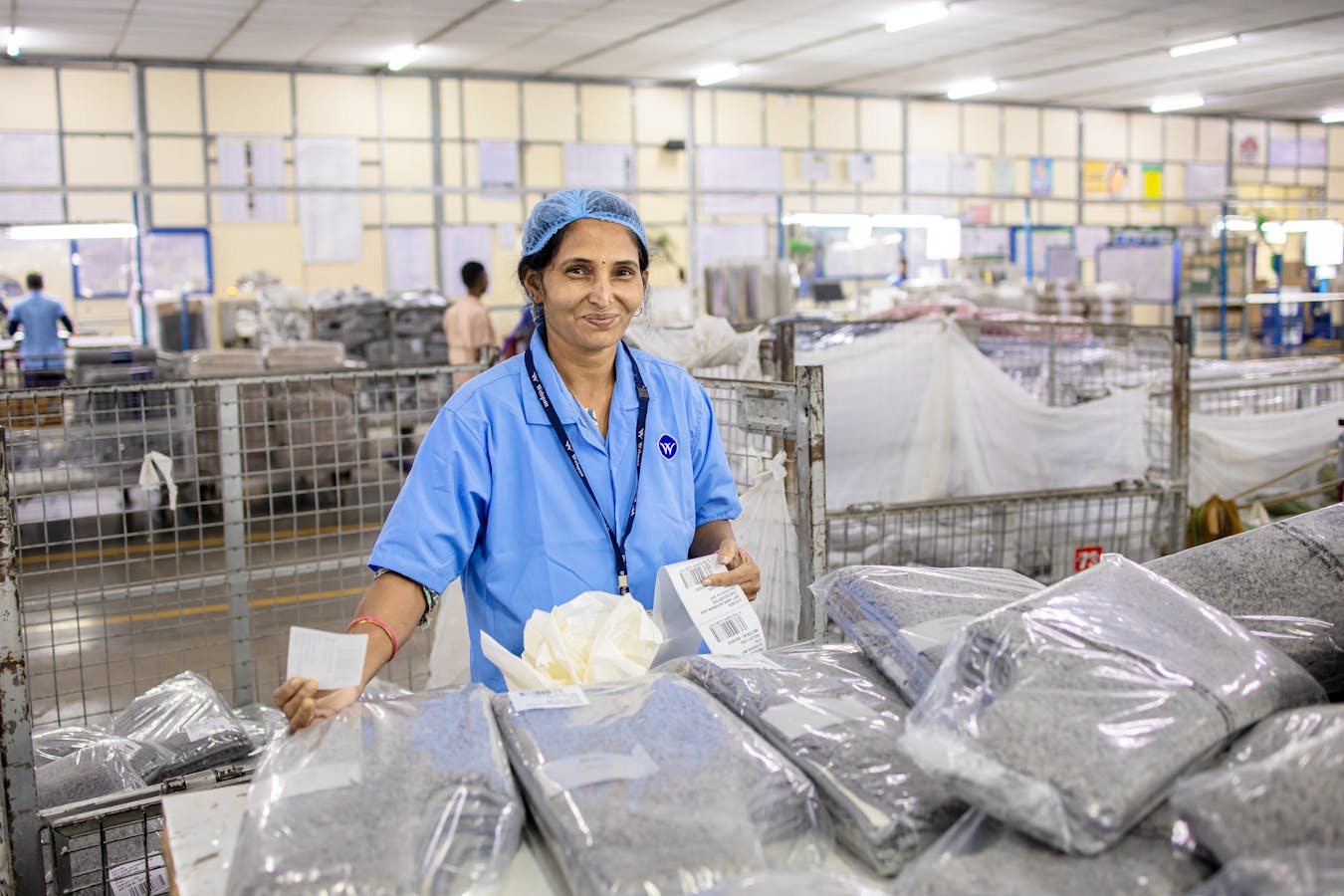
EPR readiness touches every dispatch record. The converters who treat documentation as a production output rather than an afterthought will win the second wave of post-plastic-ban demand.
Five practical actions every Indian paper bag converter can take now
The most useful framing is operational, not legal. Five actions move a converter from posture A or B toward posture C without disrupting the production line, and every one of them pays off on today’s export and tier-1 orders, regardless of when the paper EPR rules are notified.
- Document recycled content per batch, not per quarter. A single batch register that records mill input recycled percentage against outbound bag dispatch becomes the evidence base for every brand declaration you sign. Build it once, use it forever.
- Align every kraft paper bag SKU to an IS 1397 base-paper grade. This is the single quickest panel-access lever in the market this year. Documented base-paper evidence is being written into RFQs as a default requirement. Converters without it are filtered out at the longlist stage.
- Formalise FSC or PEFC chain-of-custody on the kraft paper grades you run. Tier-1 brands and any QSR client will need this, even on bags carrying no sustainability claim. The chain-of-custody document is what makes recycled content declarations defensible.
- Rewrite the standard supplier declaration form. The version your sales team sends out probably dates from 2022 and references plastic-ban compliance only. A ready form needs explicit fields for EPR category, recycled content percentage, recyclability statement, and mill chain-of-custody reference number. A one-page form is enough.
- Watch for the paper EPR portal to open. The current CPCB portal is titled “Centralized EPR Portal for Plastic Packaging” and does not accept paper registrations. When the paper, glass and metal rules are notified, a registration channel for paper is expected to follow. Track CPCB’s notifications rather than acting on aggregator claims that the rules are already live.
The converters who execute these five actions will see the change reflected first in panel retention, then in pricing power, and eventually in the kind of clients willing to issue letters of intent for next year’s volume, and they will be ready the day the paper rules commence.
Frequently asked questions
Is EPR for paper packaging in force in India yet?
No. As of September 2026 it exists only as a draft: the Environment Protection (EPR for Packaging made from Paper, Glass and Metal as well as Sanitary Products) Rules, 2024, published for public comment in December 2024 with a proposed start of 1 April 2026. No final gazette notification has been issued, and the CPCB EPR portal remains plastic-only. There is no paper EPR return to file today. Reports describing it as “in force from April 2026” are repeating the draft’s proposed date, not a notification.
Is EPR mandatory for paper bag converters in India?
Even if the draft is notified as written, EPR would not be directly mandatory for paper bag converters. The obligation sits with the PIBO, the brand or importer placing the bag on the market. But converters who cannot supply EPR-aligned data (recycled content, mill chain-of-custody, recyclability declaration) already lose access to export and tier-1 brand panels, because those brands cannot file clean returns without that data. Building the data now is a commercial move, not just a compliance one.
What recycled content would paper carry bags need under the draft EPR rules?
The draft rules propose 40% recycled fibre content for flexible paper packaging, including paper carry bags and kraft paper bags, for FY 2026-27. This is a proposed target in a draft that has not been notified, so it is not yet a legal requirement. Recycled content in Indian carry bags varies by mill route and a large share of the market runs below 40%, so most converters would need to shift their mill source mix if the target is adopted as drafted.
How would EPR for paper packaging affect bag pricing?
Once paper EPR is notified and fees apply, PIBOs would absorb part of the per-tonne fee and push part back into procurement budgets, creating downward pressure on negotiated paper bag prices, the same pattern already visible on the plastic side. Converters who can supply EPR-compliant data offset this through panel retention and premium pricing on certified output. No paper EPR fees are payable today.
Do paper bag converters need to register on the CPCB EPR portal?
Not today. There is nowhere to register. The CPCB portal is titled “Centralized EPR Portal for Plastic Packaging” and has no paper registration category. Converters are not the obligated entity in any case; the PIBO (brand owner) would file the EPR return. When the paper, glass and metal rules are notified, watch CPCB for a paper registration channel rather than acting on third-party claims that registration is already open.
What documents do brands ask paper bag suppliers for now?
Independently of EPR, export-facing and tier-1 brands already ask for three: a recycled content declaration per batch on letterhead, mill chain-of-custody (FSC, PEFC, or equivalent), and a recyclability declaration confirming the bag is recyclable in Indian municipal streams. Converters who package these three with every consignment see higher panel retention and faster repeat orders, and will be ready if the draft EPR rules commence.
Do bagasse and agri-residue paper bags fall under the 40% recycled content target?
Under the draft, no. Bagasse, wheat-straw, rice-straw, and other agri-residue paper bags fall under Category IV (Compostable paper packaging), which would require compostability certification (IS 17088, ASTM D6400, or EN 13432) rather than 40% recycled fibre content. The recycled-content rule applies to wood-pulp kraft because it is written to reduce virgin forest input. Agri-residue paper already avoids virgin wood entirely, so the draft uses a compostability lever instead. Converters running these grades should explicitly state Category IV on supplier declarations, otherwise PIBOs would default-classify the bag as Cat II and file against a target the bag was never meant to meet. FSC and PEFC chain-of-custody do not apply to non-wood fibre. Agri-residue feedstock audits and compostability certs are the equivalent credibility documents.
Last reviewed: September 2026. Regulatory status: paper EPR remains in draft; no final notification issued.
If you are evaluating a kraft paper grade that would need to satisfy a 40% recycled-content target under the proposed flexible-paper-packaging rules without sacrificing burst factor or food-grade Cobb specs, our technical team can walk through the available options and match a grade to your converting line. Request a technical spec sheet or sample evaluation, and we will share batch test data and chain-of-custody documentation alongside the grade recommendation.
Specifying paper for food wrap and carry applications? Pakka’s food wrap and carry paper range carries spec sheets with food-contact and barrier data on the category page. For grade-level questions, talk to the Pakka team.
Browse all Pakka articles.
You may also like