Recycling vs Composting: What the Data Shows About Which System Handles More Waste

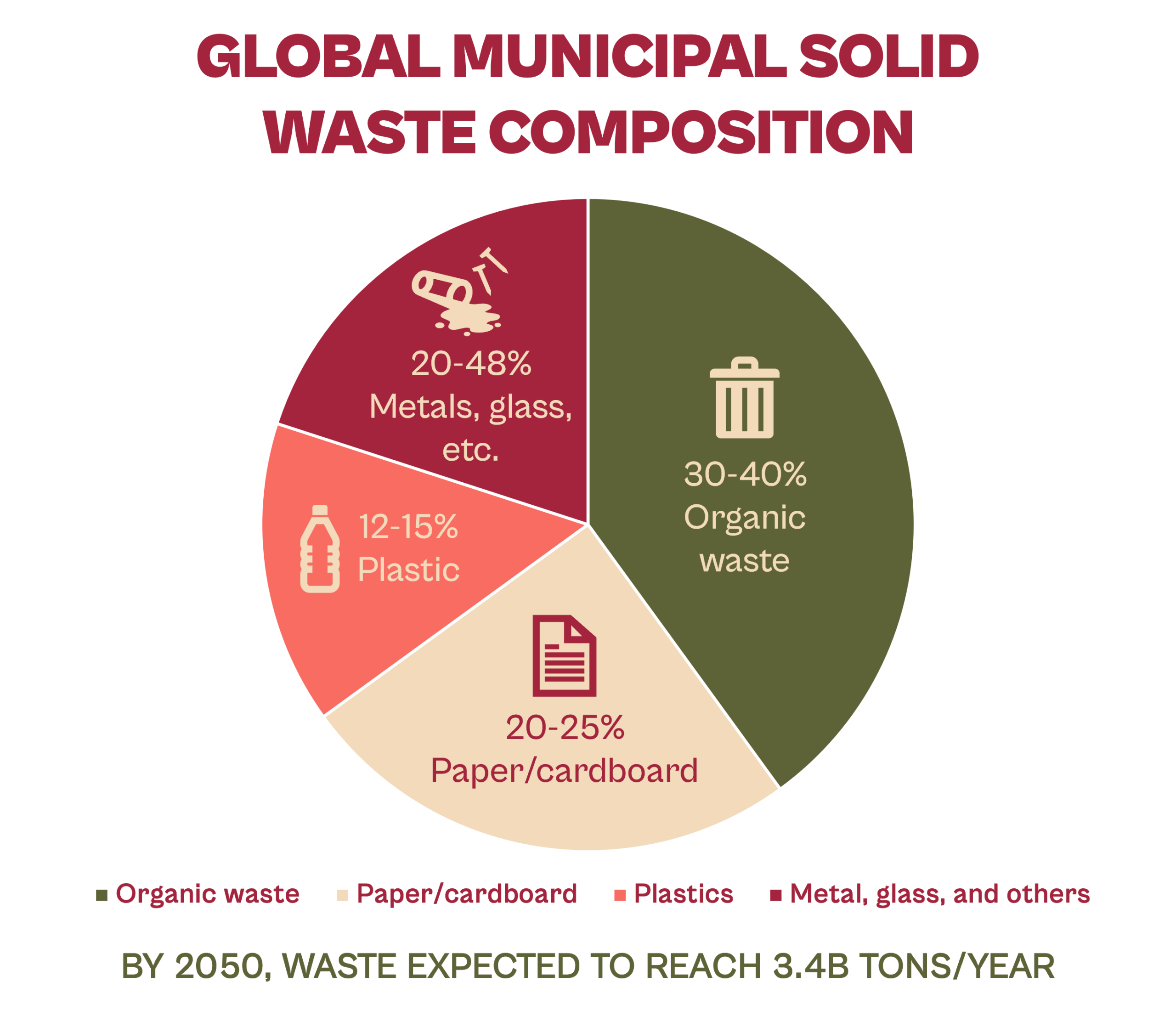
The world generates over 2 billion tonnes of municipal solid waste annually. By 2050, that figure is projected to reach 3.4 billion tonnes (World Bank — What a Waste 2.0, 2018, updated 2024). The two systems we rely on to divert waste from landfill — recycling and composting — operate on fundamentally different principles, process different material streams, and face different infrastructure constraints.
The comparison matters for packaging brands because the EPR for Packaging Rules (effective April 2026 in India) require brand owners to ensure their packaging is either recycled or composted at end of life. Choosing packaging materials that align with the stronger waste management system in your distribution geography is not just an environmental decision. It is a compliance cost decision.
This article compares the two systems on the metrics that matter: what they can process, how much waste they actually divert, what infrastructure they require, and what the implications are for packaging material selection.
Key takeaways
- Only 9% of all plastic ever produced has been recycled globally (OECD Global Plastics Outlook, 2022). The recycling system works for specific material streams (PET, HDPE, aluminium) and fails for others (multilayer flexible packaging, mixed plastics).
- Organic waste accounts for 30 to 40% of the total municipal waste stream in most countries, and over 50% in India (CPCB Annual Report, 2024). Composting addresses the largest single fraction of waste.
- Composting prevents methane emissions from organic waste in landfill. Methane is 28 times more potent than CO2 as a greenhouse gas over a 100-year period (IPCC AR6, 2021).
- Aluminium recycling saves 95% of the energy required for virgin production. Paper recycling saves 60 to 70%. Plastic recycling saves 30 to 50%, but only for the fraction that is actually recycled.
- For packaging brands, the practical question is not “which is better?” but “which system exists where my packaging is used?” Compostable packaging in a city without composting facilities and recyclable packaging in a region without collection infrastructure both fail at end of life.
What recycling does and where it works
Recycling converts post-consumer materials back into raw materials or new products. It works by collecting, sorting, cleaning, and reprocessing used materials.
The system performs well for materials with these characteristics: they are easy to identify and sort, they retain value through reprocessing, and they have established collection and processing infrastructure.
Materials where recycling works
Aluminium. The recycling success story. Aluminium can be recycled indefinitely without quality loss. Recycling saves 95% of the energy required for virgin aluminium production. Global aluminium recycling rates exceed 70% in countries with deposit return systems.
PET bottles. India has one of the highest PET recycling rates globally, driven by the informal waste collection sector. PET bottles have clear identification (resin code 1), high resale value in the waste market (INR 25 to 40/kg), and established recycling infrastructure. India recycles approximately 80% of PET bottles (ICPE — Indian Centre for Plastics in the Environment, 2024).
Paper and cardboard (non-food-contact). Clean paper and cardboard have established recycling pathways. Paper recycling saves 17 trees per tonne of recycled paper and reduces water use by approximately 50% compared to virgin paper production. The limitation: paper can be recycled 5 to 7 times before fibre degradation makes it unusable.
Materials where recycling fails
Multilayer flexible packaging. PET/aluminium/PE laminates cannot be mechanically separated for recycling. The bonded layers contaminate single-material recycling streams. Near-zero recycling rates globally.
Mixed plastics. Low-grade plastics (codes 3 through 7) have limited recycling infrastructure and low resale value. Most enter landfill.
Food-contaminated packaging. Grease and food residue contaminate recycling inputs. A pizza box with oil stains cannot be recycled through conventional paper recycling.
The overall result: recycling works for specific, clean, high-value material streams. For the mixed, contaminated, multi-material packaging that dominates food service, recycling rates are near zero.
What composting does and where it works
Composting is the biological decomposition of organic materials under controlled conditions (temperature, moisture, oxygen) into humus, a nutrient-rich soil amendment. Industrial composting operates at 55 to 65 degrees C, accelerating decomposition to 90 to 180 days.
What composting processes
Food waste. The largest single fraction of municipal solid waste. In India, organic waste (food and garden waste) accounts for over 50% of total municipal waste (CPCB, 2024). Composting is the primary pathway for diverting this material from landfill.
Compostable packaging. Materials certified under IS 17088 (India), EN 13432 (EU), or ASTM D6400 (US) decompose under industrial composting conditions. This includes bagasse tableware, compostable flexible films, PLA-based products, and paper with compostable coatings.
Garden and agricultural waste. Leaves, branches, crop residue, and other biodegradable organic matter.
The methane prevention benefit
When organic waste enters landfill, it decomposes anaerobically (without oxygen), producing methane. Methane is 28 times more potent than CO2 as a greenhouse gas over a 100-year period. Composting processes organic waste aerobically (with oxygen), producing CO2 and water vapour instead of methane.
The climate impact is significant. Composting organic waste can reduce greenhouse gas emissions from waste by up to 50% compared to landfilling the same material (UNEP, 2024). For a country like India, where over 50% of waste is organic and most of it goes to landfill, expanding composting infrastructure has a larger climate impact than expanding recycling for most material categories.
The soil health benefit
Compost returns organic carbon and nutrients to soil. India faces widespread soil degradation: 30% of agricultural land is affected by soil degradation (Indian Council of Agricultural Research, 2023). Compost from organic waste and compostable packaging contributes to soil carbon restoration, nutrient cycling, and water retention.
This is an output that recycling does not produce. Recycling converts materials into materials. Composting converts materials into a soil input that addresses a separate environmental problem.
Infrastructure comparison: India in 2026
The theoretical superiority of one system over another is irrelevant if the infrastructure does not exist. Here is where India stands:
| Parameter | Recycling | Composting |
|---|---|---|
| Established infrastructure | PET, HDPE, aluminium, clean paper | Pune, Bengaluru, parts of Delhi |
| Informal sector role | Waste pickers handle ~90% of recyclable collection | Minimal informal sector involvement |
| Processing capacity | Adequate for PET and metals; inadequate for flexible packaging | Growing but insufficient for total organic waste volume |
| Policy support | EPR for Packaging Rules (2026); Plastic Waste Management Rules | Solid Waste Management Rules (mandatory segregation); Swachh Bharat Mission |
| Commercial viability | Profitable for PET, aluminium; unprofitable for mixed plastics | Revenue from compost sales (INR 3 to 8/kg); tipping fees from municipalities |
| Expansion trajectory | Slow for flexible packaging; strong for rigid containers | Faster growth driven by organic waste volumes and mandatory segregation rules |
The practical reality: recycling infrastructure is mature for rigid containers (bottles, cans, jars) but nearly absent for flexible packaging. Composting infrastructure is limited to a handful of cities but expanding faster because the organic waste volume is larger and the Solid Waste Management Rules mandate waste segregation.
For packaging brands making material choices, the question is: which end-of-life system is more likely to exist in my distribution geography within the next 3 to 5 years? For most Indian cities, composting infrastructure is developing faster than flexible packaging recycling infrastructure.
Implications for packaging material selection
When to choose recyclable packaging
Recyclable packaging makes sense when the recycling infrastructure exists and the material has high recycling rates in practice. This means:
– Aluminium containers (for food service, biryani delivery, catering)
– PET bottles and rigid containers (for beverages, sauces, condiments)
– Clean paper and cardboard (for secondary packaging, cartons)
These materials have established collection pathways, commercial value in the waste market, and processing infrastructure in most Indian cities.
When to choose compostable packaging
Compostable packaging makes sense when:
– The packaging will be food-contaminated at end of life (disposable tableware, food wraps, meal trays) — recycling cannot handle food-contaminated materials
– The distribution geography has or is developing composting infrastructure
– The brand needs to simplify EPR compliance (compostable packaging enters organic waste streams)
– The application is flexible packaging where recycling is not viable (sachets, pouches, wraps)
For food service packaging specifically — plates, bowls, trays, cutlery, meal containers — compostable is the stronger choice because these items are always food-contaminated and cannot enter recycling streams.
The honest middle ground
Neither system is universally superior. Recycling works for what it can process: clean, sorted, high-value materials. Composting works for what it can process: organic matter and certified compostable materials. The waste management challenge is not choosing one over the other. It is building both systems to handle their respective material streams and choosing packaging materials that align with the system available in the geography where the packaging is used.
Frequently asked questions
Is recycling or composting better for the environment?
Neither is universally better. Recycling conserves material resources and energy (aluminium recycling saves 95% of virgin production energy). Composting prevents methane emissions, restores soil health, and handles the largest single waste fraction (organic waste at 30 to 50% of total). The right choice depends on the material and the available infrastructure.
What percentage of plastic is actually recycled globally?
9% of all plastic ever produced has been recycled (OECD, 2022). Recycling rates are much higher for specific materials: PET bottles at 30 to 80% depending on the country, aluminium at 70%+. Multilayer flexible packaging has near-zero recycling rates.
Can food-contaminated packaging be recycled?
Generally no. Grease, food residue, and moisture contaminate recycling inputs. A used pizza box, a biryani-stained meal tray, or a curry-soaked wrapper cannot enter conventional recycling. This is why food service packaging is better suited to composting pathways.
Does compostable packaging actually compost in India?
Under industrial composting conditions (available in Pune, Bengaluru, parts of Delhi), IS 17088 certified products decompose in 90 to 180 days. In cities without industrial composting, compostable packaging enters landfill, where it degrades faster than plastic but does not compost within the certified timeframe.
How do EPR rules affect the recycling vs composting decision?
EPR for Packaging Rules (April 2026) require brands to meet end-of-life targets. For recyclable packaging, brands must prove collection and recycling. For compostable packaging, end-of-life is fulfilled through composting. Non-recyclable, non-compostable packaging (like multilayer films) faces the highest compliance burden.
What happens to compostable packaging in landfill?
It degrades faster than plastic but slower than under composting conditions. Without the temperature, moisture, and microbial activity that composting provides, decomposition takes significantly longer. The material is not harmful in landfill, but the composting benefit (methane prevention, soil restoration) is not realised.
Evaluating end-of-life options for your packaging? Talk to our team about IS 17088 certified compostable packaging, EPR compliance planning, and material selection for your waste management geography.
The Good Garbage Podcast
The Myth of Recycling with Sian Sutherland
Hear Sian Sutherland discuss this topic in depth with host Ved Krishna on The Good Garbage Podcast.
Browse all Pakka articles.
You may also like