How to Respond to a QSR Paper Bag RFQ: What Procurement Teams Actually Evaluate

A QSR paper bag RFQ is won on evidence, not on the lowest quote. Procurement teams score a converter on substrate specification, strength test data, food-grade compliance, certified-fibre traceability, batch consistency, and commercial terms, then shortlist only suppliers who have proven all of them on paper. The converter who assembles that evidence before the deadline, in the order the buyer evaluates it, clears the technical gate that eliminates most rivals.
The quote itself is the last thing scored, and only among suppliers who have already passed every technical filter. Most Indian converters lose at the documentation stage, not the price stage, because the line can already make the bag, but the response cannot prove it.
Key takeaways
- A QSR paper bag tender is a scored evaluation, not a price auction. Price is weighted, but it is one criterion among six, and it decides nothing until the technical gates are cleared.
- Procurement teams reward a complete, structured data pack (spec sheets, batch test data, certification trails) submitted in the sequence they evaluate, not paperwork bolted on after the sample.
- Pricing a tender well means costing the full programme: material, conversion, certification, logistics, and a margin that survives a multi-year contract, not a spot-rate quote.
- The most common reasons converters lose are an incomplete compliance pack, a spec met on the sample but not the batch, and a quote that cannot be defended line by line.
- Treat the RFQ response as a product. The converter who engineers it as carefully as the bag wins contracts that thin-quoting rivals never reach.
What does a QSR paper bag RFQ actually ask for?
A QSR paper bag RFQ asks a converter to prove capability, compliance, and commercial stability in a single structured submission, not just to name a price. The document typically requests technical specifications for each bag format, test data proving strength and food-safety, certification and traceability evidence, production-capacity and lead-time commitments, quality-management credentials, and a priced bill of materials. Procurement teams build the RFQ as a filter: each section screens out suppliers who cannot evidence what they claim. According to the National Restaurant Association of India India Food Services Report, the organised food-services market has crossed ₹5.5 lakh crore and is growing at roughly 9–10% a year, which is the demand engine that makes these tenders worth the effort to win.
The shift behind that demand is regulatory as much as commercial. According to the Central Pollution Control Board (CPCB) rules, plastic carry bags below 120 microns are banned nationwide, and that single thickness rule is the largest structural driver pushing QSR chains and retailers onto paper, which is why these tenders keep expanding in scope.
An RFQ, a request for quotation, is the formal document a buyer issues to invite priced, specification-bound bids from qualified suppliers. For a QSR programme it usually arrives after, or bundled with, a request for information that pre-screens vendors. The distinction matters because by the RFQ stage the buyer expects you to already understand their specifications and the parameters QSR chains demand from paper carry bags suppliers; the RFQ is where you prove you can deliver them at volume, at price, and on time.
The sections of a typical QSR paper bag RFQ break down as follows:
| RFQ section | What it requests | What it screens for |
|---|---|---|
| Technical specification | GSM, substrate, burst factor, tear index, Cobb, dimensions | Can you match the brief precisely? |
| Test and quality data | Batch test reports, QC method, tolerances | Is the spec repeatable, not a one-off? |
| Compliance and certification | FSSAI, BIS, FSC/PEFC, EPR documentation | Is the bag legal and audit-ready? |
| Capacity and lead time | Monthly volume, plant capacity, dispatch reliability | Can you supply a national programme? |
| Commercial terms | Unit price, payment terms, price-validity period | Is the quote defensible and stable? |
| References and audit | Existing clients, facility audit readiness | Have others trusted you at scale? |
How should a converter structure an RFQ response?
A converter should structure the RFQ response in the exact order the buyer evaluates it, leading with technical conformity and closing with price, so each section answers the question the procurement scorecard asks next. A response organised around the buyer’s scoring logic reads as low-risk; one organised around the converter’s convenience reads as a gamble. The following sequence mirrors how most QSR procurement teams score a submission.
- Restate the specification, parameter by parameter. Open each bag format with the buyer’s own spec and your matching value beside it. This proves comprehension before persuasion and lets the evaluator tick conformity in seconds.
- Attach the test data that proves it. Burst factor, tear index, Cobb value, and GSM tolerance, logged per batch, not a single laboratory certificate. There is no BIS standard for paper carry bags and no statutory minimum grammage, and 80 GSM is the commercial floor, so a QSR brief specifying 90–120 GSM already sits above the legal floor, and your test file must prove the band, not just clear it. Evidence beats assertion at every gate.
- Lead the compliance pack with the non-negotiables. FSSAI food-grade conformity, BIS alignment, and certified-fibre chain-of-custody up front, because these are pass/fail before anything else is read.
- State capacity and lead time honestly. Declare real monthly capacity and dispatch reliability. Over-promising volume is a faster route off the panel than quoting a slightly higher price.
- Present a defensible price build. Show the quote as a structured build covering material, conversion, certification, logistics and margin, so procurement can interrogate it without assuming you have hidden a risk in a round number.
- Close with references and audit readiness. Name comparable clients and confirm you can host a facility audit on request. This converts a paper claim into a checkable one.
A response built this way needs no covering letter to explain itself. Each section pre-empts the evaluator’s next question, which is exactly the impression that moves a converter from the long list to the shortlist.

Procurement scores the documentation as closely as the bag. The data pack is the product.
What do QSR procurement teams actually evaluate and weight?
QSR procurement teams evaluate a paper bag tender against a weighted scorecard, and technical and compliance criteria almost always outweigh price. While exact weightings are confidential and vary by chain, the pattern across organised food-service tenders is consistent: food-safety and quality conformity carry the most weight, followed by supply reliability and certification, with price weighted meaningfully but rarely decisively. A converter who understands the weighting stops competing on the cheapest axis and starts competing where the points actually sit. Most losing bids fail because they treat the tender as a price contest and pour effort into shaving a few paise per bag, while the scorecard is quietly handing four-fifths of its points to evidence the converter never assembled. The decision matrix below shows a representative weighting model a converter can plan against, and reading it changes where a serious bidder spends the week before the deadline.
| Evaluation criterion | Indicative weight | What scores well | What loses points |
|---|---|---|---|
| Food-safety & quality conformity | 30% | FSSAI conformity, Cobb <30, low-migration inks, batch test data | Sample-only proof, no migration data |
| Supply reliability & capacity | 20% | Proven monthly volume, dispatch track record | Over-stated capacity, single-line risk |
| Certification & traceability | 20% | FSC/PEFC chain-of-custody, BIS alignment, EPR data | Missing chain-of-custody, no EPR returns |
| Commercial terms (price) | 20% | Defensible build, stable price validity | Unexplained low quote, short validity |
| Quality-management system | 10% | Documented QC, audit readiness, references | No system, no traceable audit trail |
How to read this: roughly 80% of the available points sit outside unit price. A converter who arrives with the cheapest quote but a thin compliance pack scores well on a fifth of the scorecard and poorly on the rest. Conversely, a slightly higher quote backed by complete test data, certification, and proven capacity wins on volume of points. The lesson for paper carry bags suppliers is to invest the response effort where the weighting is, which is overwhelmingly in evidence rather than in shaving the price.
Building a QSR data pack? Start with the grade specs
The grade specifications, GSM ranges and substrate options you will cite in an RFQ response are set out in Pakka’s Food Wrap & Carry paper brochure. Open the “Food Wrap & Carry Paper” card on our resources page to download it.
How should a converter price a QSR paper bag tender?
A converter should price a QSR tender as a full-programme cost build held stable across the contract term, not as a spot quote pegged to today’s reel price. A QSR contract typically runs one to three years with fixed or formula-linked pricing, so a quote that ignores input volatility erodes margin every month after signing. The defensible approach is to cost each layer separately (base paper, conversion, certification and testing, packaging and logistics, and a margin sized for the contract’s duration and risk), then state a clear price-validity and revision mechanism. A quote that hides all of this inside one round figure invites suspicion, because the procurement team cannot see whether the number is lean or padded, and an unexplained low bid reads as a risk waiting to surface mid-contract rather than as a bargain worth taking.
Base paper is the largest and most volatile input. According to the Indian Agro & Recycled Paper Mills Association and industry price trackers, kraft and recycled-fibre paper prices in India have moved in double-digit percentage swings within single years, driven by pulp cost, waste-paper availability, and import parity. A converter who quotes a flat unit price with no revision clause absorbs that swing alone. The professional move is to anchor the quote to a transparent build and propose a quarterly or input-linked revision, which procurement teams generally prefer to a padded fixed price.
| Cost layer | What to include | Why it matters in a tender |
|---|---|---|
| Base paper | Grade, GSM, certified-fibre premium, freight | Largest input; most volatile; revision-sensitive |
| Conversion | Printing, die-cutting, gluing, line speed, waste | Determines true cost-per-bag at volume |
| Certification & testing | FSSAI, BIS, FSC/PEFC, per-batch QC | Often under-costed; non-negotiable for QSR |
| Logistics & packaging | Cartons, palletising, distribution-centre delivery | Multi-location QSR delivery adds real cost |
| Margin & risk | Contract-term margin, FX and input buffer | Protects profitability across a multi-year deal |
The converter who shows this build wins two things: a price procurement can trust because it can be interrogated, and a revision mechanism that protects the margin a flat quote would have surrendered. For a fuller treatment of how base paper procurement discipline protects cost and consistency, the same logic that secures a clean reel secures a clean quote.
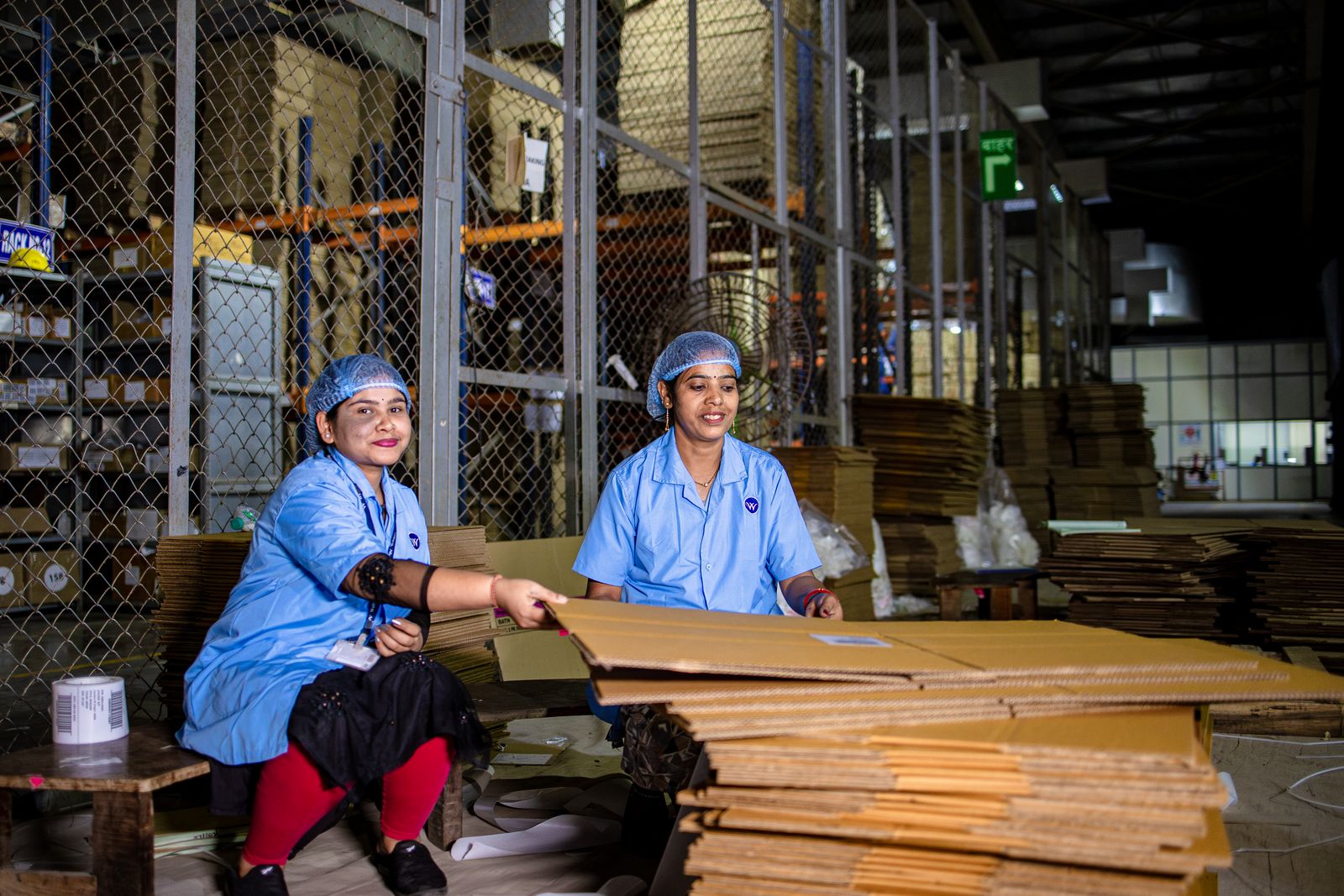
A national QSR programme is won on proven capacity, not promised capacity.
What documents must accompany a QSR RFQ response?
A QSR RFQ response must travel with a complete compliance and certification pack, because procurement treats a missing document as a failed criterion, not a follow-up item. The core pack covers food-safety conformity, BIS standards alignment, sustainability certification, and extended-producer-responsibility data, and each maps directly to a scored section of the tender. Assembling it before the buyer asks is the single clearest signal of a converter who has supplied at this level before.
The non-negotiable documents are:
- Food-safety conformity. Declarations aligned to Food Safety and Standards Authority of India (FSSAI) packaging rules for paper, ink, and adhesive, with ink-migration test data where the brand requires it. Food contact is pass/fail, and the BIS standards and IS specifications auditors actually check, benchmarked against Bureau of Indian Standards specifications, give the buyer a recognised reference to verify it against.
- Certified-fibre chain-of-custody. FSC or PEFC documentation proving the fibre origin, increasingly a gate rather than a differentiator as global chains publish recycled-and-certified sourcing commitments.
- EPR and recycled-content data. Because the chain you supply is the obligated entity, the EPR documentation converters now have to provide, covering recycled percentage, recyclability, and registration evidence, feeds directly into the brand’s own regulatory filing.
- Quality-management evidence. A documented QC method, batch test logs, and a traceable audit trail linking mill input certificates to outbound dispatch.
Missing any one of these does not lower a converter’s score gently; in most QSR scorecards it caps the technical section, which is where the majority of points sit.
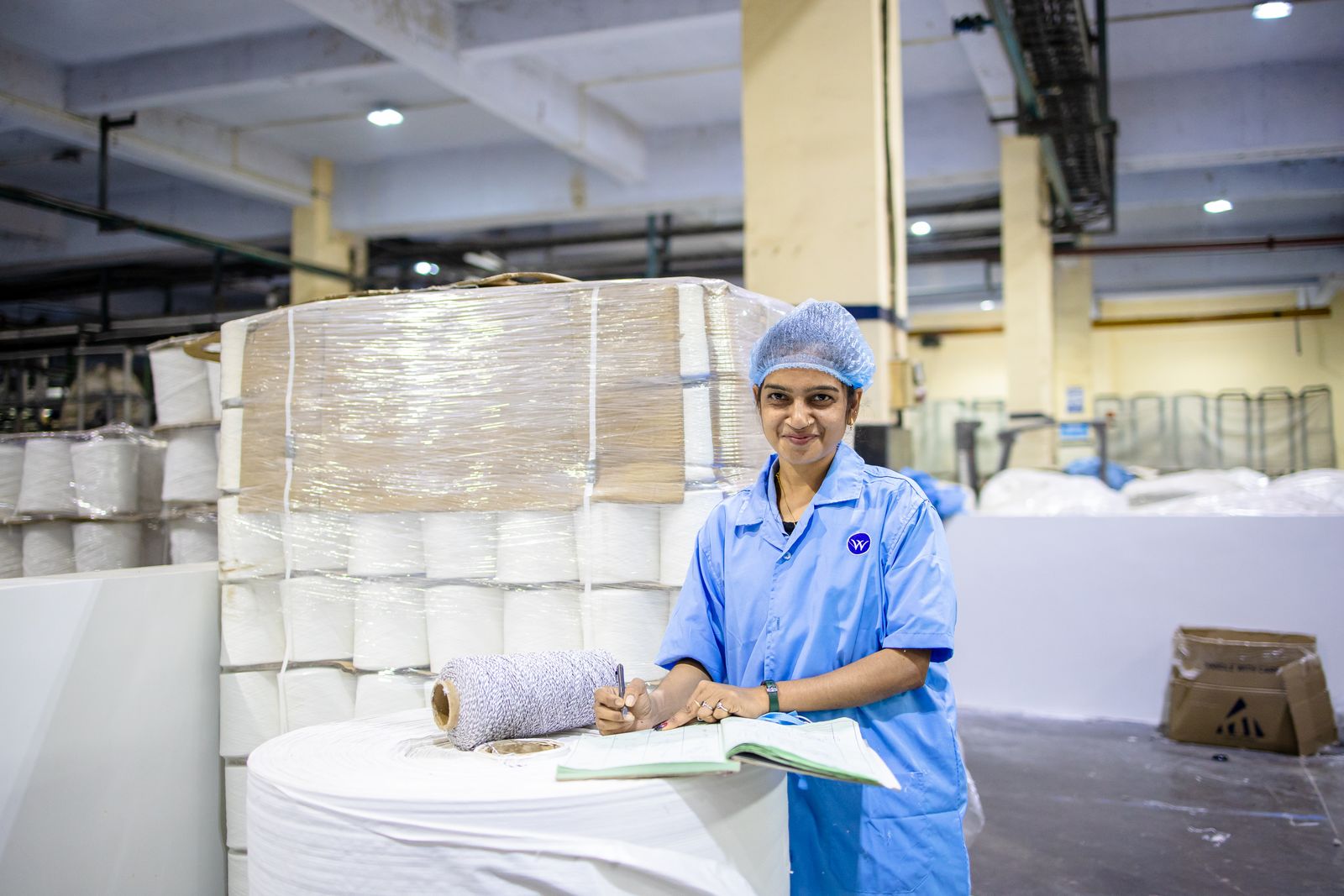
Batch-level test logs turn a quality claim into evidence the buyer can check.
Why do converters lose QSR tenders they could have won?
Converters most often lose winnable QSR tenders because the response is incomplete or inconsistent, not because the bag or the price was wrong. The recurring failures are predictable: a compliance pack with a gap, a specification proven on a sample but not on a production batch, an unexplained low quote that reads as hidden risk, and over-stated capacity that collapses under a reference check. Each of these is a self-inflicted loss, fixable before submission rather than after rejection.
The pattern worth internalising is that QSR procurement is risk-averse by design. A buyer awarding a multi-million-bag programme is protecting a brand that gets used millions of times a day, so any unanswered question becomes a reason to choose the safer supplier. A converter who closes every open question (spec matched, data attached, compliance complete, price defensible, capacity honest) removes the evaluator’s reasons to say no. That, more than any single technical strength, is how the tender is won.
Frequently asked questions
What is a QSR paper bag RFQ and how does it differ from a normal quote?
A QSR paper bag RFQ is a formal, specification-bound request for a priced bid that a quick-service chain issues to qualified suppliers, evaluated on a weighted scorecard rather than on price alone. It differs from a normal quote because it demands proof of technical conformity, food-safety compliance, certified-fibre traceability, and production capacity alongside the price, and a missing document in any of those areas can disqualify the bid before the quote is even read.
How do you win a QSR packaging contract in India?
You win a QSR packaging contract in India by submitting a complete, structured response that proves technical conformity and compliance before it competes on price. In practice that means matching every specification with batch test data, attaching the full FSSAI, BIS, FSC/PEFC and EPR documentation, stating honest capacity, and presenting a defensible cost build. Because roughly 80% of a typical scorecard sits outside unit price, completeness of evidence beats the lowest quote.
What should a converter price into a QSR paper bag tender?
A converter should price in five layers: base paper including the certified-fibre premium and freight, conversion cost at realistic line speed and waste, certification and per-batch testing, logistics to multiple distribution centres, and a margin sized for a multi-year contract. Because kraft and recycled paper prices in India swing in double-digit percentages within a year, the quote should be anchored to a transparent build with a quarterly or input-linked revision mechanism rather than a flat fixed rate.
What documents are mandatory in a QSR paper bag RFQ response?
The mandatory documents are FSSAI food-safety conformity for the paper, ink and adhesive system; BIS base-paper evidence against IS 1397; FSC or PEFC chain-of-custody proving fibre origin; and EPR recycled-content and registration data. A documented quality-management method with batch test logs and a traceable audit trail completes the pack. Procurement treats any missing item as a failed criterion, so the pack should be assembled before submission, not promised for later.
How much volume does a QSR paper bag tender typically involve?
A national QSR chain programme in India typically runs to several million paper bags a year per regional cluster, scaling higher for global-chain master franchisees. The volume is substantial and sticky once awarded, but it is matched by a tougher qualification barrier and audited consistency requirements, so a converter should target the tier whose documentation and capacity demands match its current maturity rather than over-reaching on the first bid.
Last reviewed: June 2026
If you are specifying kraft for a carry-bag programme, our food wrap and carry range lists each grade with a downloadable spec-sheet PDF covering GSM band, burst factor, Cobb value and food-contact status, so you can check the numbers against your brief before you speak to anyone. If the published spec looks close but not exact, write to our technical team and we will tell you plainly whether a grade can hold your requirement.
Browse all Pakka articles.
You may also like