Fat Bloom, Moisture and Shelf Life: What Your Chocolate Wrapper Is Actually Fighting

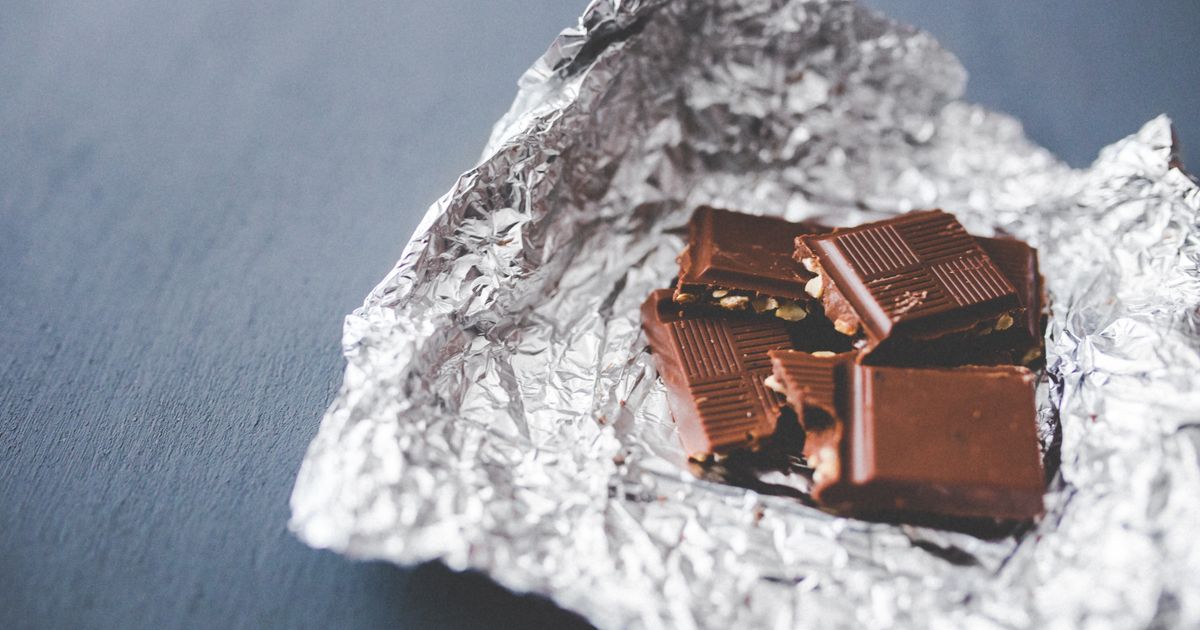
A chocolate wrapper fights four things at once: moisture moving in, oxygen moving in, aroma moving out, and the surface defects that follow. It cannot fight temperature. Fat bloom, the greyish film most brands blame on packaging, is driven mostly by heat cycling that no wrapper prevents, while sugar bloom, rancidity and flavour loss are genuinely the wrapper’s job.
Getting that split right is the whole of a good chocolate packaging material decision. Spend the barrier budget on the failures a wrapper can stop, be honest about the one it cannot, and control that one with cold chain and tempering instead. This piece sets out what actually degrades a bar over its declared chocolate shelf life, and which of those a barrier layer changes.
What is fat bloom, and can packaging prevent it?
Fat bloom is a greyish-white film that forms when cocoa butter migrates to the chocolate surface and recrystallises, usually after the bar has been through a temperature swing. Packaging cannot prevent it. Bloom of this kind is a physics problem inside the chocolate, not a barrier problem at the wrapper, so a better film slows the moisture and oxygen changes around it but does not stop the fat itself from moving.
The mechanism is worth stating precisely, because it is where most packaging blame is misplaced. Cocoa butter is polymorphic: well-tempered chocolate holds its fat in the stable Form V crystal, which melts at around 34°C. Take the bar above that point, in a warehouse, a delivery van, or an Indian summer supply chain, and some fat liquefies; let it cool and it recrystallises into coarser, duller Form VI crystals at the surface. That surface change is fat bloom. It is a quality defect that drives consumer rejection and returns, not a safety defect, and it is caused by the temperature history of the bar, not by the permeability of its wrapper.
This is the honest boundary of what packaging buys you, and it should be stated to any brand owner before the barrier conversation starts. A wrapper with a flawless moisture and oxygen barrier sitting on a pallet at 40°C will still bloom. The controls that actually prevent fat bloom are correct tempering at manufacture and an unbroken cold chain through distribution. What the wrapper contributes is secondary: by holding moisture and oxygen out, a good barrier slows the surface reactions that make an early bloom look worse and arrive sooner. Sell the wrapper on what it can do, and the trust holds; sell it as a bloom cure, and the first hot-season return destroys the claim.
How is sugar bloom different, and why is it a packaging problem?
Sugar bloom looks similar but has the opposite cause, and it is squarely a packaging problem. It is a rough, gritty surface left when moisture condenses on the chocolate, dissolves surface sugar, then evaporates and leaves the sugar recrystallised. Because the trigger is moisture reaching the product, moisture barrier and seal integrity control it directly, which is exactly what a wrapper is for.
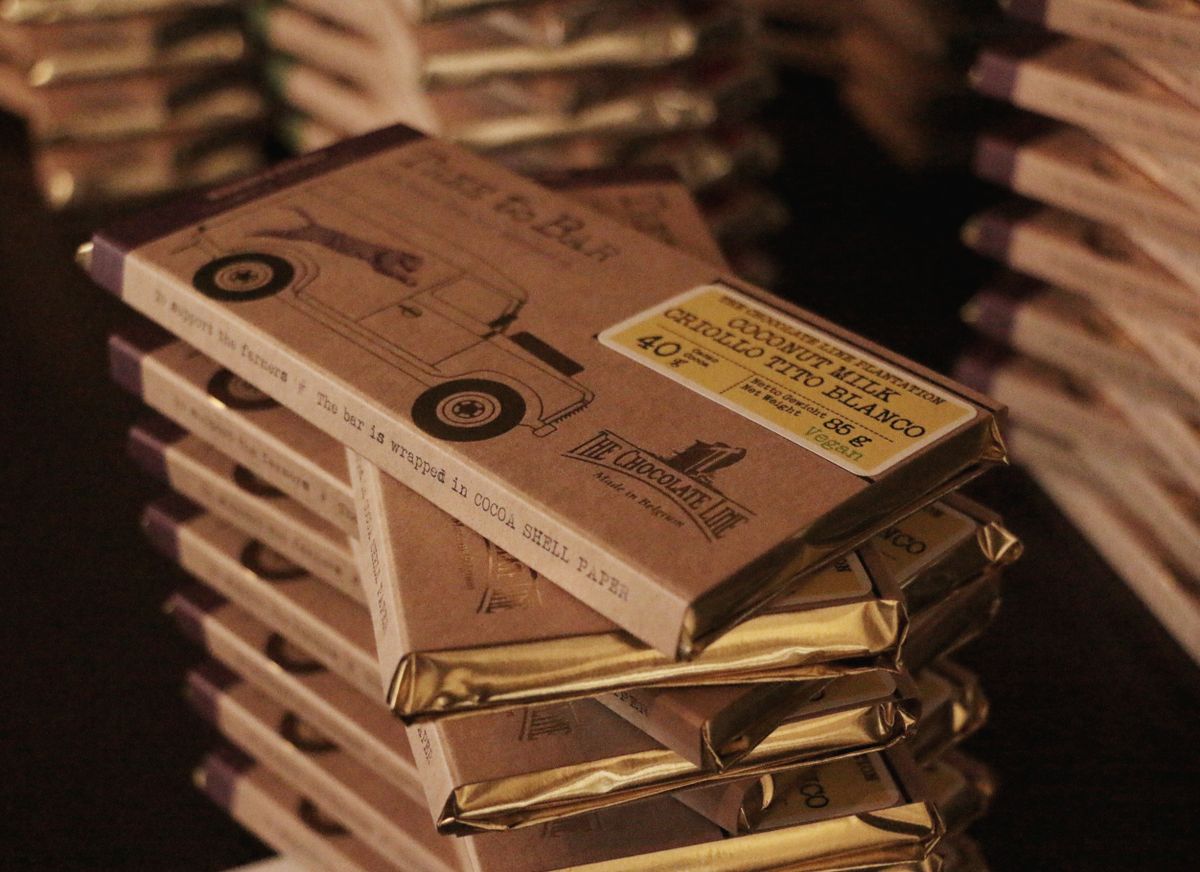
The two defects are easy to confuse on a returns line and are fixed by different levers. Fat bloom feels waxy and comes from heat; sugar bloom feels gritty and comes from damp. In an Indian context the sugar-bloom risk peaks whenever a cold bar meets humid air, a chilled product pulled into a monsoon-season shop, condensation forming the moment the pack is opened or the seal leaks. Here the packaging specification genuinely decides the outcome: a low moisture vapour transmission rate and a continuous, channel-free seal keep ambient humidity off the product, and a bar that never gets wet cannot sugar-bloom. This is the same moisture-control problem the tea sector benchmarks obsessively, and the monsoon MVTR benchmarks for tea pouches translate almost directly to confectionery, because the failure physics are identical even though the product is not.
What barrier properties actually protect chocolate shelf life?
Two numbers govern how long a wrapper protects a bar: moisture vapour transmission rate and oxygen transmission rate. MVTR controls sugar bloom and any moisture-driven softening; OTR controls the oxidation of cocoa fat and the loss of aroma. The lower each number, the longer the barrier holds, and the right target depends on the product’s cocoa content, inclusions and declared shelf life rather than on a single universal spec.
The table below sets out what each property protects and where the honest limits sit. Read it as a map of which failure a given number is buying against.
| Barrier property | Measured as | What it protects against | Where it stops helping |
|---|---|---|---|
| MVTR (moisture) | g/m²/day (ASTM F1249) | Sugar bloom, tack, softening | Cannot stop heat-driven fat bloom |
| OTR (oxygen) | cc/m²/day (ASTM F1927) | Rancidity, aroma loss in cocoa and nut fats | Cannot restore aroma already scalped by the sealant |
| Aroma scalping | qualitative, by sealant choice | Flavour flattening before barrier fails | A polymer sealant may scalp even at low OTR |
| Seal integrity | channel-leak inspection | Moisture and oxygen ingress at the join | A perfect film with a leaking seal fails anyway |
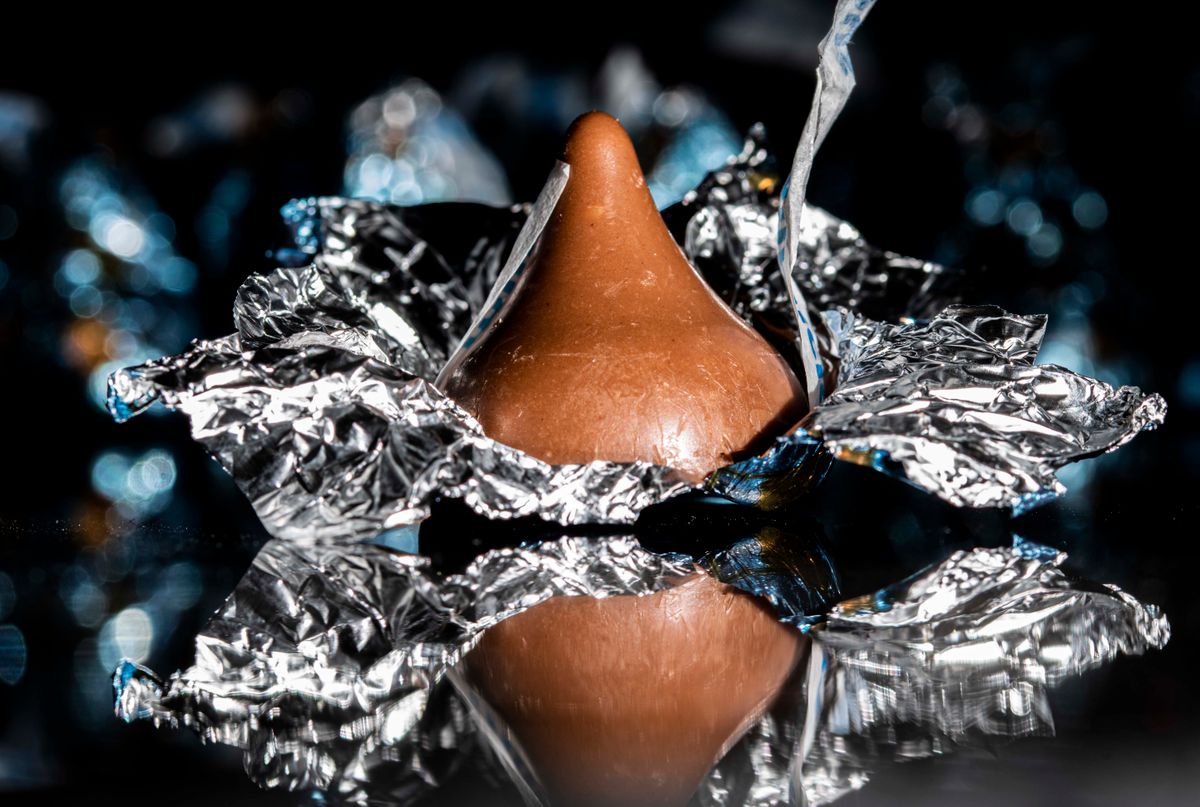
The most common specification error is buying a low headline OTR and ignoring the sealant. Aroma scalping is the absorption of a product’s volatile aroma compounds into the packaging material itself rather than loss through it, and polymer sealant layers scalp cocoa and mint volatiles more readily than some paper-facing structures. Scalping flattens flavour well before any measurable barrier failure, which is why a bar can test in-spec on OTR and still taste dull at the end of its shelf life. The full barrier-by-material breakdown for chocolate sets out how each structure performs against both numbers, and every term used here is defined in the confectionery packaging glossary.
What does oxygen do to chocolate flavour and aroma?
Oxygen degrades chocolate in two ways that the code date does not always show. It oxidises the fats, most aggressively in high-cocoa chocolate and in any bar with nut or fruit inclusions, producing rancid off-notes; and it carries away or degrades the volatile aroma compounds that make the chocolate taste of anything. Both processes are slow, cumulative, and invisible until a consumer tastes a flat or stale bar, which is why OTR matters even when the product looks perfect.
Inclusions change the maths sharply. A plain milk bar tolerates a fairly relaxed oxygen barrier; a dark bar at high cocoa percentage, or a bar loaded with nuts, needs a materially lower OTR because the exposed fats oxidise faster than the chocolate around them. The difference between an OTR of 2 and an OTR of 10 cubic centimetres per square metre per day is measurable on the shelf for these products. The confectionery sector borrows its oxygen-management thinking from categories that solved it first: the same logic drives nitrogen flushing in tea packaging, where displacing headspace oxygen protects delicate volatiles, and the parallel is close because cocoa and tea aromatics degrade by the same route. For chocolate the usual lever is the barrier itself rather than gas flushing, but the target is the same: keep oxygen away from fat and aroma for the length of the declared life.
How long should a chocolate wrapper protect the bar?
A chocolate wrapper has to hold its barrier for the full declared shelf life under real distribution conditions, not laboratory ones, which in India means heat and humidity that a temperate-market spec never sees. A standard milk or dark bar carries a declared life of roughly nine to twelve months, and the wrapper’s barrier must still be intact at the end of it, after months on a shelf that may swing from air-conditioned modern trade to an un-cooled kirana store.
This is where specification honesty pays off, because most shelf-life failures are one of three things and only two are the wrapper’s fault. Sugar bloom and staling are barrier failures the wrapper owns. Rancidity in a nut bar is an oxygen failure the wrapper owns. Fat bloom in a bar that cooked in transit is a cold-chain failure the wrapper does not own, however good its numbers. Writing a realistic barrier spec means matching the MVTR and OTR targets to the product and the route, then being clear that the wrapper is one of three controls and cannot carry a broken cold chain on its own. The total cost-of-ownership comparison of chocolate wrapper structures shows how those barrier targets translate into material and EPR cost, so the spec can be defended on numbers rather than on instinct.
Where a paper-based metallised wrapper fits
The limitation first, because it decides everything else: for chocolate, metallisation is still required today. A plain, non-metallised paper wrapper cannot hold the moisture and oxygen barrier that cocoa fat and volatile cocoa aroma need across a retail shelf life, and no honest supplier should claim otherwise for a high-cocoa bar. It is visible in the product data itself. Pakka’s flexC range lists chocolate as an application for its metallised structure only, and reserves the non-metallised paper structure for energy bars, cookies, biscuits and nuts, where the barrier demand is lower. If a wrapper is offered as bare paper for real chocolate, ask for the MVTR and OTR numbers before believing it.
Within that boundary, a paper-based metallised structure now meets the barrier target for the great majority of milk and dark bars, and it does so with published, method-named data rather than marketing adjectives. flexC’s Bleached Confectionary Metalized (90 GSM) is a paper-based, compostable, metallised wrapper with a water vapour transmission rate below 2 g/m²/day (ASTM F1249, 50% RH, 23°C) and an oxygen transmission rate below 10 cc/m²/day (ASTM F1927), which are the two numbers this whole article turns on. It is both heat and cold sealable, and the cold-seal route matters for chocolate because it bonds under pressure without heat that could mar the product at the jaws. Thickness is 75 ± 2 µm and grammage is verified to TAPPI T410; it ships as reel or laminate stock by GSM and runs on digital, flexographic and gravure lines. What it does not do is beat foil on absolute barrier or fix a bloom caused by a 40°C pallet, and both of those stay true whatever the wrapper.
One point has to be made plainly because the category repeats the opposite. There is no Indian regulation banning or restricting plastic or foil for chocolate, candy or protein bars, and none is proposed; the FSSAI in fact moved the other way in March 2025, permitting recycled PET for food-contact use. The case for a paper-based metallised wrapper here rests on barrier performance for standard bars, on end-of-life and Extended Producer Responsibility cost, and on brand preference, not on any regulatory pressure that does not exist.
Frequently asked questions
Does chocolate packaging prevent fat bloom?
Not really. Fat bloom is caused by cocoa butter recrystallising after the bar goes through a temperature swing, so it is a cold-chain and tempering problem, not a barrier one. A good wrapper slows the moisture and oxygen changes around a bloom but cannot stop heat-driven bloom in a bar that overheated in transit. Tempering at manufacture and an unbroken cold chain are the real controls.
What is the difference between fat bloom and sugar bloom?
Fat bloom is a waxy greyish film from cocoa butter migrating to the surface after heat cycling, and packaging cannot prevent it. Sugar bloom is a gritty surface from moisture condensing on the chocolate, dissolving sugar and leaving it recrystallised, and packaging controls it directly through a low MVTR and a leak-free seal. One is a heat failure, the other a moisture failure.
What barrier properties decide chocolate shelf life?
Two: moisture vapour transmission rate (MVTR), which controls sugar bloom and softening, and oxygen transmission rate (OTR), which controls rancidity and aroma loss. Sealant choice matters too, because a polymer sealant can scalp aroma even at a low OTR. The right targets depend on cocoa content, inclusions and declared shelf life rather than a single universal number.
Why does dark chocolate need a better oxygen barrier than milk chocolate?
Because higher cocoa content and any nut or fruit inclusions mean more exposed fat, and fat oxidises to rancid off-notes when oxygen reaches it. A plain milk bar tolerates a relaxed OTR; a high-cocoa dark bar or a nut-loaded bar needs a materially lower OTR to hold flavour across the same shelf life.
Can a paper-based wrapper protect chocolate shelf life?
A paper-based metallised structure can, for most standard milk and dark bars, with a WVTR below 2 g/m²/day and an OTR below 10 cc/m²/day. A plain non-metallised paper wrapper cannot hold chocolate’s barrier target, which is why flexC lists chocolate on its metallised structure only and keeps non-metallised paper for bars, biscuits and nuts.
Last reviewed: August 2026
Specifying a chocolate wrapper is really an exercise in matching barrier numbers to the failures your product actually faces, and in being honest that fat bloom is fought with cold chain while sugar bloom, rancidity and aroma loss are fought with the wrapper. If you are setting an MVTR and OTR target for a specific bar, cocoa loading and distribution route, the flexC range and its published barrier data are set out on the flexC food packaging page. For a spec-level conversation about your bar, its inclusions and its supply-chain temperatures, get in touch with the Pakka team.
Browse all Pakka articles.
You may also like