Where Compostable Flexible Packaging Works as a Plastic Replacement (And Where It Does Not)

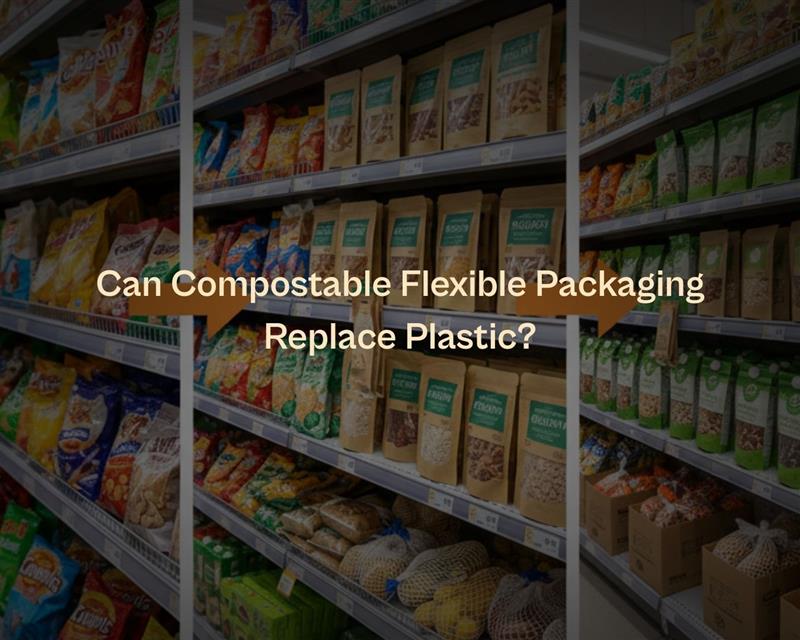
The short answer is: in some applications, yes. In others, not yet. Pretending otherwise does a disservice to brands trying to make a genuine material transition. The compostable flexible packaging market is growing at 12.3% CAGR and projected to reach USD 5.18 billion by 2035 (Custom Market Insights, March 2026), but that growth is coming from specific product categories where compostable films already meet performance requirements, not from a blanket replacement of all plastic packaging.
This article lays out where the fit works today, where it does not, and how brands should think about the transition.
Key takeaways
- Compostable flexible packaging works well for dry foods, tea, coffee, single-serve sachets, short shelf-life products, and secondary packaging like overwraps and liners.
- It does not yet work for high-fat products requiring extended shelf life, retort applications, or products shipped without temperature control over long distances.
- Current compostable films achieve MVTR of 1 to 3 g/m2/24hr and OTR of 5 to 15 cc/m2/24hr. Conventional films sit at sub-1 for both metrics. That gap determines which applications are viable.
- 72% of global consumers perceive compostable packaging as the most sustainable option (McKinsey, 2025). Consumer pull is real, but it cannot override physics.
- The practical approach is not “replace all plastic” but “replace plastic where compostable alternatives meet performance specs, and improve the compostable materials for the remaining applications over time.”
The barrier performance gap, quantified
Everything in flexible packaging material selection comes back to barrier properties. How well does the film keep moisture out? How well does it keep oxygen out? How well does it block light and grease?
Here is where compostable and conventional films actually stand, based on current commercial products:
| Parameter | Conventional (metallised PET/BOPP) | Compostable (current generation) | Impact |
|---|---|---|---|
| MVTR (g/m2/24hr at 38C, 90% RH) | 0.3 to 1.0 | 1.0 to 3.0 | Shelf life for moisture-sensitive products |
| OTR (cc/m2/24hr at 23C, 50% RH) | 0.5 to 2.0 | 5.0 to 15.0 | Oxidation rate for fats and aroma loss |
| Grease resistance | Excellent | Good (with coating) | Oil migration in fatty foods |
| Heat seal window | Wide, well characterised | Narrower, varies by supplier | Line speed and reject rate |
| Puncture resistance | High | Moderate | Transit damage for textured products |
| Light barrier | Excellent (metallised) | Good (metallised paper) | UV degradation of flavour compounds |
The MVTR gap of 1 to 2 g/m2/24hr might sound small. It is not. For tea, that difference can mean the product absorbs enough moisture to lose aroma character within 3 months instead of 9. For protein powder, it means clumping starts earlier. The numbers matter because they determine which products can transition to compostable packaging today and which ones need to wait for the next generation of materials.
Where compostable packaging already works
Tea, coffee, and single-serve sachets

Photo via Pexels — Free to use
This is the strongest application category for compostable flexible packaging. Tea and coffee sachets have short to medium shelf life requirements (6 to 9 months), are consumed relatively quickly after purchase, and benefit from the consumer visibility of sustainable packaging.
Metallised compostable paper achieves MVTR of 1 to 2 g/m2/24hr, which is adequate for overwrap applications where the product is also protected by an inner tea bag or filter. For direct-contact sachets (ground coffee, loose tea), the barrier needs tighter control, but current generation materials can deliver acceptable performance.
Several Indian tea brands have already made this transition. The packaging runs on existing HFFS lines with minor adjustments to seal temperature and line speed.
Dry foods: pulses, rice, cereals, flours
Dry food products with moisture content below 12% and shelf life targets of 6 to 9 months are well suited to compostable packaging. The products are not oxygen-sensitive in the way fats and oils are, and the moisture barrier requirements are within the range that compostable films deliver.
The main consideration is pack size. Single-serve and small pouches (50g to 500g) work well. Larger packs (1kg and above) create more surface area for moisture transmission, which can push total moisture ingress above acceptable levels over 9+ months. For large-format dry food packs, testing is essential.
Secondary packaging and overwraps
This is arguably the easiest transition. Overwraps, inner liners, and secondary packaging layers do not contact food directly and face lower barrier requirements. They protect against dust, handling damage, and light, not moisture and oxygen at the primary barrier level.
Replacing plastic shrink wrap with compostable film for multipacks, outer wraps, and bundling is straightforward and delivers visible sustainability credentials at the point of sale where consumers actually see the packaging.
Short shelf-life products
Products consumed within days or weeks of packaging, fresh baked goods, ready-to-eat meals, snack bars for immediate consumption, do not need the 12+ month barrier performance that conventional films provide. The lower MVTR and OTR of compostable films is irrelevant when the product is eaten within 2 weeks.
Where compostable packaging does not yet work
High-fat products with extended shelf life
Chips, fried snacks, products with high oil content. These need OTR below 2 cc/m2/24hr to prevent lipid oxidation over 9 to 12 months. Current compostable films at 5 to 15 cc/m2/24hr allow too much oxygen through for this application. The result is rancidity before the printed expiry date, and that is a product recall scenario, not a consumer preference issue.
Retort and hot-fill applications
Retort packaging (processed foods, ready-to-eat meals with 12 to 24 month shelf life) requires materials that survive sterilisation temperatures of 121 degrees C under pressure. No commercially available compostable flexible packaging survives retort processing.
Temperature-uncontrolled distribution over long distances
Products shipped through India’s logistics network without cold chain, spending days in warehouses at 35 to 45 degrees C, face compounding moisture stress. The MVTR gap between compostable and conventional films widens at higher temperatures because moisture transmission is temperature-dependent. A film with MVTR of 2 g/m2/24hr at 38 degrees C may read 3.5 or higher at 45 degrees C.
For brands distributing nationally through general trade, this is a real constraint. For brands selling D2C with controlled fulfillment and shorter transit times, it is less of an issue.
Modified atmosphere packaging (MAP)
MAP relies on maintaining a controlled gas mix inside the pack. The higher OTR of compostable films means the modified atmosphere degrades faster, shortening the window during which the product stays fresh. For MAP applications, conventional films remain the correct choice.
How brands should think about the transition
The mistake most brands make is treating this as a binary decision: switch everything to compostable or do nothing. The effective approach is portfolio-level.
Map your product range against the application categories above. Some SKUs will be straightforward transitions. Others will not be ready for 3 to 5 years. A few may never move to compostable packaging unless there is a step change in barrier technology.
Start with the products where compostable packaging already meets performance specs. Run your own shelf life studies. Do not rely on supplier specifications alone; test with your actual product in your actual distribution environment. Then scale to additional SKUs as compostable materials improve.
This is not a failure of ambition. It is how materials transitions actually happen in practice. Brands that try to force compostable packaging into applications where it does not yet perform end up with quality problems, customer complaints, and a retreat back to conventional materials. That does more damage to the cause of compostable packaging than a measured, staged adoption.
The regulatory context pushing the timeline
India’s EPR for Packaging Rules (effective April 2026) create a financial incentive to shift away from plastic. Producers, importers, and brand owners registered on the CPCB portal must meet recycling or composting targets for their packaging. Non-compliance penalties reach INR 1 crore under the Environment Protection Act.
Compostable packaging certified under IS 17088 simplifies EPR compliance because it enters organic waste streams. That is a real cost advantage that partially offsets the material cost premium. Brands that start the transition now build compliance headroom. Brands that wait face both the material transition and the compliance burden simultaneously.
Frequently asked questions
Can compostable packaging fully replace plastic for all food products?
Not today. Compostable flexible packaging works for dry foods, tea, coffee, sachets, short shelf-life items, and secondary packaging. It does not yet match conventional films for high-fat products needing 12+ month shelf life, retort applications, or temperature-uncontrolled distribution. The gap is narrowing but it has not closed.
What barrier properties can compostable films achieve?
Current generation compostable films deliver MVTR of 1 to 3 g/m2/24hr and OTR of 5 to 15 cc/m2/24hr. Conventional metallised PET/BOPP films achieve sub-1 on both metrics. The compostable numbers are adequate for 6 to 9 month shelf life in most dry food and beverage applications.
Is the cost premium justified?
At 15 to 40% material cost premium, the pure unit economics favour conventional films. When you add EPR compliance fees, waste management costs, and the growing consumer preference for compostable packaging (72% perceive it as most sustainable, per McKinsey 2025), the total cost comparison shifts. For consumer-facing D2C brands, the brand value of compostable packaging can outweigh the material premium.
How should we test compostable packaging for our products?
Run real-time shelf life studies with your product packed in the compostable film, stored under your actual distribution conditions (temperature, humidity, handling). Accelerated shelf life studies are useful for screening but do not capture the full picture. Test over at least one full target shelf life cycle before committing.
What certifications validate compostable packaging claims?
IS 17088 (India), EN 13432 (Europe), ASTM D6400 (North America). All three require biodegradation, disintegration, and ecotoxicity testing. Ask suppliers for the certificate, not just the claim. Also confirm FSSAI food contact compliance separately.
Will compostable films work on our existing packaging lines?
Commercially validated compostable films run on standard FFS and HFFS equipment. Films still in development may need seal temperature adjustments or slower line speeds. Ask the supplier for converting validation data specific to your machine type and format before ordering production quantities.
Evaluating which products in your range can transition to compostable packaging? Talk to our team about barrier specs, shelf life testing, and a phased transition plan.
The Good Garbage Podcast
The Road Map to Compostables with Gary Smith & Richard Fine
Hear Gary Smith discuss this topic in depth with host Ved Krishna on The Good Garbage Podcast.
Browse all Pakka articles.
You may also like