How QSR Chains and E-Commerce Brands Are Rethinking Packaging in India

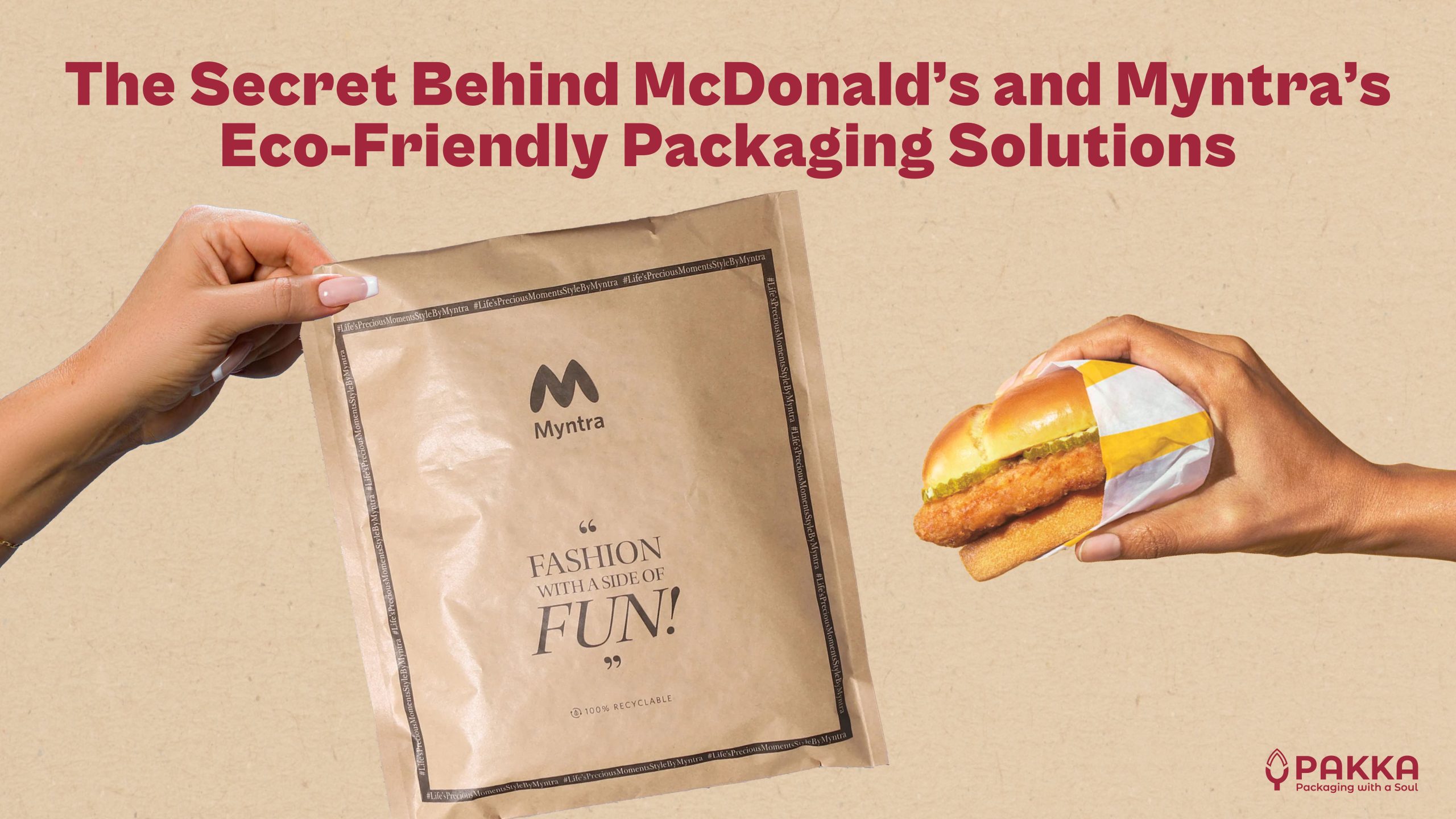
India’s QSR market hit USD 27.8 billion in 2025 and is on track for USD 45 billion by 2031 (Mordor Intelligence). With over 500,000 QSR outlets generating disposable packaging at every transaction, the waste volumes are difficult to ignore. Add India’s e-commerce sector, where every parcel ships in packaging that the customer throws away within minutes of opening, and you have two industries sitting on the same compliance problem.
The single use plastic ban is enforced. EPR obligations are expanding. And consumer surveys keep showing the same thing: 76% of buyers now prefer packaging that is biodegradable or compostable (NielsenIQ, 2025). The question for procurement teams is no longer whether to switch but what the alternatives actually look like in terms of performance, cost, and supply chain readiness.
Key takeaways
- India’s Plastic Waste Management Rules ban identified single use plastic items in QSR and food delivery. EPR penalties under the Environment Protection Act reach INR 1 crore.
- McDonald’s globally has reached 86.7% of its target to source all primary guest packaging from renewable, recycled, or certified materials (McDonald’s Sustainability, 2023 data).
- Molded fibre (bagasse based) packaging handles temperatures up to 220 degrees C, resists grease and liquids, and is certified compostable under IS 17088.
- E-commerce players including Myntra, Amazon India, and Flipkart have introduced paper based or compostable alternatives for shipping packaging.
- The cost gap between compostable and conventional packaging has narrowed to 10 to 20% at volume, with further reduction expected as production capacity scales.
QSR compostable packaging: the working definition
QSR compostable packaging is food-contact packaging for quick-service restaurants made from materials that break down in composting conditions – molded fibre (sugarcane bagasse), paper, or certified compostable films. In India, IS 17088 certification is the compostability marker, and certified items sit outside the single use plastic ban list. The procurement checklist has four lines: heat tolerance (bagasse handles up to 220 degrees C), grease and liquid resistance, unit economics at volume, and EPR documentation the supplier can actually produce. Format choice matters as much as material here – see how to choose packaging that keeps food hot without getting soggy for the venting and barrier trade-offs.
What the regulations actually require from QSR and e-commerce operators
India’s Plastic Waste Management Amendment Rules, effective since August 2022, ban the manufacture, import, sale, and use of specified single use plastic items. Plates, cups, cutlery, straws, stirrers, and certain packaging films are explicitly covered. These are exactly the items QSR operations burn through at high volume every day.
Enforcement is real and getting more frequent. The Central Pollution Control Board and state level authorities conduct inspections, issue closure notices, and impose fines. For a chain with outlets across multiple states, one enforcement action at one location creates reputational risk for every other outlet carrying the same brand name.
The EPR for Packaging Rules, effective April 2026, go further. Producers, importers, and brand owners are now responsible for the end of life management of their packaging. That includes ensuring collection, recycling, or composting. The rules now cover not just plastics but paper, glass, metal, and sanitary products. Over 60,000 entities are registered on the CPCB’s centralised EPR portal (CPCB, 2026).
For QSR chains and e-commerce companies, compostable packaging certified under IS 17088 offers a clean compliance path: it enters organic waste streams, avoids the need for separate plastic collection infrastructure, and simplifies EPR obligations.
How the largest brands are actually making the switch
McDonald’s: fibre first, globally and in India

Photo via Pexels — Free to use
McDonald’s set a global target to source 100% of its primary guest packaging from renewable, recycled, or certified materials by end of 2025. By late 2023, they reported reaching 86.7% (McDonald’s Corporate). Most of their primary packaging is already fibre based: paper, pulp, cardboard. They have replaced plastic straws with paper, removed plastic lids from McFlurry cups, and introduced salad boxes made from renewable fibre.
In India specifically, McDonald’s outlets have shifted to paper based clamshells, paper bags, and fibre trays. The transition has not happened overnight. It required parallel work on supplier qualification, line compatibility testing, and verifying that the new materials met food contact safety requirements under FSSAI regulations.
McDonald’s did not treat this as a marketing exercise, and that matters. Their approach was methodical: phase out problem items, qualify replacement materials against performance specs, and scale once validation was complete. That is also what makes it replicable for mid-size QSR chains without McDonald’s resources.
E-commerce: packaging as a returns prevention problem
Myntra introduced biodegradable packaging for shipments, replacing single use plastic mailers with paper based alternatives. Amazon India has scaled corrugated packaging and eliminated single use plastic packaging in several fulfilment centres. Flipkart has tested compostable mailers and paper cushioning in place of plastic bubble wrap.
The motivation goes beyond compliance. For e-commerce, packaging damage during transit drives returns. And returns are expensive, 15 to 20% of orders in some categories. Corrugated paper and molded fibre inserts actually perform as well or better than plastic alternatives for shock absorption, while being lighter and cheaper to dispose of at the customer end.
Bambrew, an Indian sustainable packaging company, has partnered with Amazon, Myntra, Flipkart, Nykaa, and Bata to supply paper based packaging alternatives (Inc42). India’s sustainable packaging market is estimated at USD 9.7 billion and growing.
Why molded fibre works for food service
For QSR operators, the packaging has to handle real conditions: hot food, oily food, wet food, stacking, and transit. Paper alone does not always cut it. Molded fibre, particularly bagasse based (made from sugarcane residue), addresses each of these.
Bagasse tableware handles temperatures up to 220 degrees C, which means it is safe for microwave reheating. PLA lined alternatives start deforming well below that. Untreated bagasse already resists grease at moderate exposure levels. Where you need more protection, water based coatings provide additional barrier without affecting compostability.
The material takes flexographic and offset printing with standard water based inks, so brand owners who care about on-pack graphics and visual consistency can get what they need. Embossing and calendering are possible for premium applications.
And at end of life, bagasse products certified under IS 17088 (India) and EN 13432 (Europe) decompose within 90 to 180 days in commercial composting conditions. They go into organic waste streams. No separate collection infrastructure needed.
The cost conversation: what the numbers actually look like now
Cost is always the first objection. It was a stronger argument three years ago than it is now.
Bagasse based compostable tableware currently runs a 10 to 20% premium per unit over conventional plastic at volume. But that headline number does not account for several costs that are now real line items on procurement budgets:
- EPR compliance fees for plastic packaging
- Waste management infrastructure costs for plastic collection and recycling
- Regulatory penalty risk (up to INR 1 crore per incident under the Environment Protection Act)
- Brand risk from enforcement actions, social media exposure, and ESG reporting gaps
- Operational cost of managing dual waste streams (plastic plus organic) vs a single organic stream
When you add those up, the total cost comparison looks very different from the per unit material comparison. Several QSR operators who have completed the transition report that their all in packaging costs are flat or lower after 12 to 18 months, once compliance and waste management savings are factored in.
What procurement teams should evaluate before switching
Not all compostable packaging is the same. Procurement teams evaluating a transition should be checking:
- Certification: IS 17088 or EN 13432 certified? Ask for the test reports, not just the claim.
- Food contact compliance: Does it meet FSSAI packaging regulations? Is it free from intentionally added PFAS?
- Performance under real conditions: Has it been tested with your specific food types (hot, oily, wet)?
- Line compatibility: Does it work with your existing packaging, filling, and sealing equipment?
- Supply continuity: Can the supplier deliver at your volume consistently, not just for a pilot order?
- Print quality: Can you get the brand quality graphics you need on the material?
If a supplier cannot provide evidence across all six, they are not ready for a commercial partnership regardless of what their marketing materials say.
Frequently asked questions
Is compostable packaging mandatory for QSR chains in India?
Single use plastic items including plates, cups, and cutlery are banned under the Plastic Waste Management Rules. While the rules do not mandate compostable packaging specifically, they effectively require alternatives that are either recyclable or compostable. Compostable options simplify compliance because they enter organic waste streams without separate collection infrastructure.
How does McDonald’s source its sustainable packaging in India?
McDonald’s works with qualified fibre based packaging suppliers who meet their global sustainability standards. In India, this has meant a shift to paper clamshells, fibre trays, and paper bags. The company reached 86.7% of its global target for renewable, recycled, or certified primary packaging by late 2023.
What is the cost premium for compostable QSR packaging?
At current volumes, the material cost premium runs 10 to 20% over conventional plastic for bagasse based tableware. When you factor in EPR compliance fees, waste management costs, and regulatory penalty risk, the total cost difference is smaller than the material cost alone suggests. Some operators report cost parity within 12 to 18 months of transition.
Can compostable packaging handle hot and oily food?
Bagasse based molded fibre handles temperatures up to 220 degrees C and resists grease at moderate exposure levels. For heavier grease exposure (fried foods, curries), water based PFAS free coatings provide additional barrier without affecting compostability. PLA alternatives deform at much lower temperatures.
What EPR obligations apply to e-commerce packaging?
The EPR for Packaging Rules, effective April 2026, require e-commerce companies (as brand owners) to manage end of life for their packaging. This includes registration on the CPCB portal, filing half yearly and annual returns, and meeting recycling or composting targets. Compostable shipping materials certified under IS 17088 simplify this obligation.
How long does compostable packaging take to decompose?
Bagasse based products certified under IS 17088 or EN 13432 decompose within 90 to 180 days under commercial composting conditions. The certification requires at least 90% biodegradation within 180 days and 90% disintegration into particles smaller than 2 mm within 12 weeks.
Evaluating compostable packaging for your QSR or e-commerce operation? Talk to our team about food grade certified options, volume pricing, and supply continuity.
Specifying packaging for a QSR or e-commerce operation. Pakka’s food wrap and carry range covers paper wraps, bags and carry formats, with food-contact and barrier data on the category page. Talk to the Pakka team for specifications, samples and pricing.
Browse all Pakka articles.
You may also like